- 19.11.2024.
- -

In order to install a flat roof with a mechanically fastened waterproofing membrane, it is necessary to comply with the wind load calculation for membrane fastening, also known as the wind uplift calculation or wind load analysis.
The wind load calculation can only be carried out by authorized personnel from the waterproofing membrane manufacturer and/or the mechanical fastener (anchor) manufacturer.
Upon request, the wind load calculation is prepared either by the waterproofing manufacturer or by the manufacturer of telescopic fasteners used for mechanical fixation of the waterproofing membrane.
This calculation is prepared individually for each project, as it depends on the type of substrate, the order and type of materials in the roof build-up.
The layout and spacing of mechanical fasteners for the waterproofing membrane depend on the following factors:
- Roof structure and type of substrate (trapezoidal metal deck, concrete, timber deck, steel, etc.)
- Type of thermal insulation (mineral wool, EPS, XPS, PIR, etc.)
- Type of mechanical fasteners (for trapezoidal decks, for concrete, for steel, for timber, etc.)
- Type of waterproofing membrane (PVC, FPO, TPO)
- Membrane thickness (1.2 mm, 1.5 mm, 1.8 mm, 2.0 mm)
- Membrane roll width (1.5 m, 2.0 m)
- Building geometry (length, width, height)
- Roof geometry, slope, and height of parapets
- Site location – terrain category (urban, open terrain, flat plains, hilly area)
- Wind rose data (altitude and regional wind speed)
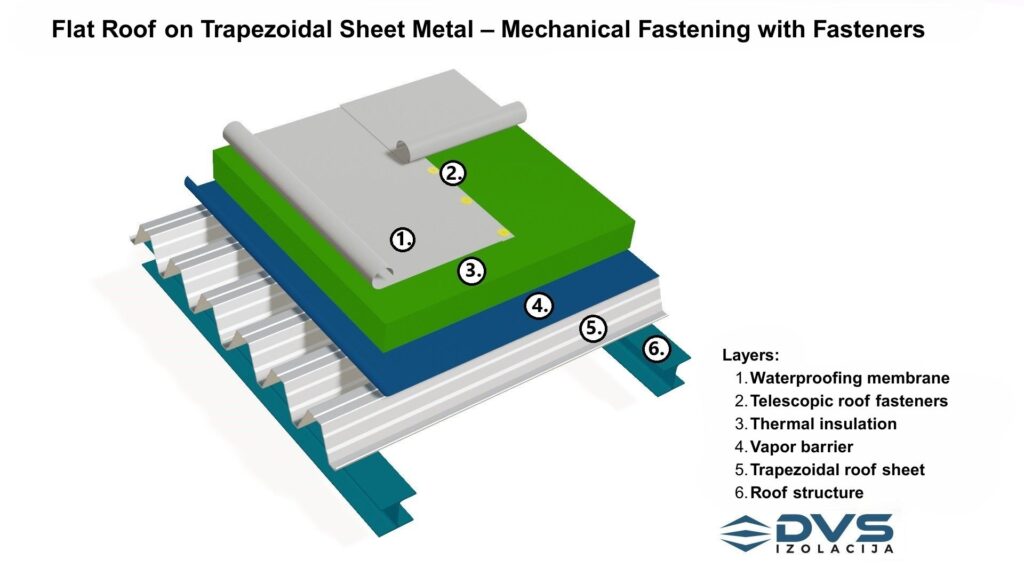
The most commonly used flat roof system on large surface buildings includes the following build-up:
- Roof structure
- Trapezoidal metal deck
- Vapour barrier
- Thermal insulation
- Waterproofing membrane mechanically fastened to the deck with telescopic fasteners
3D model of the roof build-up on a steel structure:
3D model of the flat roof layers:
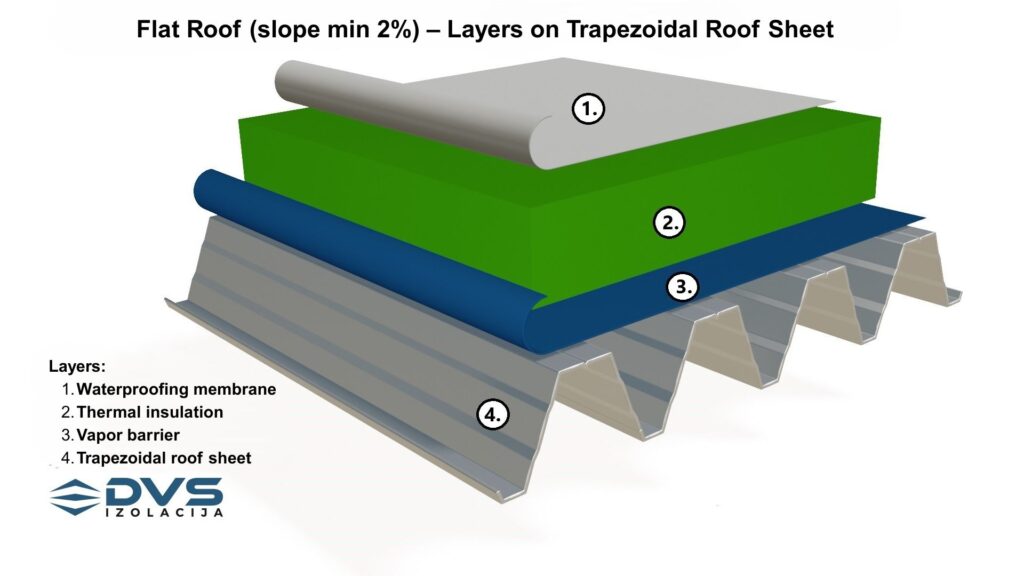
The main advantage of this system is relatively fast installation.
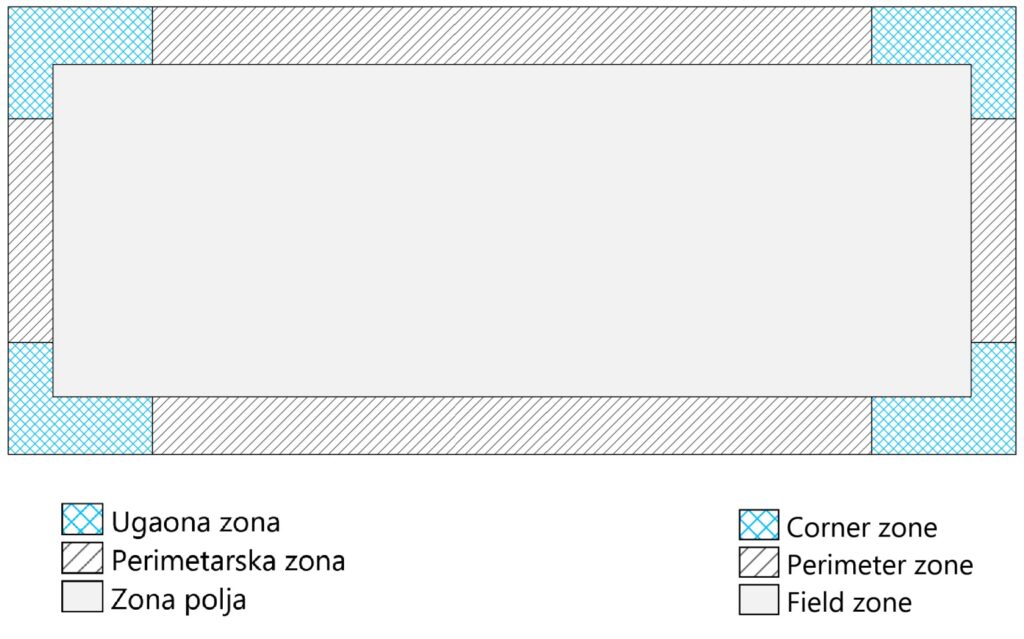
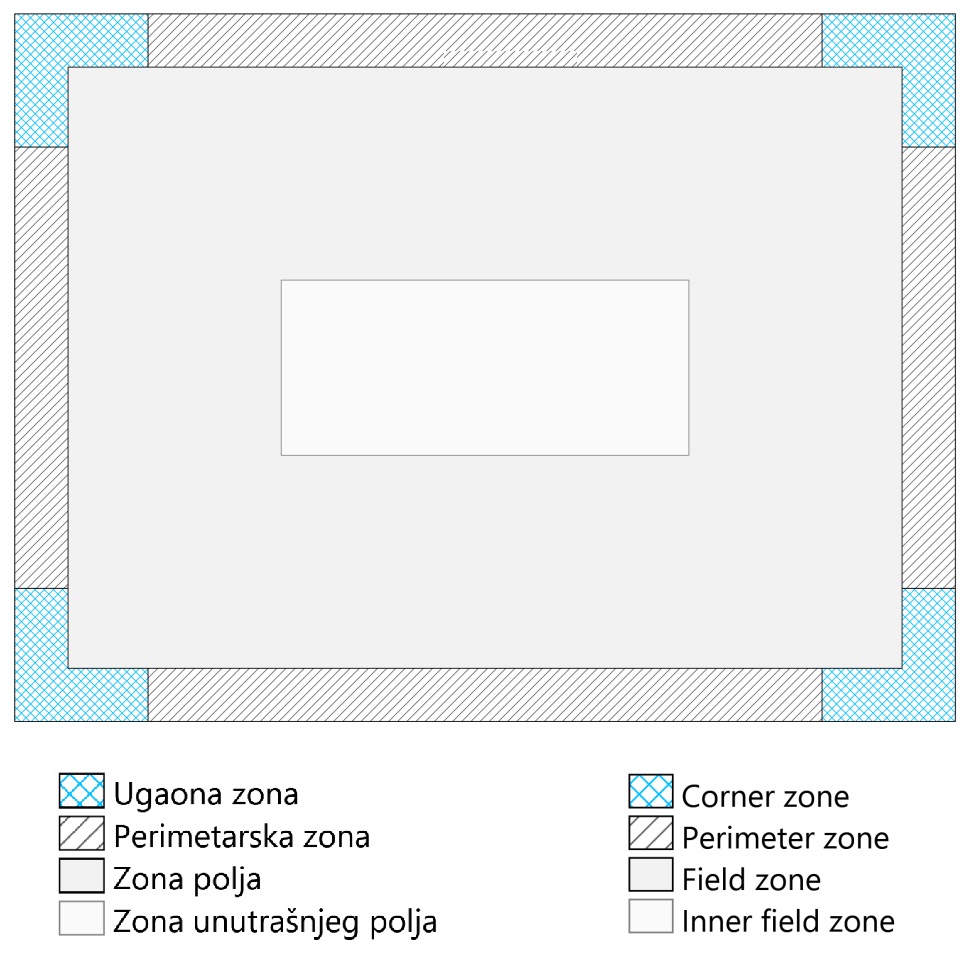
During the wind load calculation, the roof is divided into several zones with different membrane strip widths or different fastener spacing:
- Corner zone
- Perimeter zone
- Field zone
- Inner field zone
For buildings with a significantly larger length compared to width, only the first three zones appear.
For buildings with approximately equal length and width, the fourth zone (inner field) is also considered.
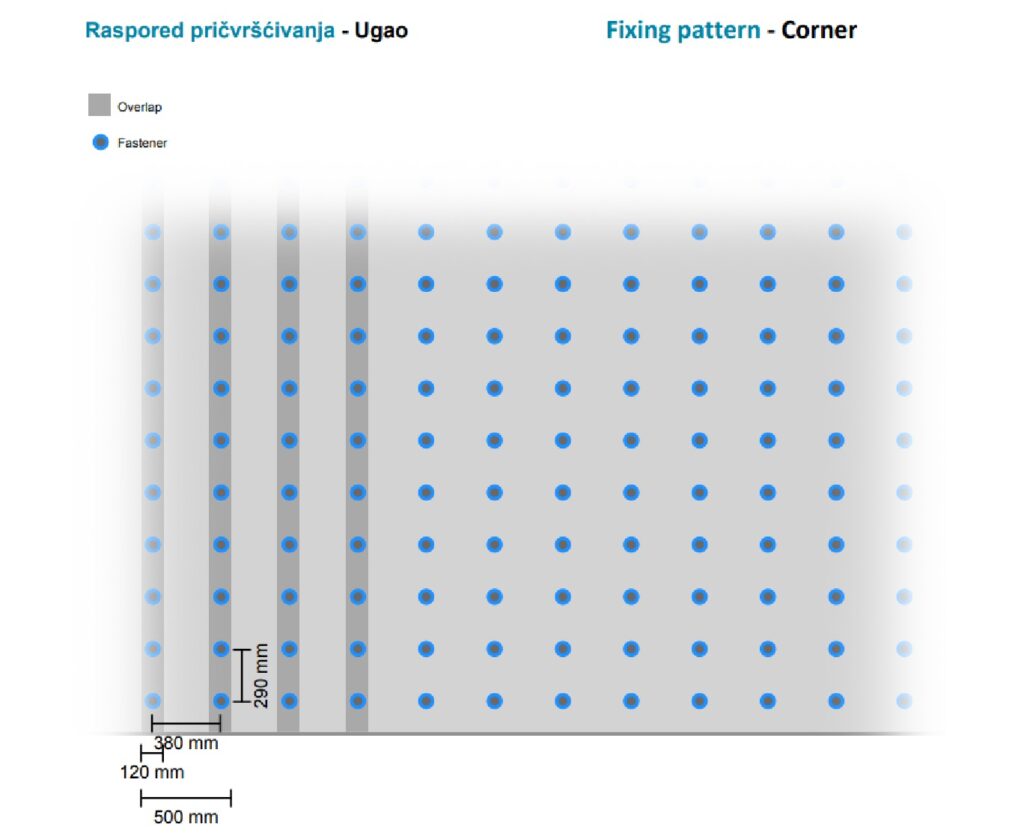
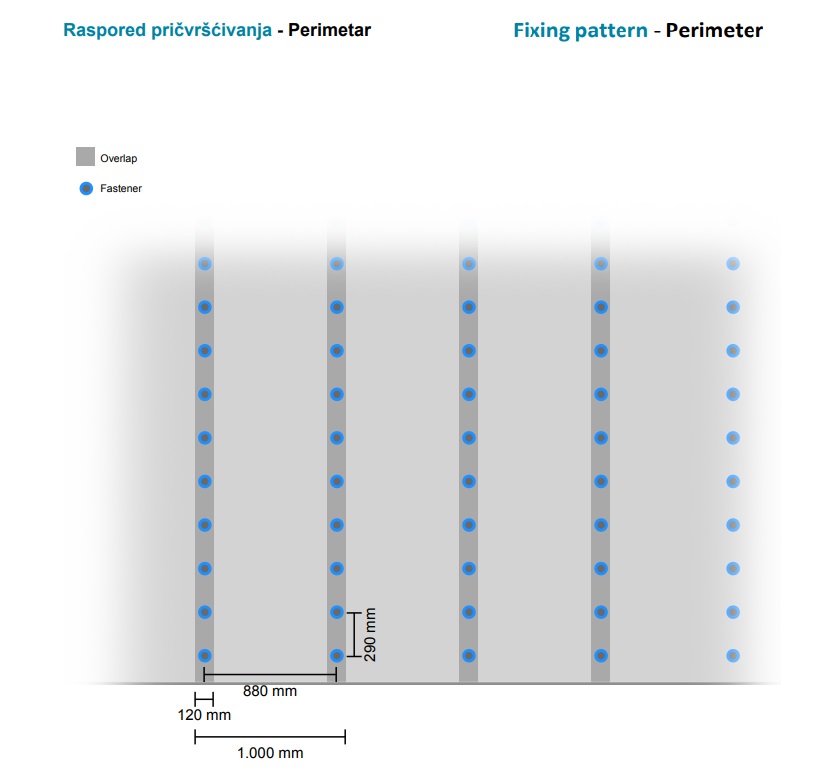
When installing the waterproofing membrane on a trapezoidal metal deck, the spacing of fasteners is determined by the rib spacing of the deck.
Since this spacing is fixed, the membrane strip width varies across the zones.
The standard roll width is typically 2.0 m, and the program defines the following strip widths per zone:
- 1/1 = 200 cm
- 1/2 = 100 cm
- 1/3 = 66 cm
- 1/4 = 50 cm
In exceptional cases, two fasteners may be placed in a single rib of the deck.
Example – Corner zone:
Example – Perimeter zone:
Example – Field zone (variant 1):
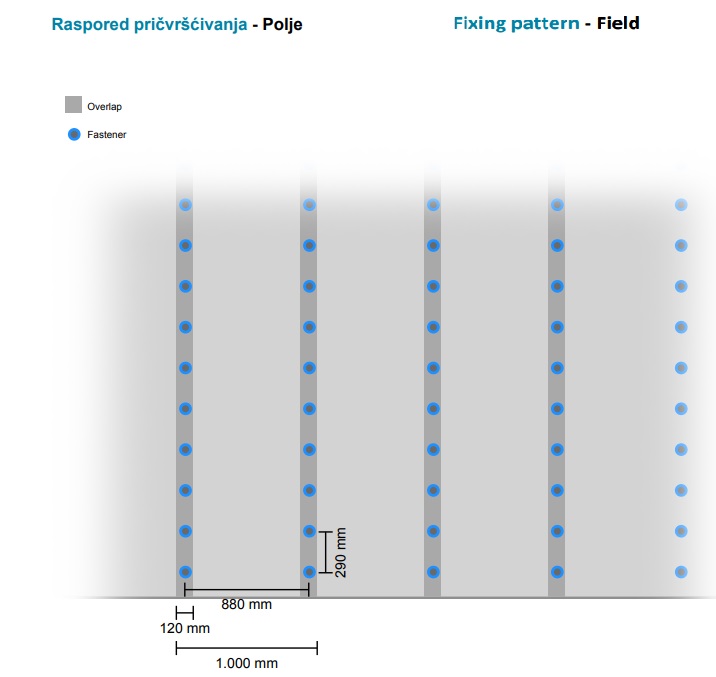
Example – Field zone (variant 2 – double fastening):
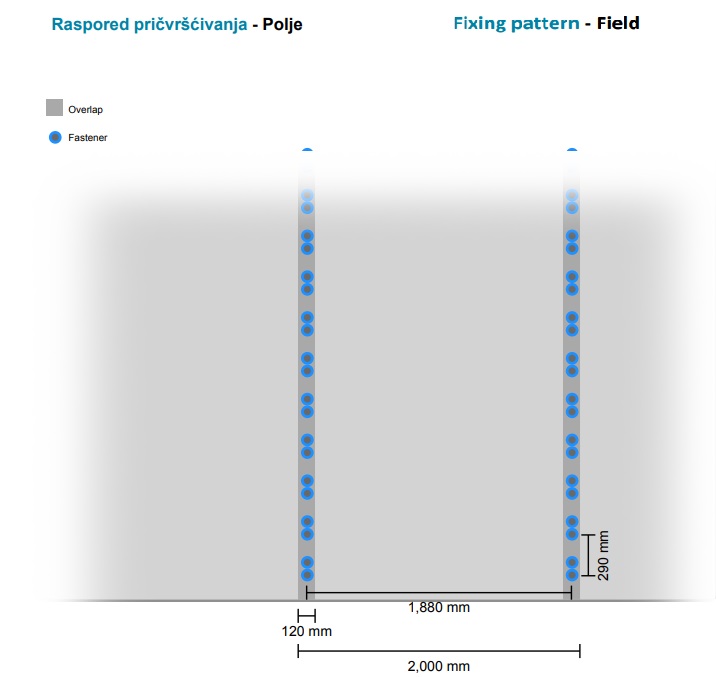
Example – Field zone (variant 3):
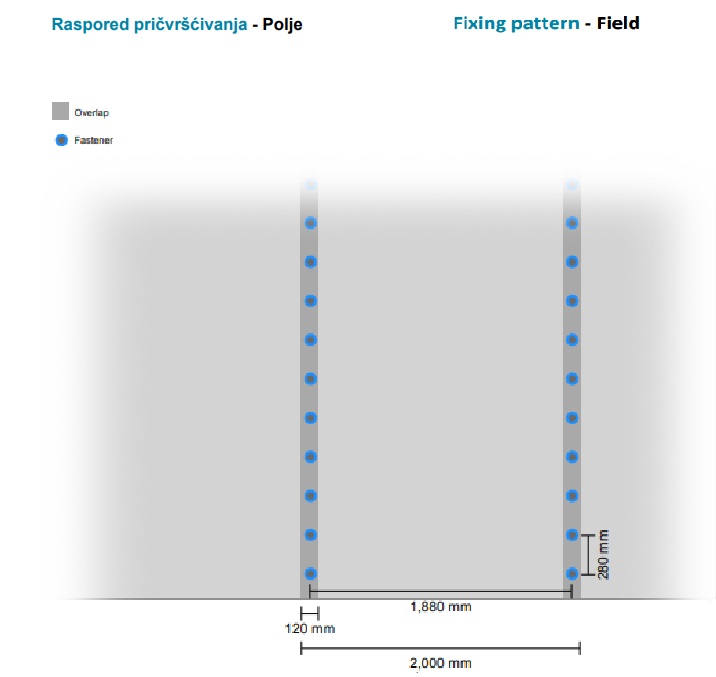
Example – Inner field zone:
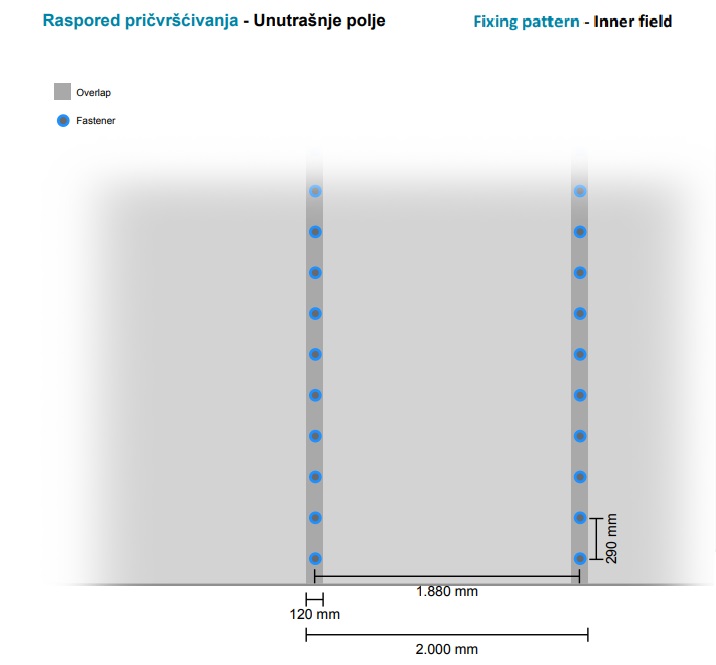
Wind pressure is highest at the corners and edges of the roof, which is why narrower membrane strips are used in these areas.
Towards the central area, wind pressure decreases, allowing for wider membrane strips, up to the full roll width of 2.0 m.
In systems with flat substrates (concrete, timber, flat steel deck), the opposite approach is used: the strip width remains constant, while the spacing of fasteners varies across zones.
In practice, it is always preferable to adopt the stricter wind load calculation provided by the membrane or fastener manufacturer.
It is also common practice during installation to apply even denser fastening than prescribed, especially in corner or perimeter zones. This ensures the roof remains resistant to extreme wind loads and storm conditions.
During installation, a technical representative from the waterproofing manufacturer usually performs an inspection to verify compliance with standard installation details, the wind load calculation, and the proper application of materials (membrane and fasteners).
In recent years, wind load criteria have become more stringent due to the increased frequency of strong winds and extreme weather events.
These updates were made in accordance with the current European standards.
In the Republic of Serbia, as of March 31, 2022, the national standard SRPS EN 1991-1-4/NA:2017 – Eurocode 1: Actions on structures – Part 1-4: General actions – Wind actions (National Annex) has been officially adopted, without modifications compared to the original European document.
This standard applies, among other things, to mechanically fastened waterproofing systems, in order to ensure sufficient resistance to wind actions.
It was prepared by the CEN/TC 254 ‘Flexible sheets for waterproofing’ technical committee and adopted at EU level in 2021.
Accordingly, all buildings with flat roofs and mechanically fastened waterproofing systems constructed before March 31, 2022, are subject to additional analysis and, if necessary, technical reinforcement measures, especially in corner and perimeter zones.
Conclusion
The cost difference between a properly executed flat roof and an improperly executed one is minor, yet the consequences of non-compliance can be significant.
A roof built in accordance with the wind load calculation (with more fasteners and narrower membrane strips) may have a slightly higher initial cost, but provides long-term safety.
Conversely, a roof installed without following the calculation (with fewer fasteners and wider strips) may fail under strong winds, resulting in costly repairs.
When the wind load calculation is properly implemented, the number of fasteners increases and membrane overlaps become wider, slightly raising material and labor costs. It is therefore important for investors to understand the method of execution, not just the final price.
This article provides a simplified explanation of the wind load calculation for mechanically fastened waterproofing membranes on flat roofs, aimed at helping non-specialists understand the core principles and importance of this analysis.