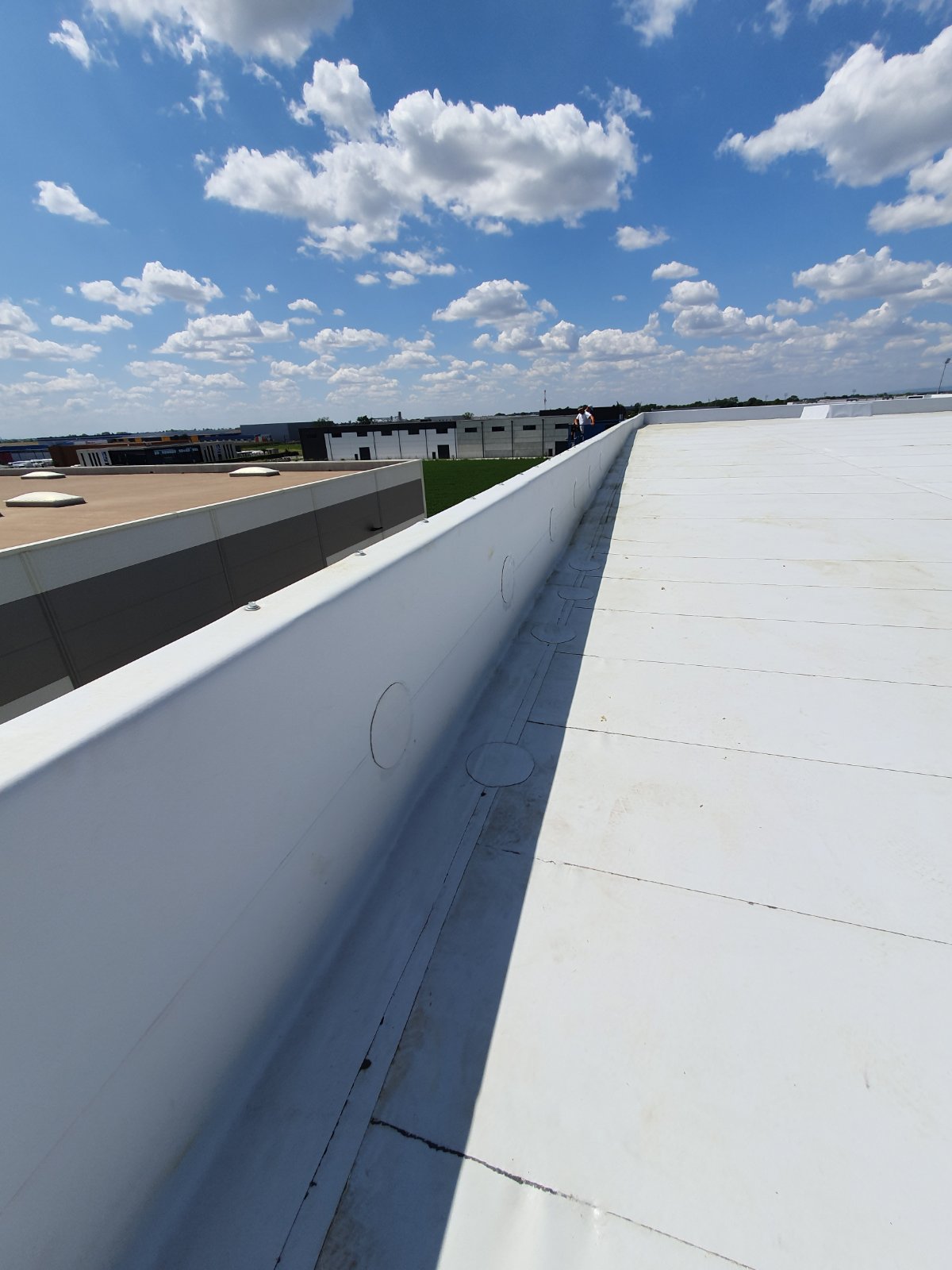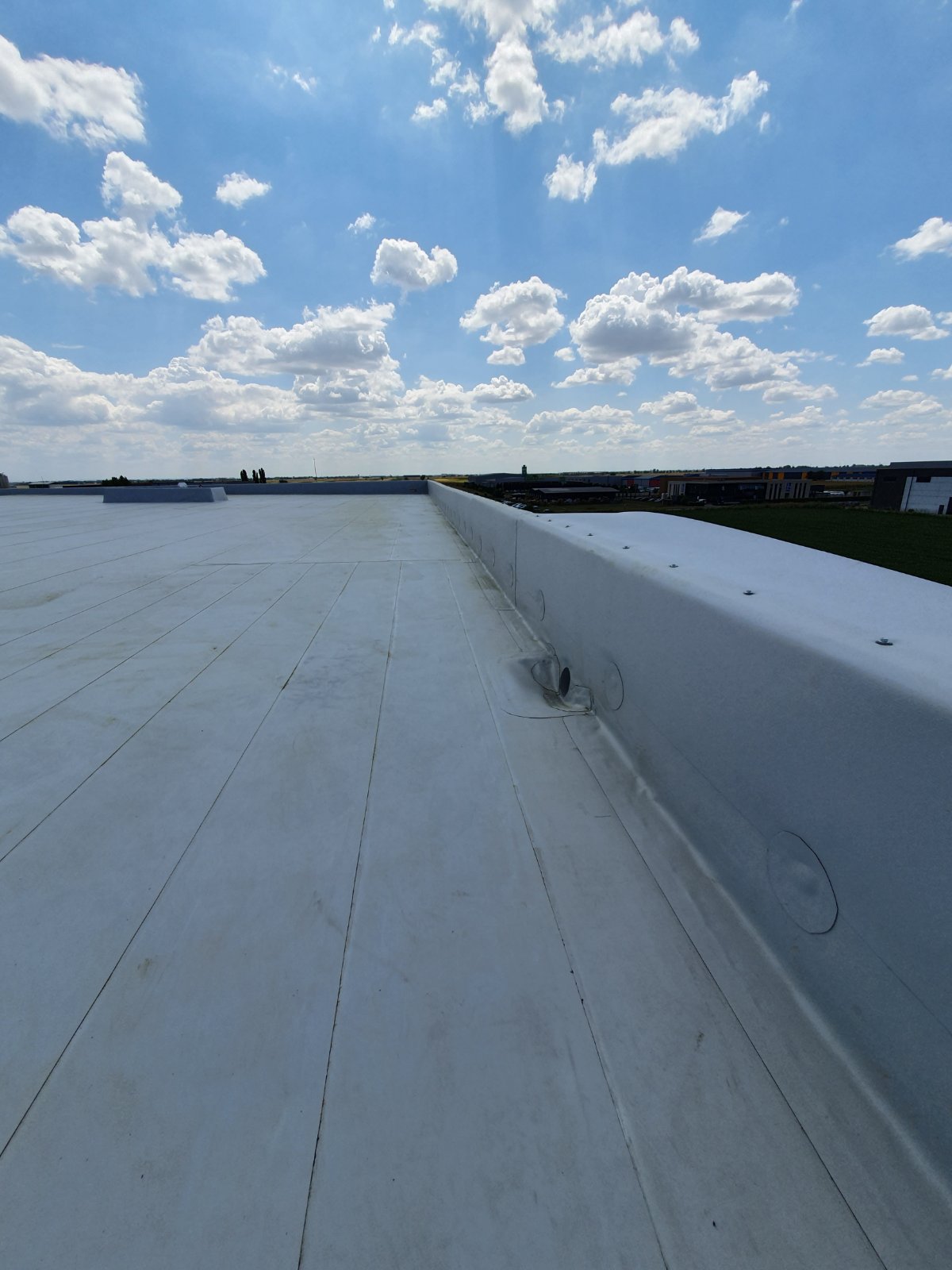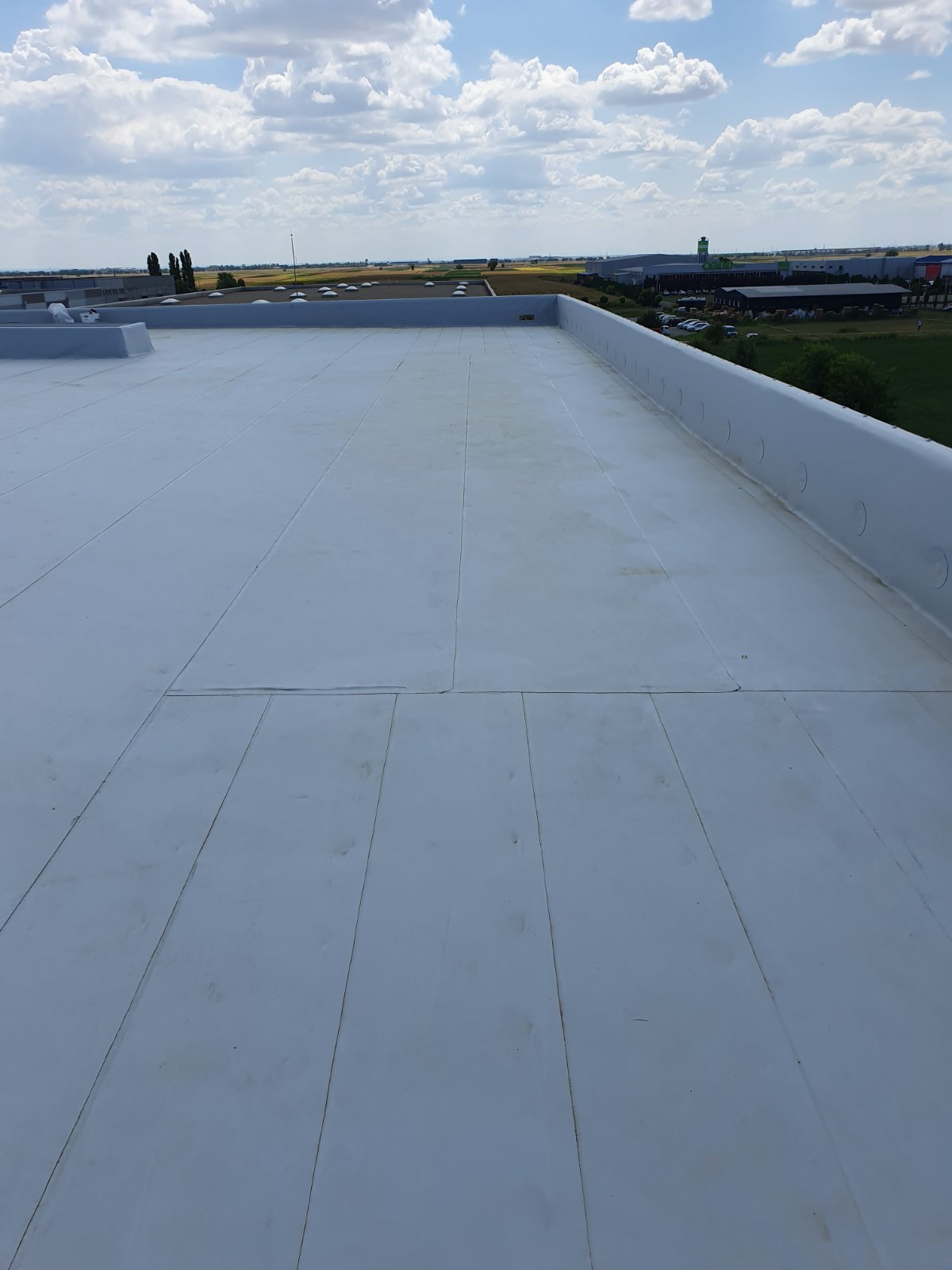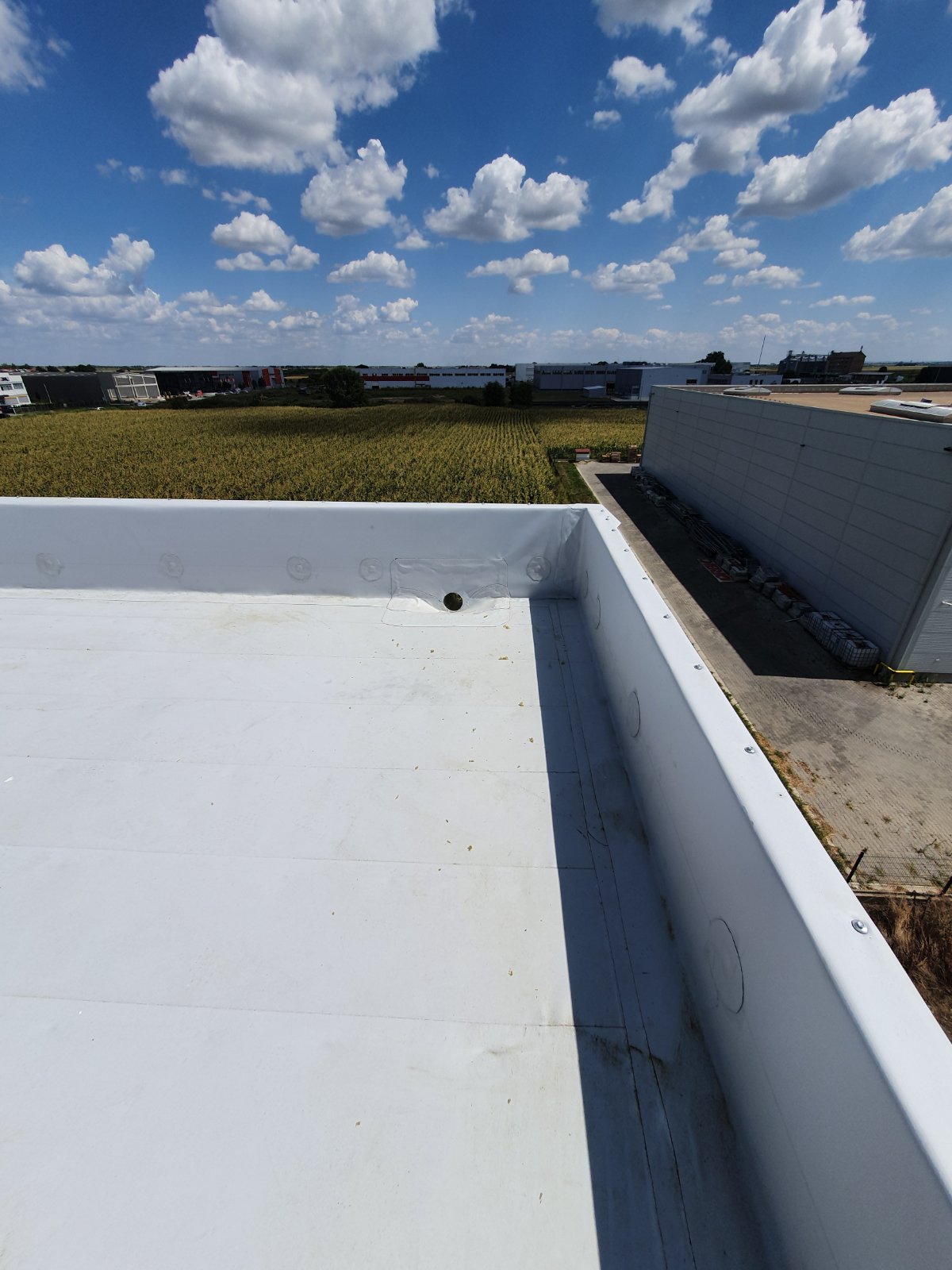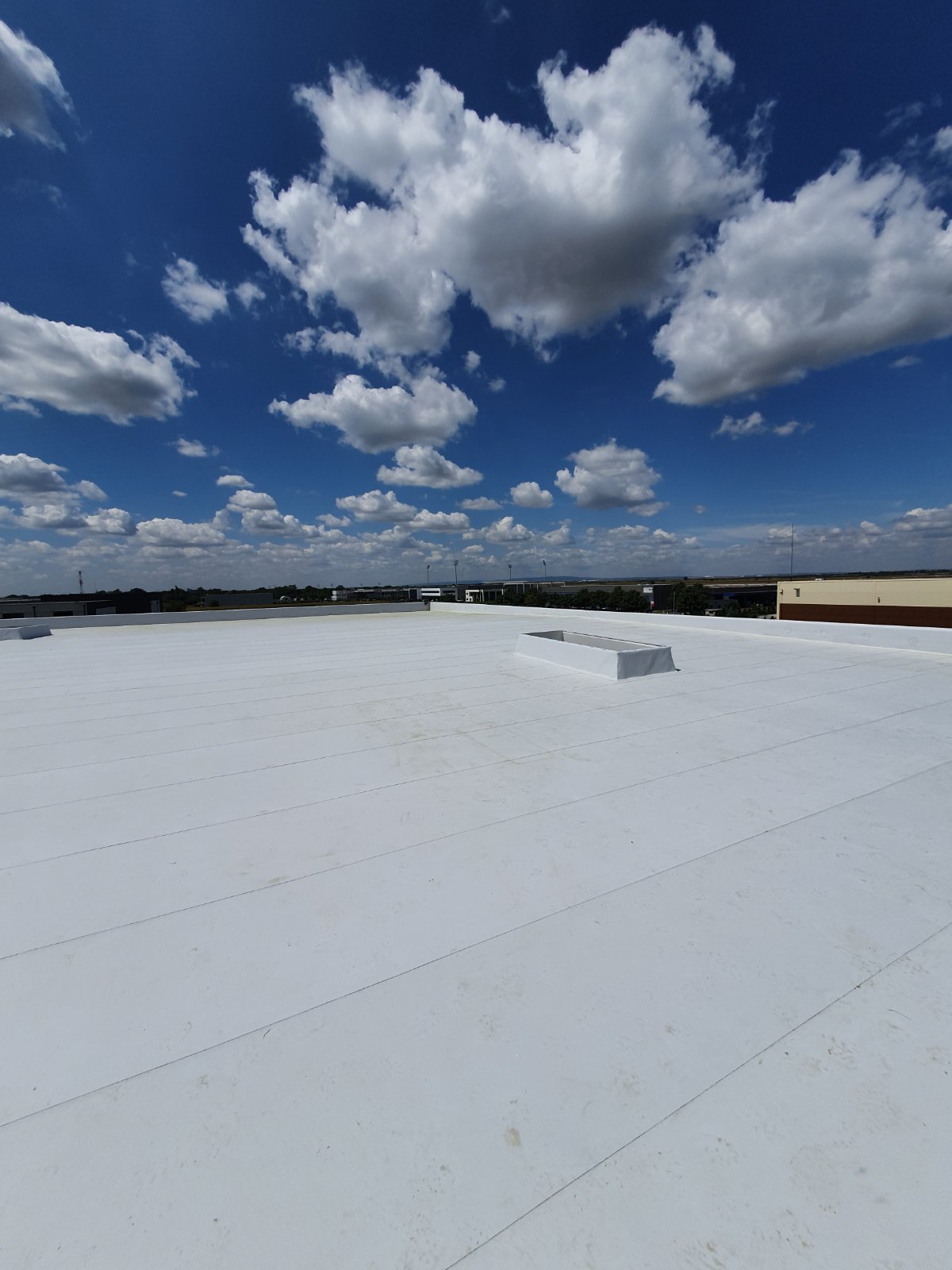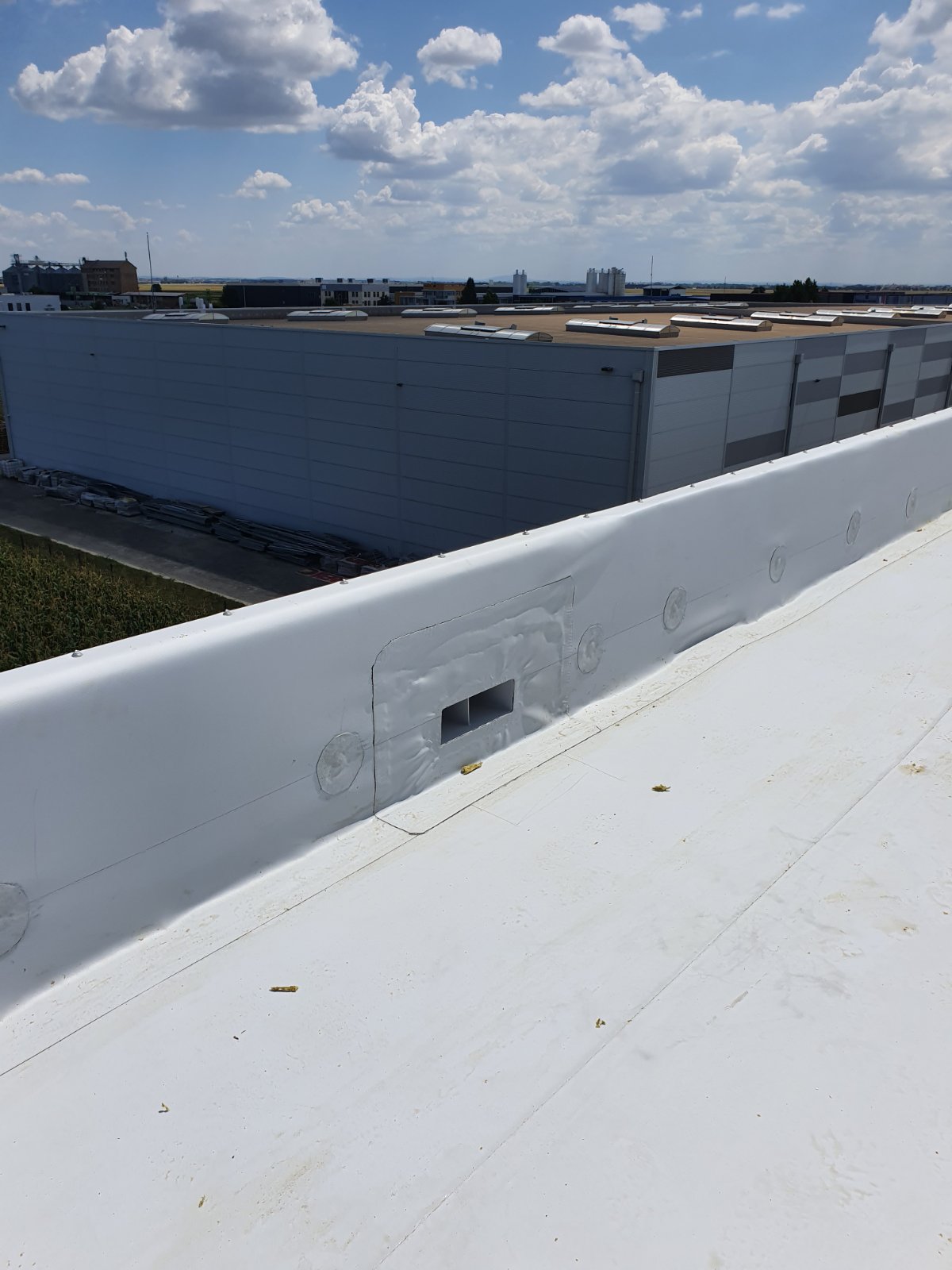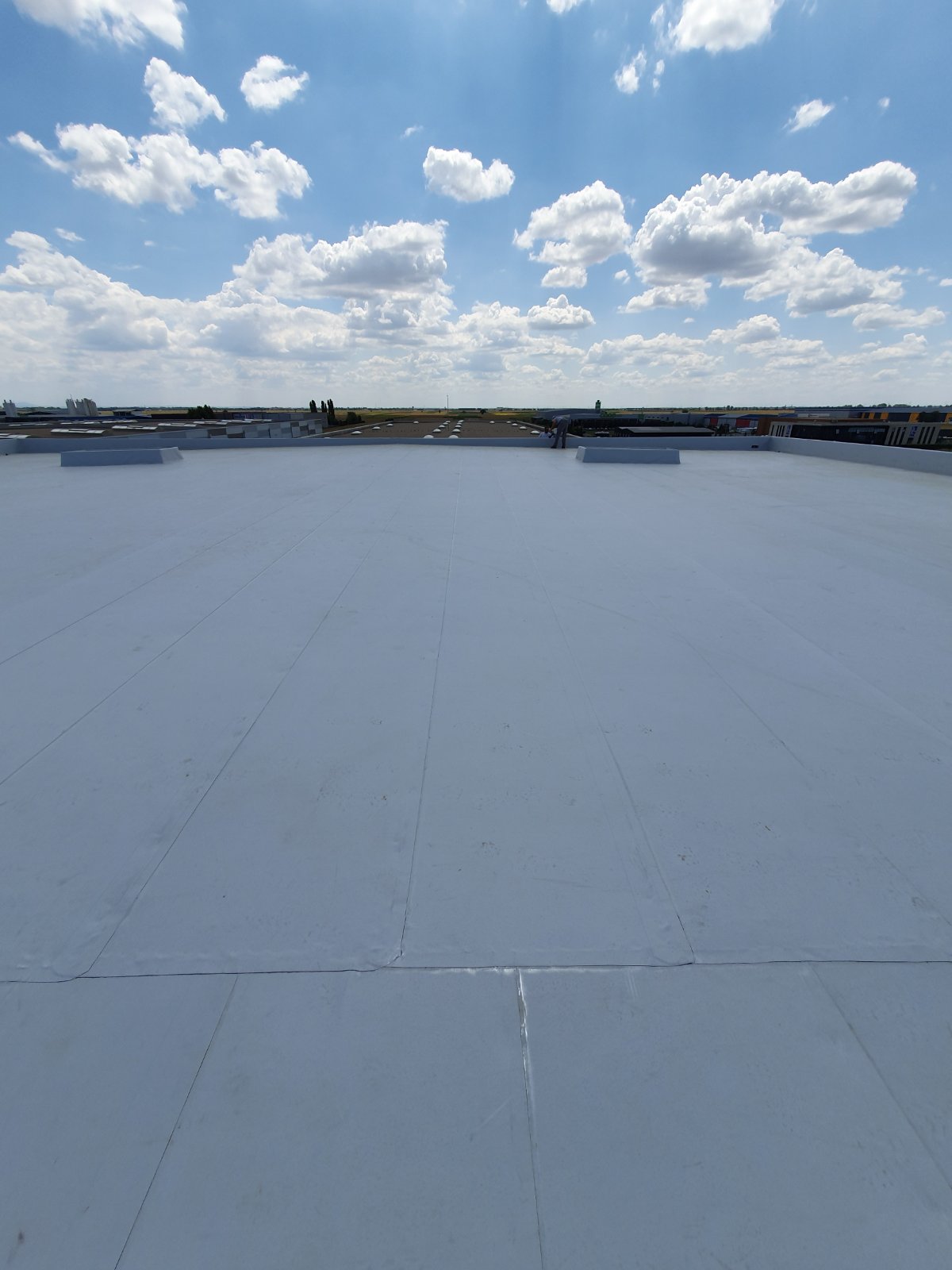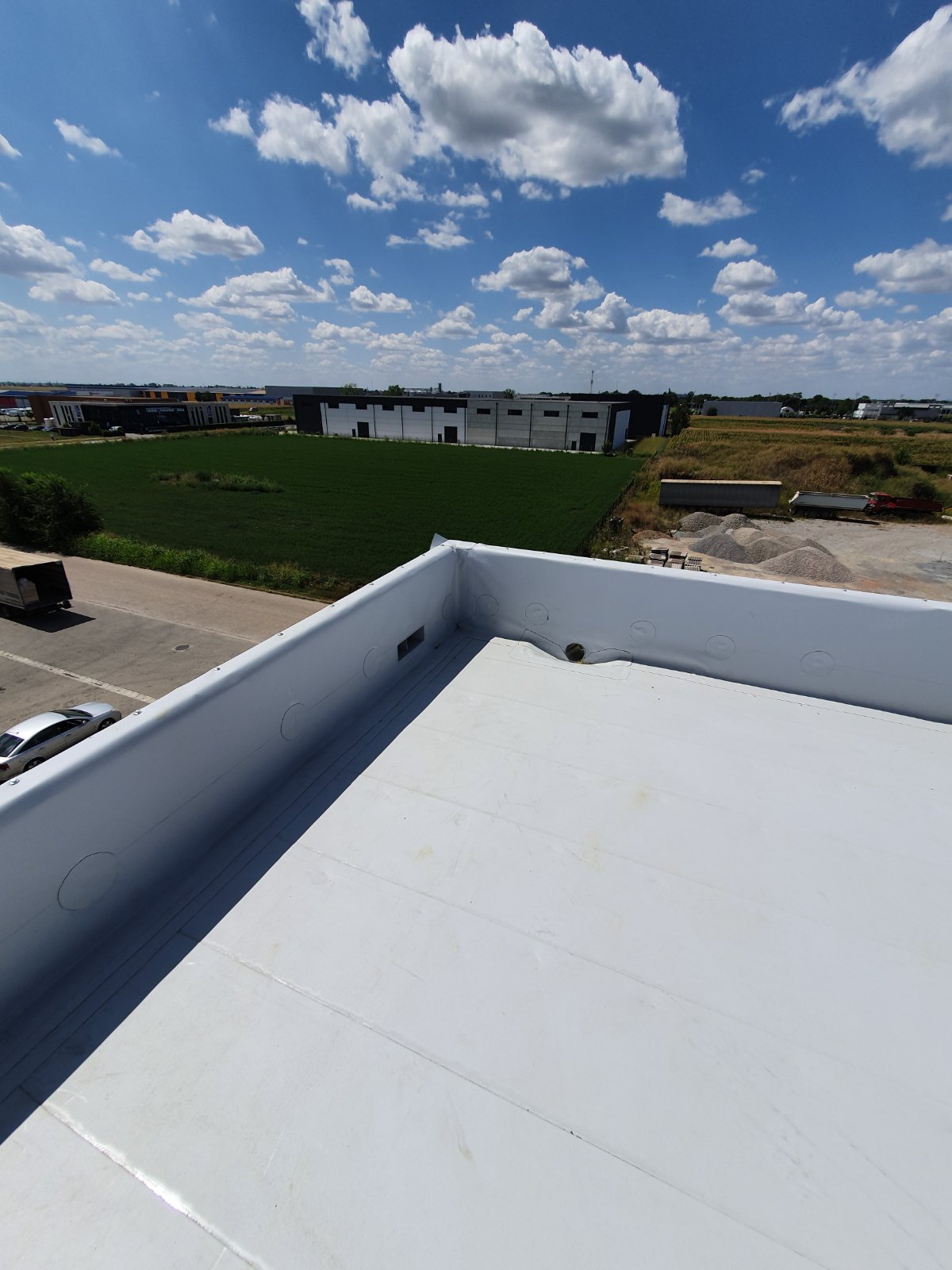
- 05.08.2024.
- -
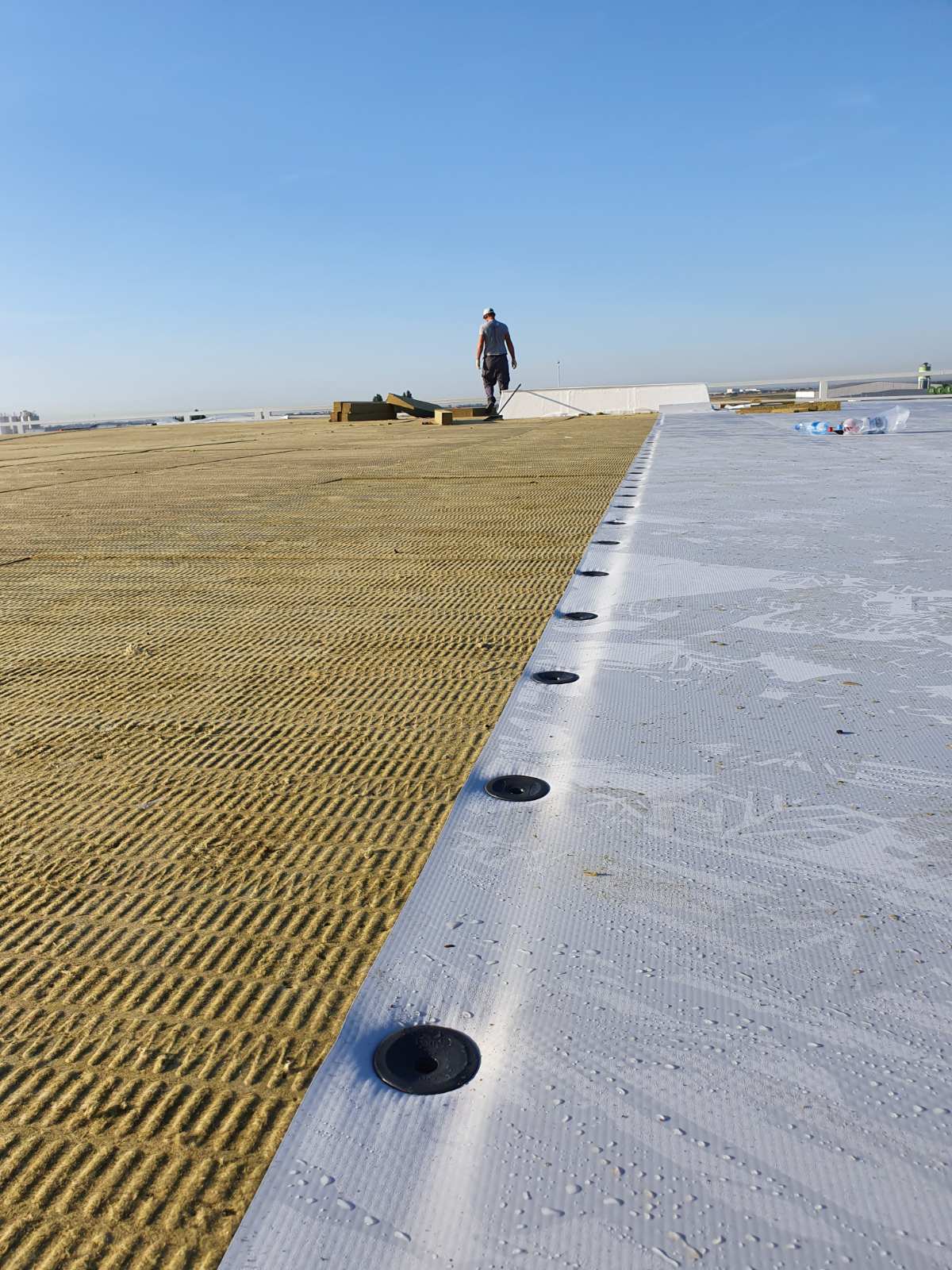
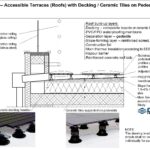
Upon receiving the project and inquiry from the investor, we developed detailed roofing system specifications for this project, including the sequence of roof layers and associated waterproofing elements for the flat roof.
The execution of works was agreed upon within a short timeframe, and the technical design for this project was initiated.
Detailed material specifications and an execution project for the flat roof (PEP) were prepared. Since our works are closely related to thermal and waterproofing of flat roofs, the execution project covered only these positions.
To correctly install a flat roof with a waterproofing membrane, it is necessary to obtain a fastener layout calculation / wind load calculation from the manufacturer.
This calculation is prepared individually for each project, depending on the substrate type, material sequence, and fastener types.
Factors affecting the fastener layout include:
- Roof structure and substrate type (trapezoidal steel deck, concrete, timber, steel, etc.)
- Type of thermal insulation (mineral wool, EPS, XPS, PIR, etc.)
- Type of mechanical fasteners for waterproofing (for trapezoidal metal, concrete, steel, wood, etc.)
- Type of waterproofing membrane (PVC, FPO, TPO)
- Membrane thickness (1.2 mm; 1.5 mm; 1.8 mm; 2.0 mm)
- Building geometry (length, width, height)
- Site location – terrain class (urban area, open space, plain, hilly area)
- Local wind conditions – wind rose influence, exposure height, and wind speed for the region
At our request, the wind load calculation is provided by the waterproofing membrane manufacturer, as well as the manufacturer of the telescopic fasteners used for mechanical attachment of the waterproofing membrane.
In practice, it is always preferable to adopt a more conservative wind load calculation than strictly required, which is standard practice within our team.
During installation, it is common to increase the fastener density beyond the wind load specification, ensuring a roof that is safe under extreme wind conditions.
During execution, the manufacturer of the waterproofing membrane sends a technical inspector to the site to verify compliance with technical details, wind load calculations, and the correct installation of certified materials.
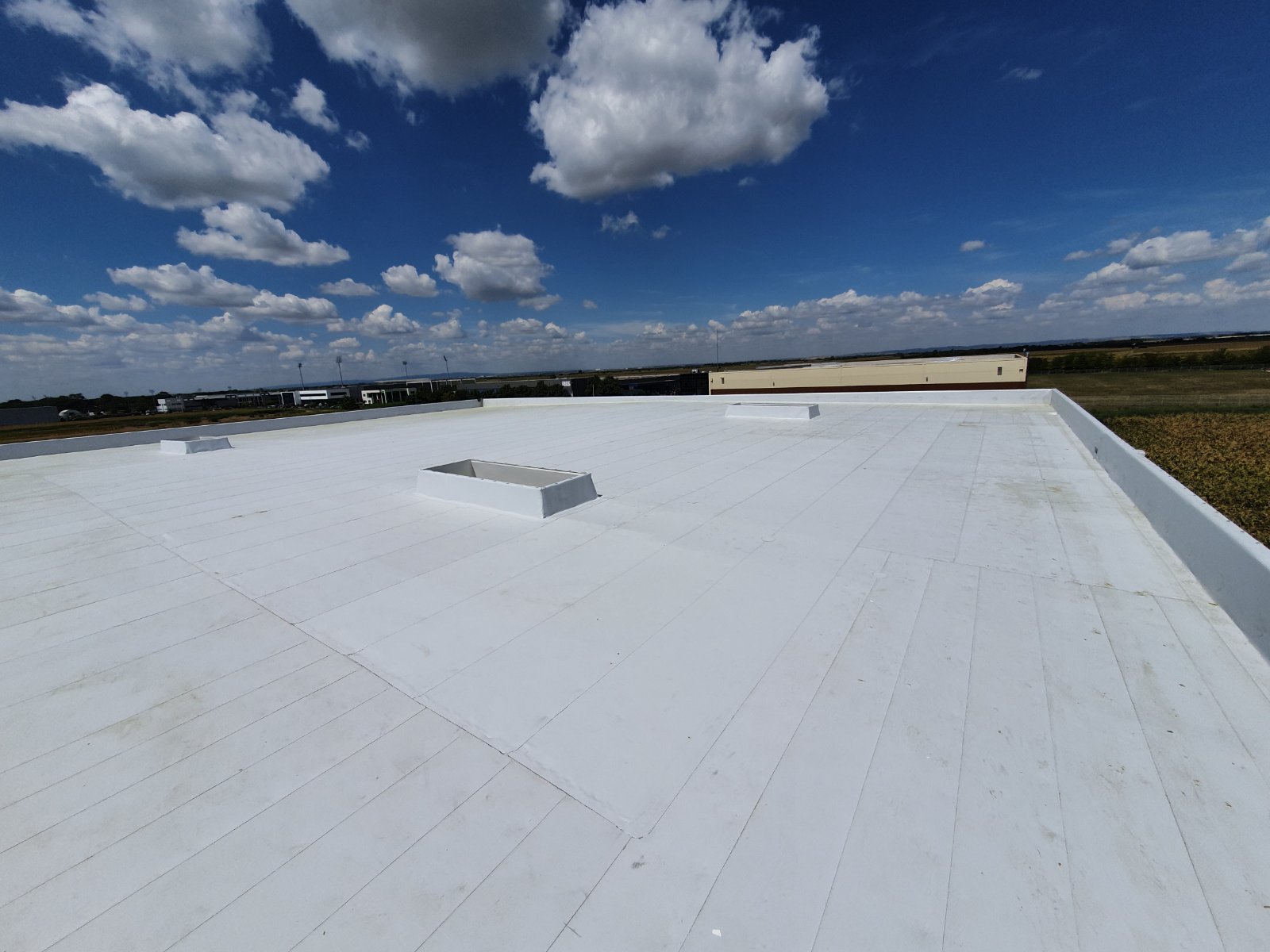
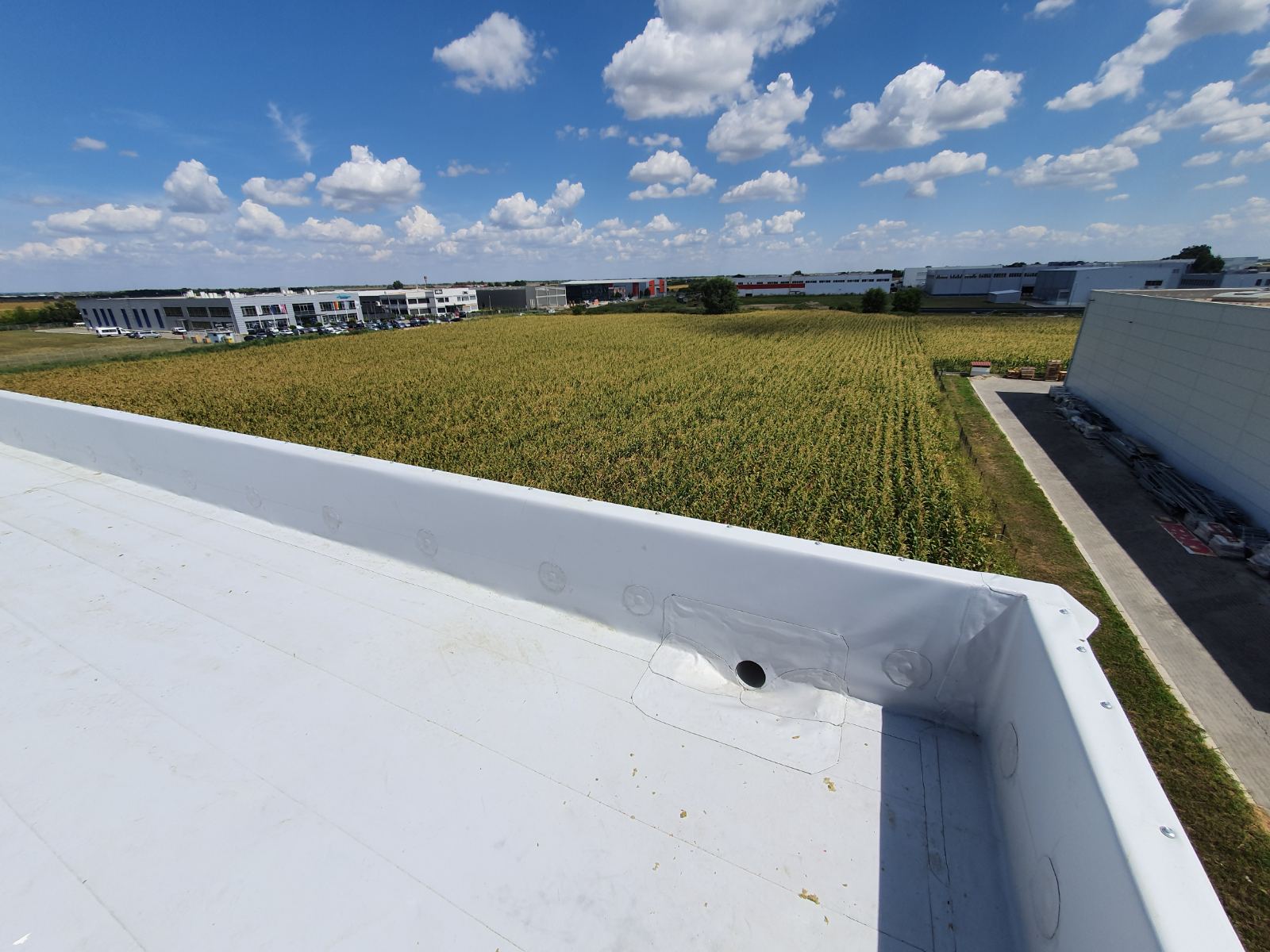
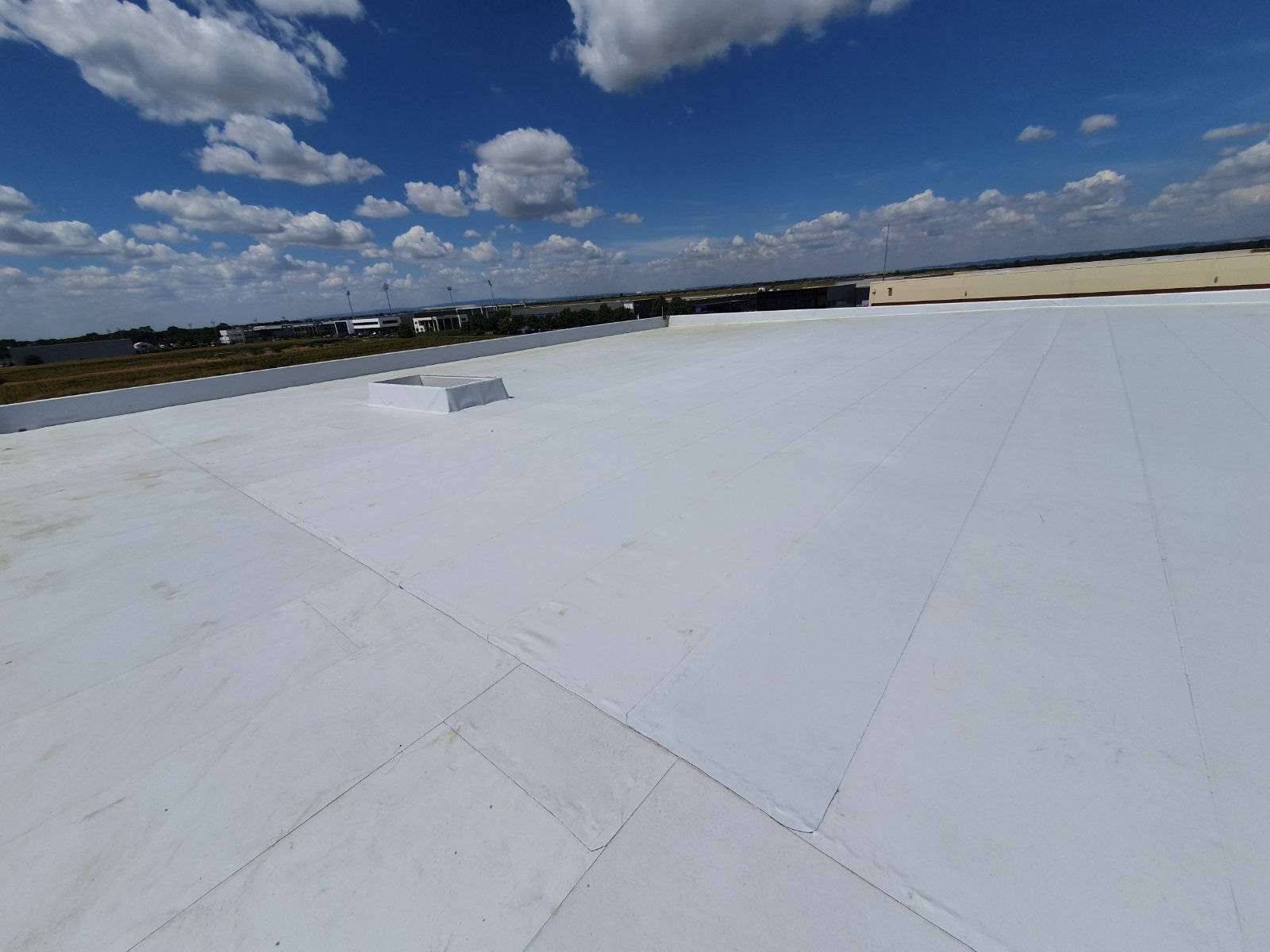
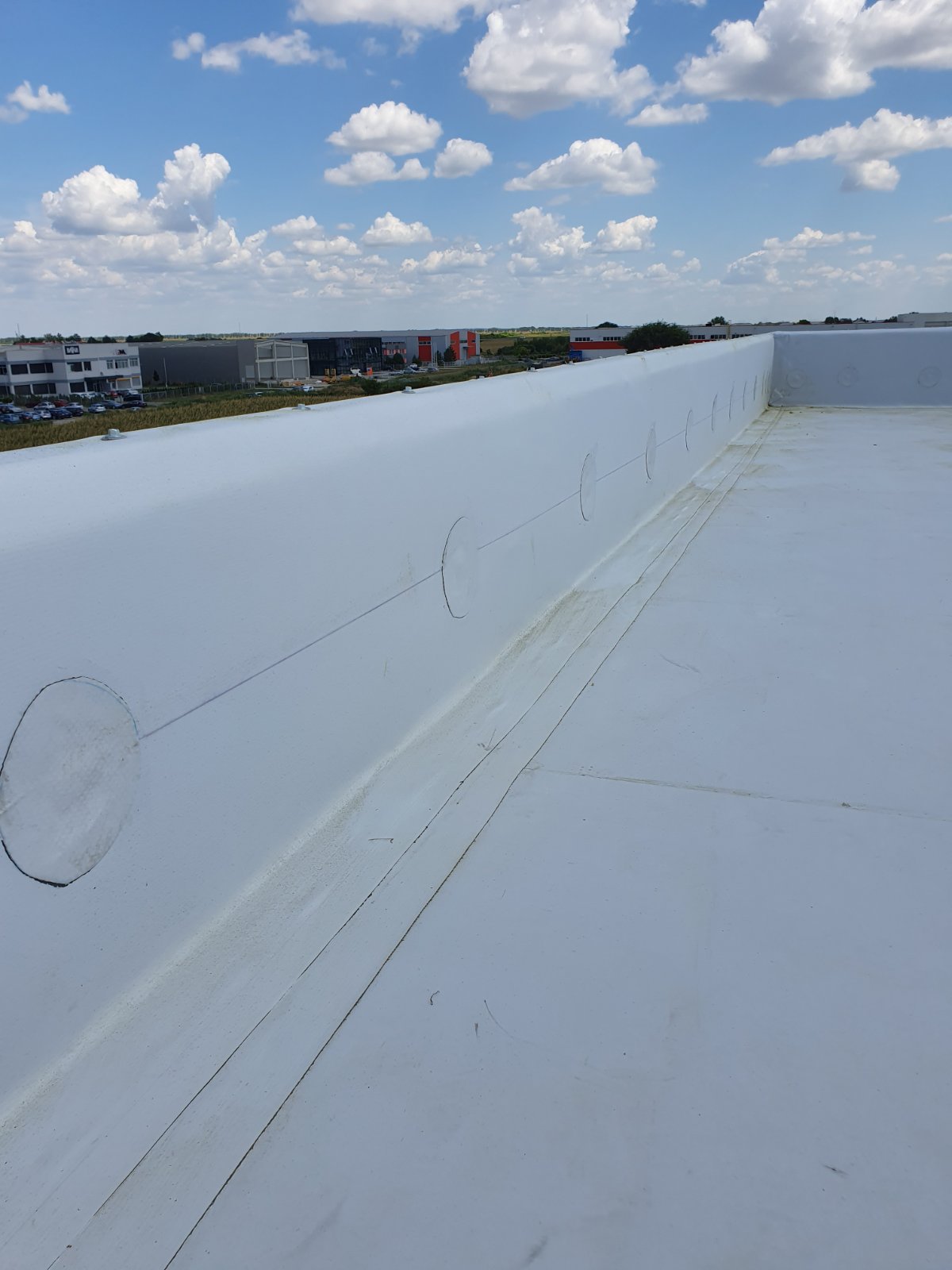
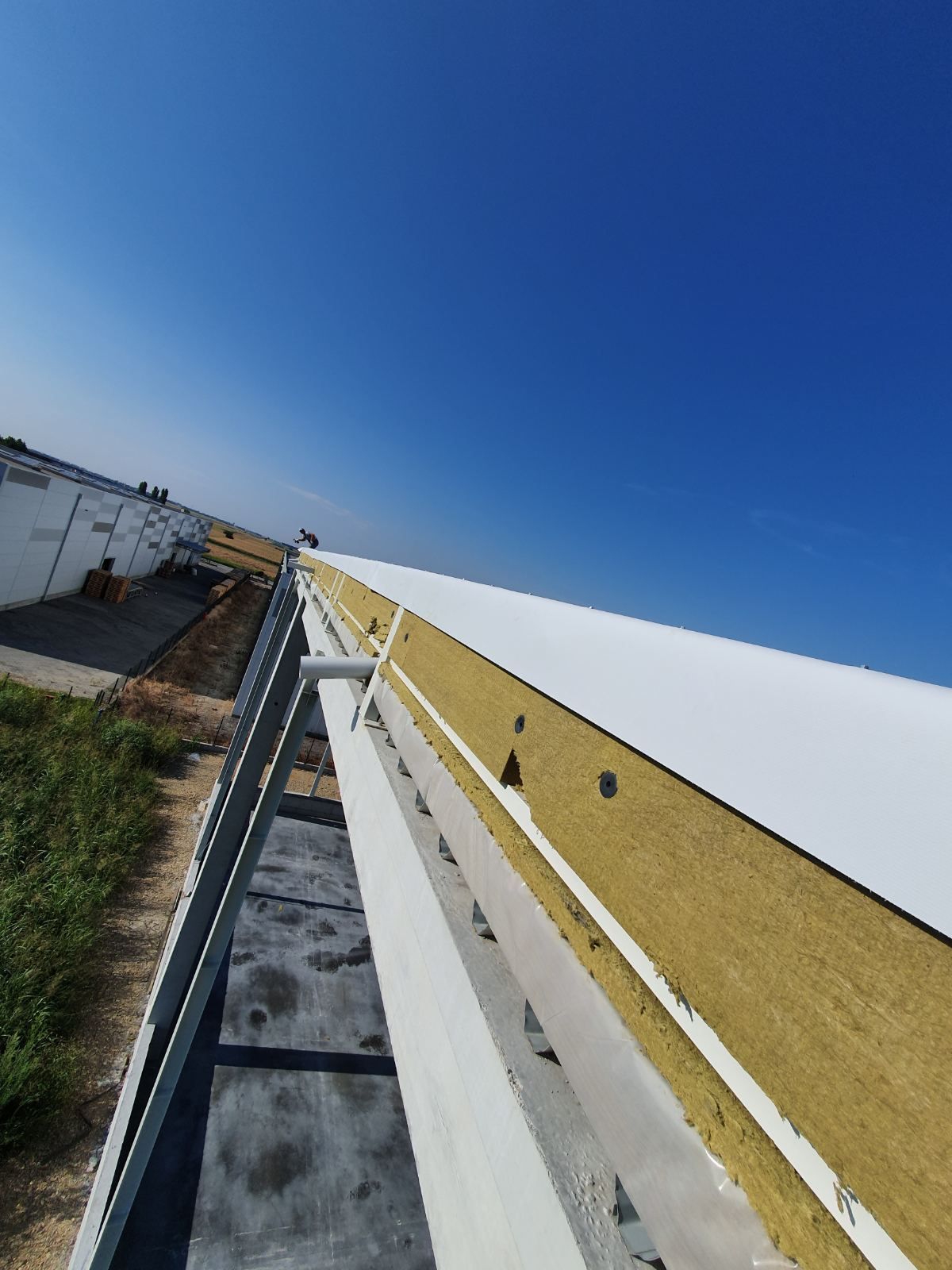
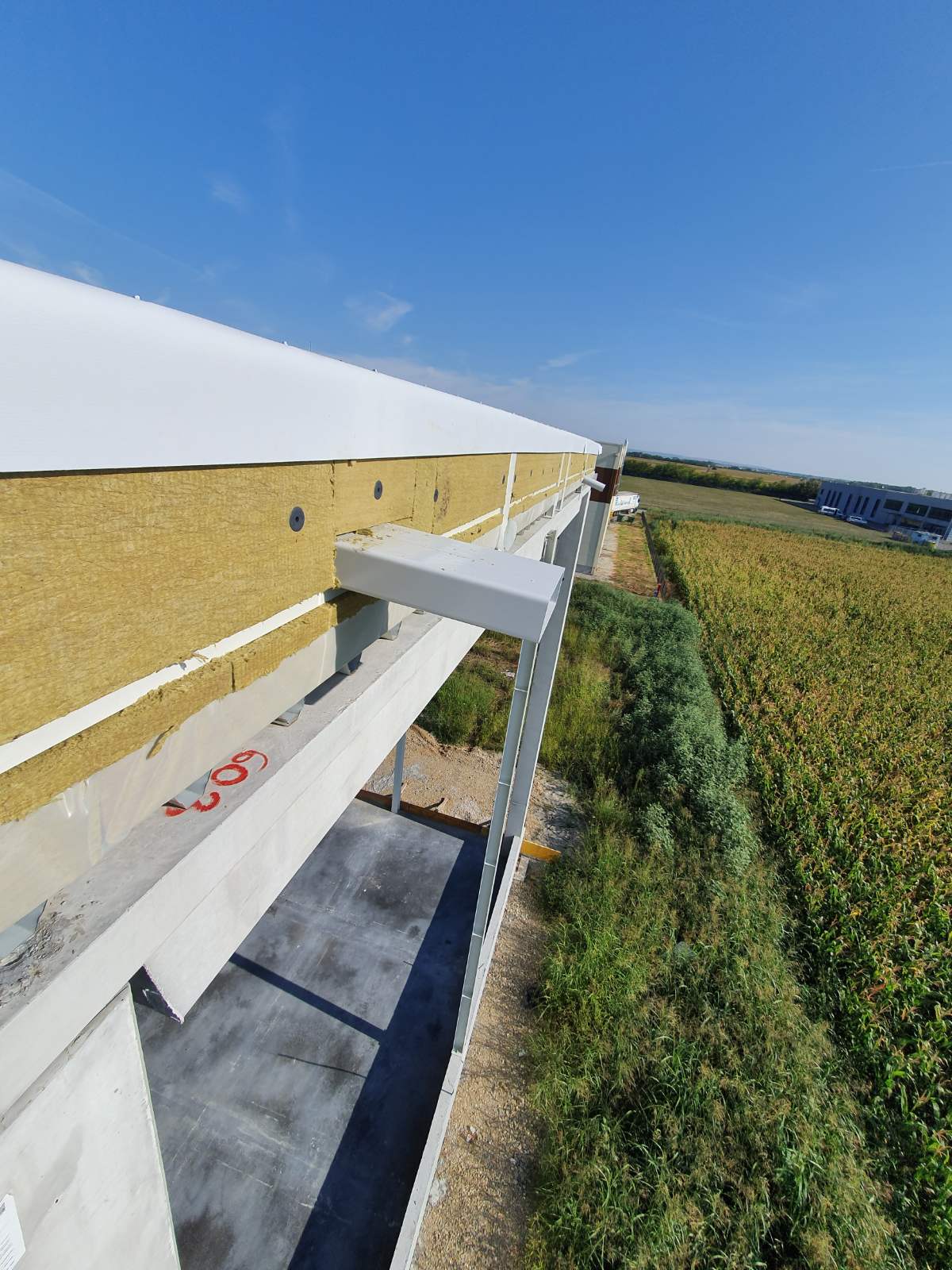
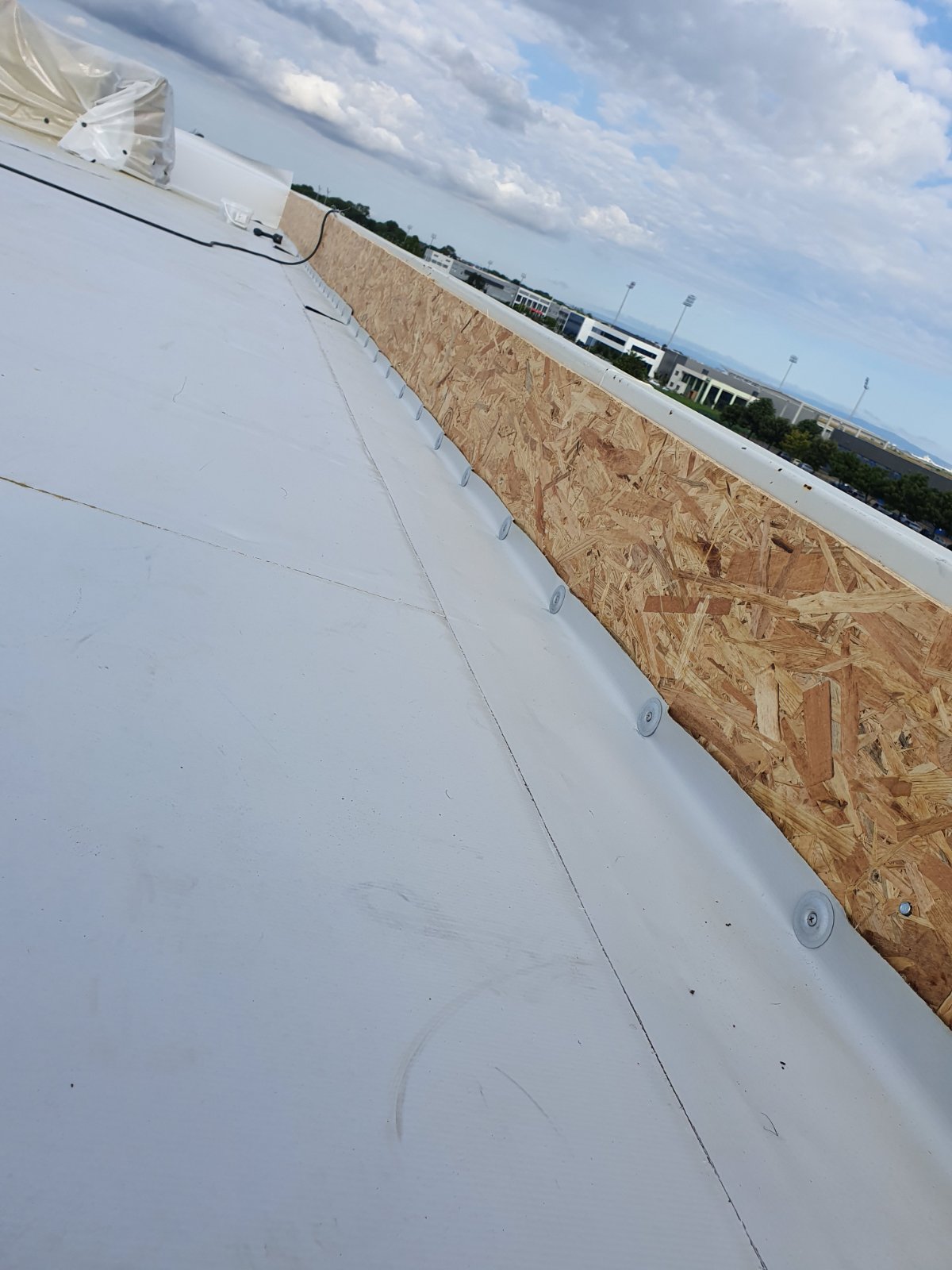
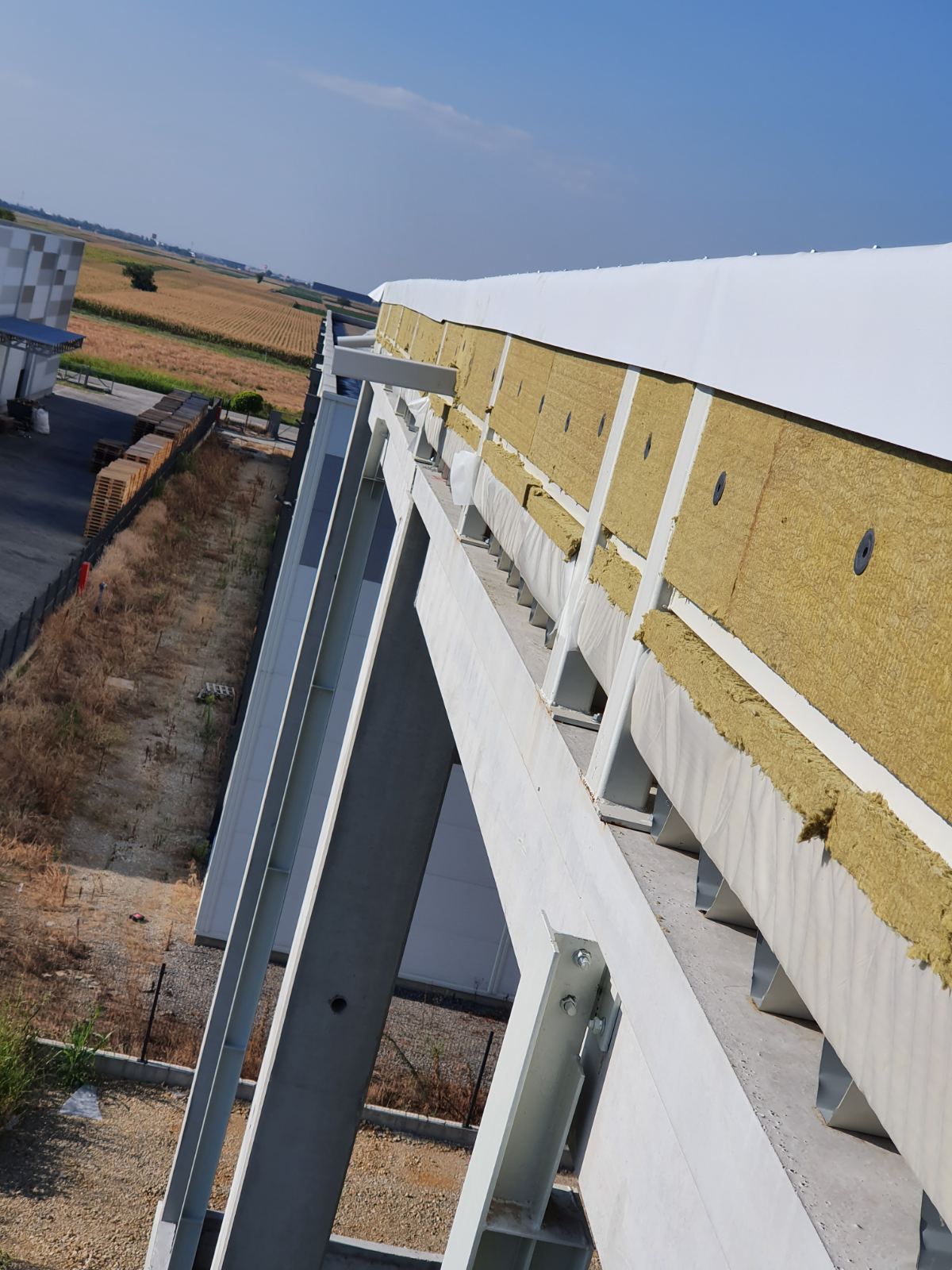
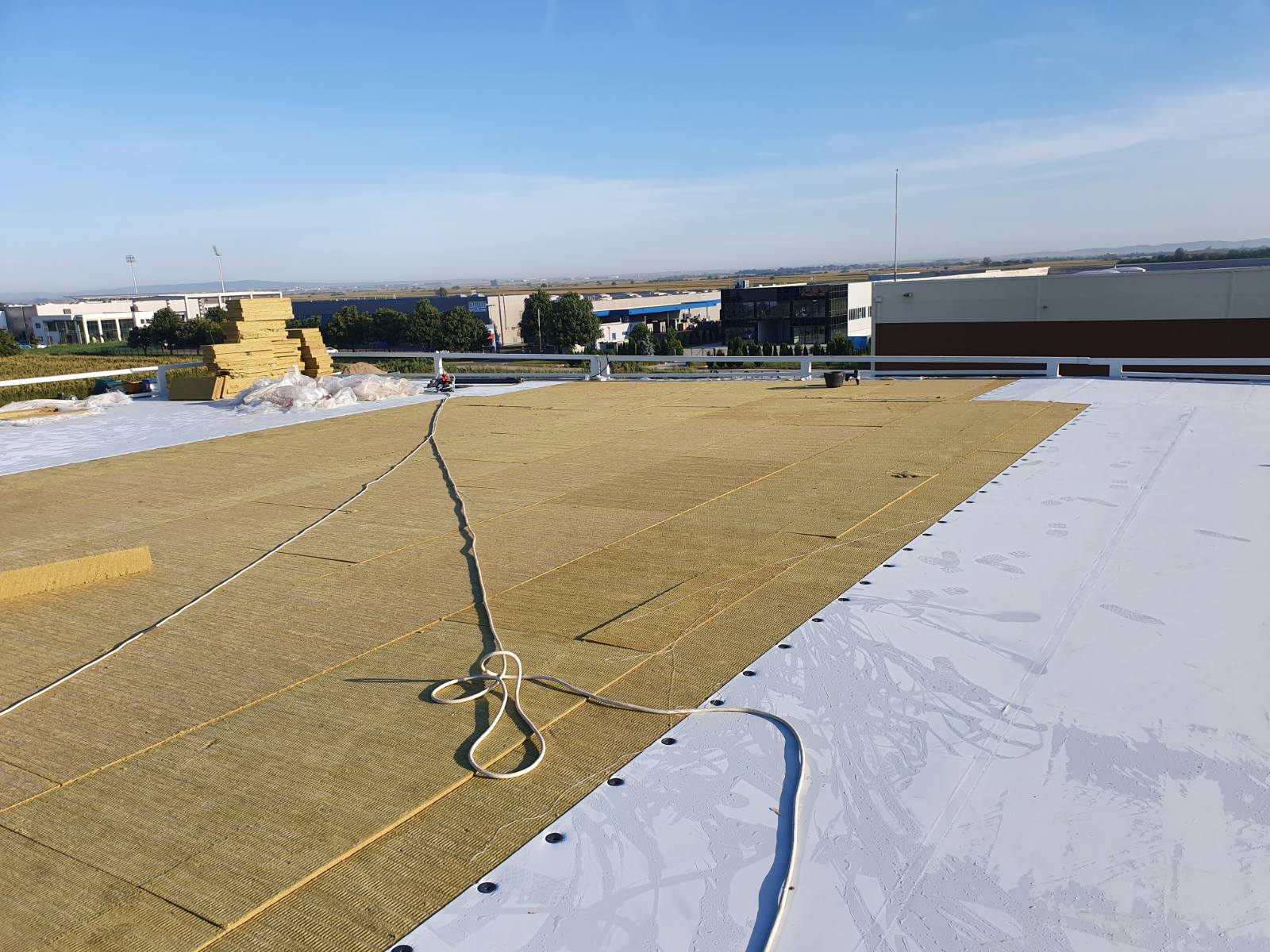
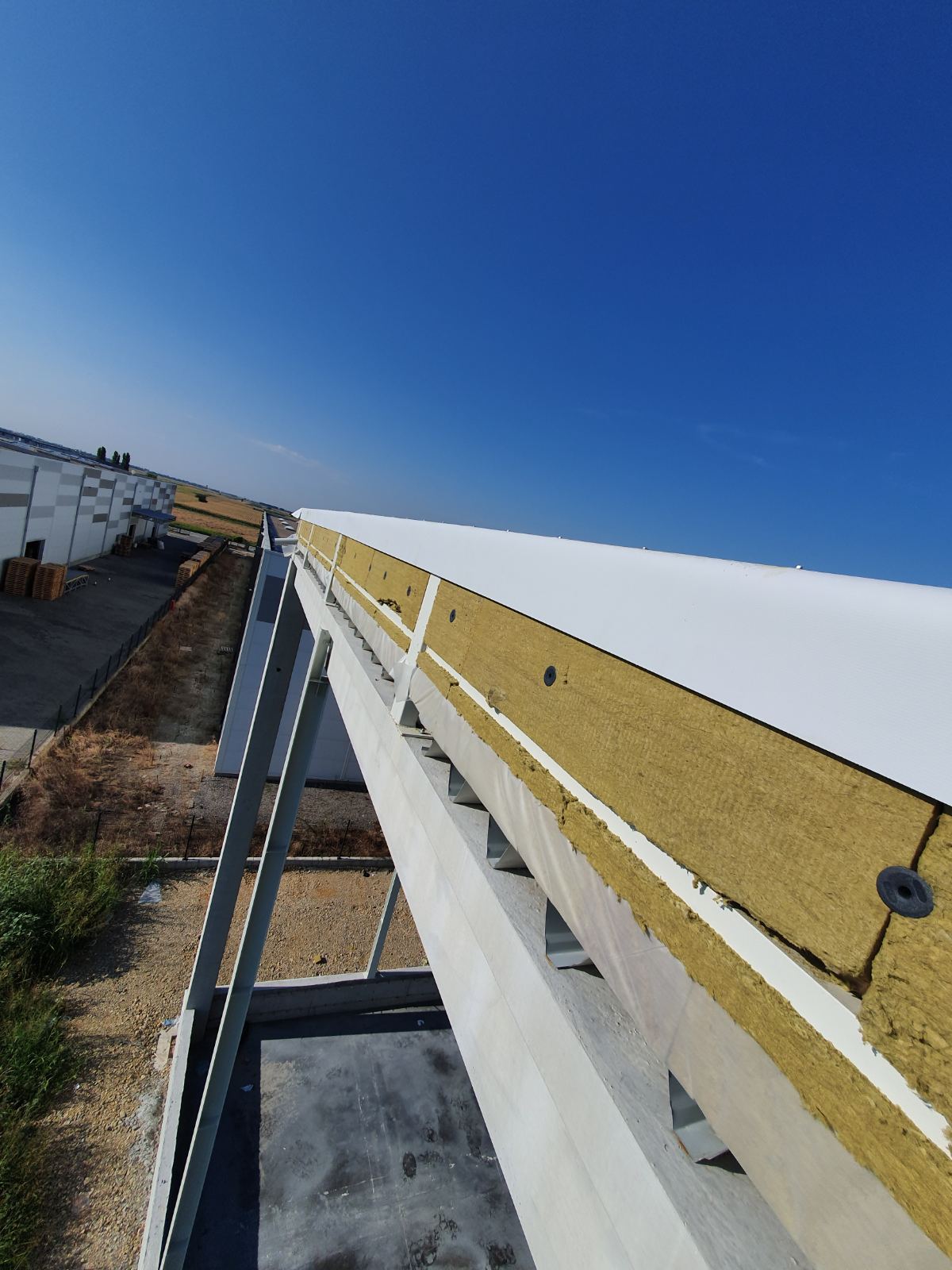
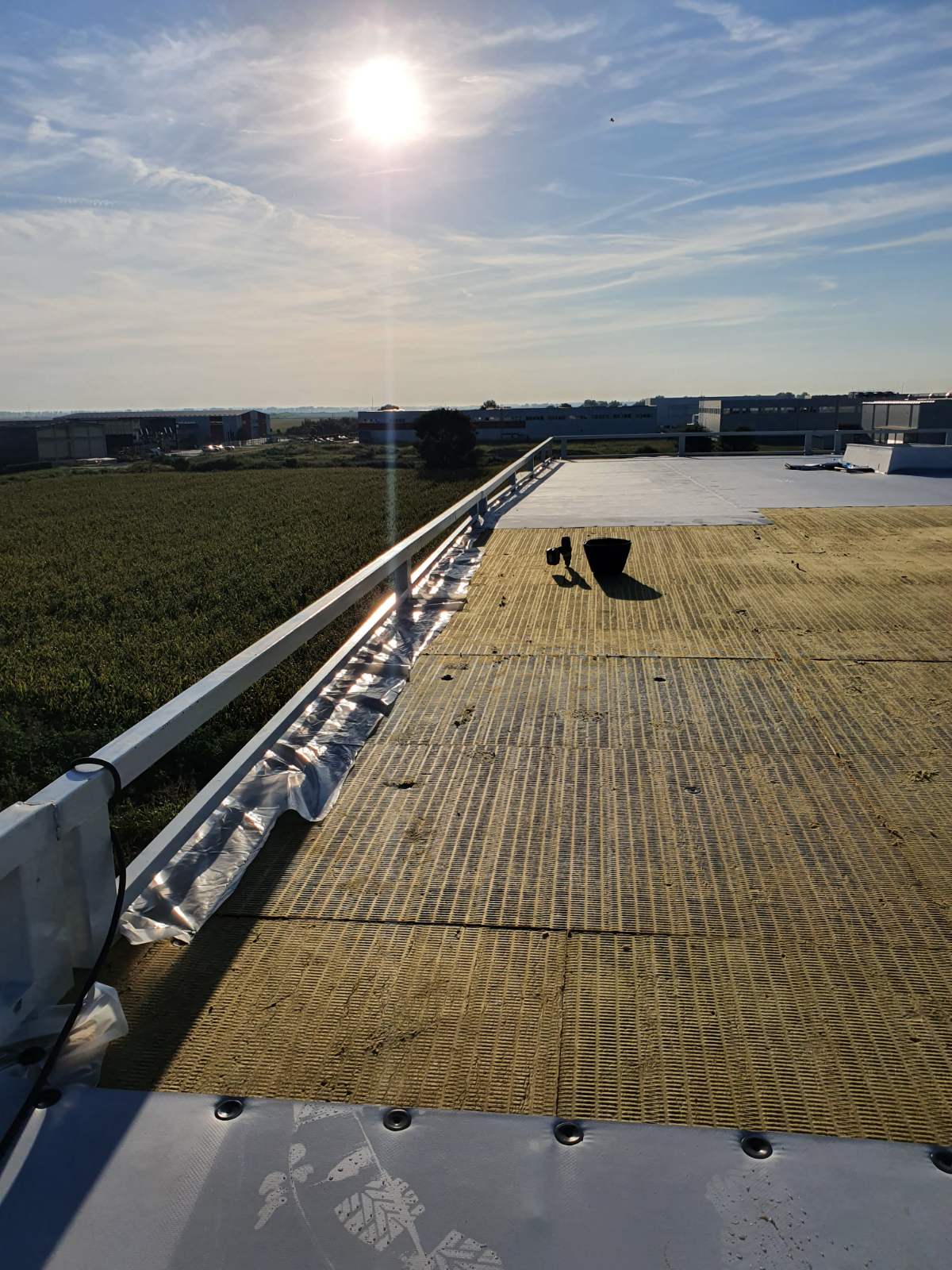
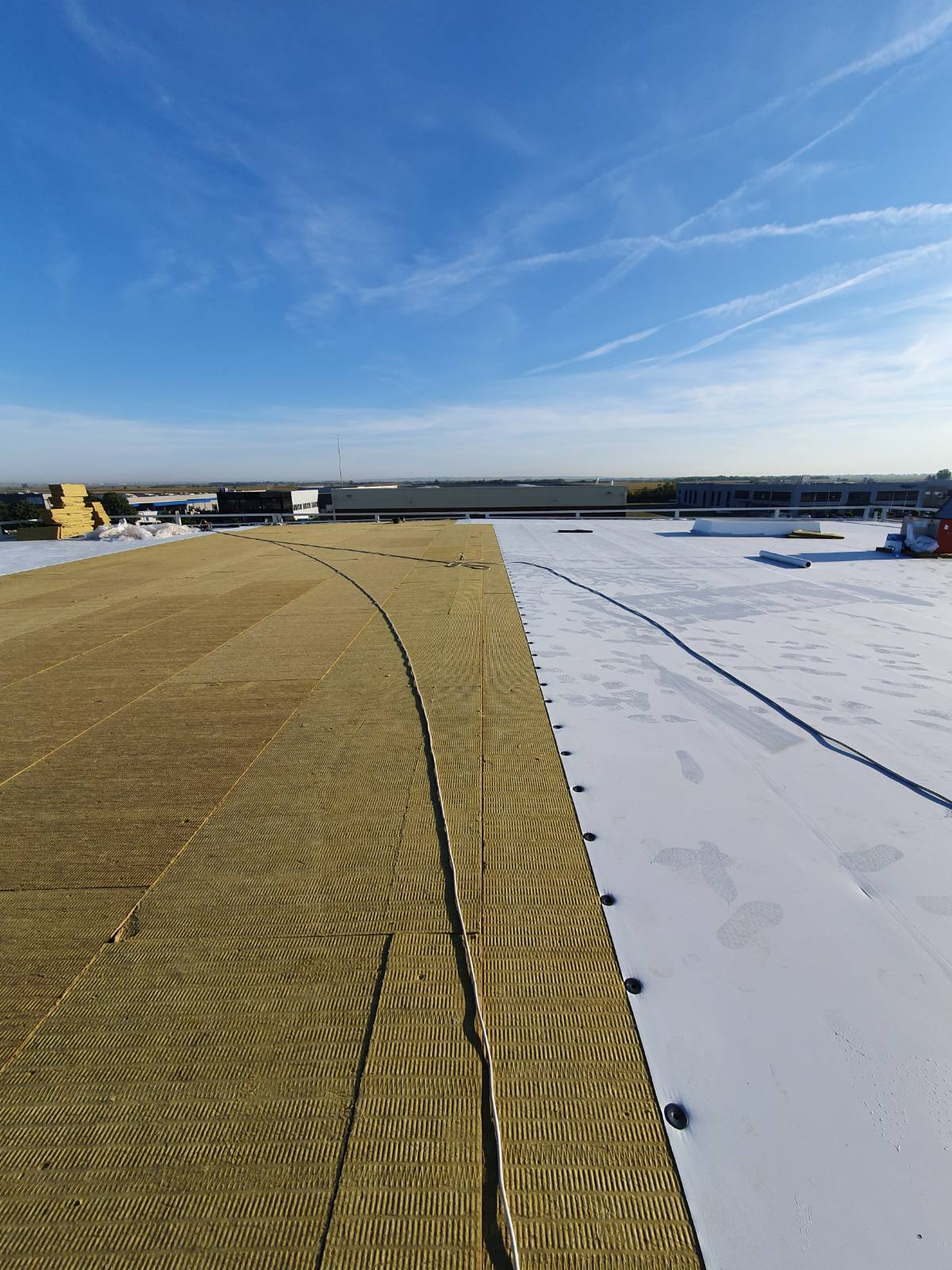
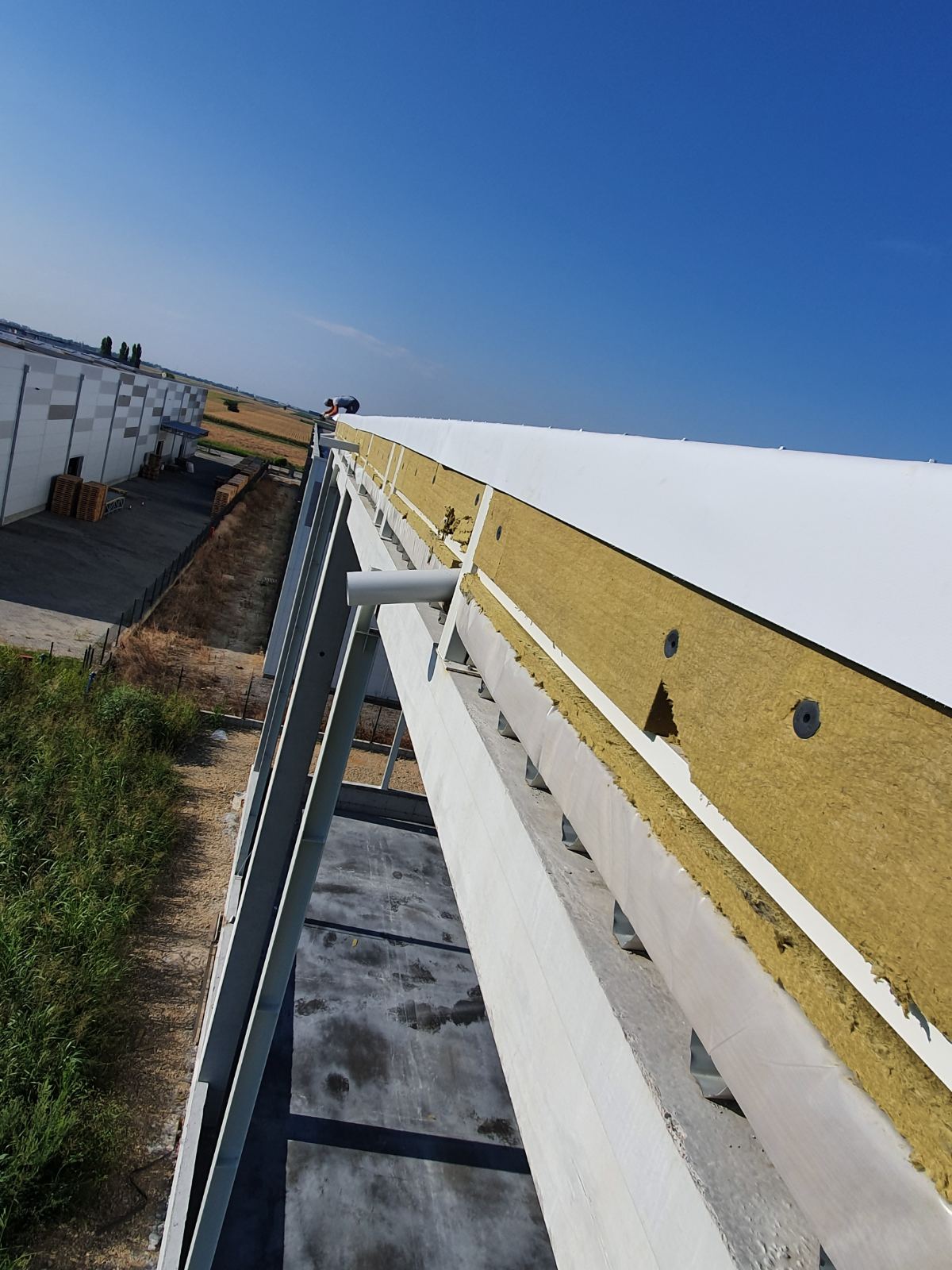
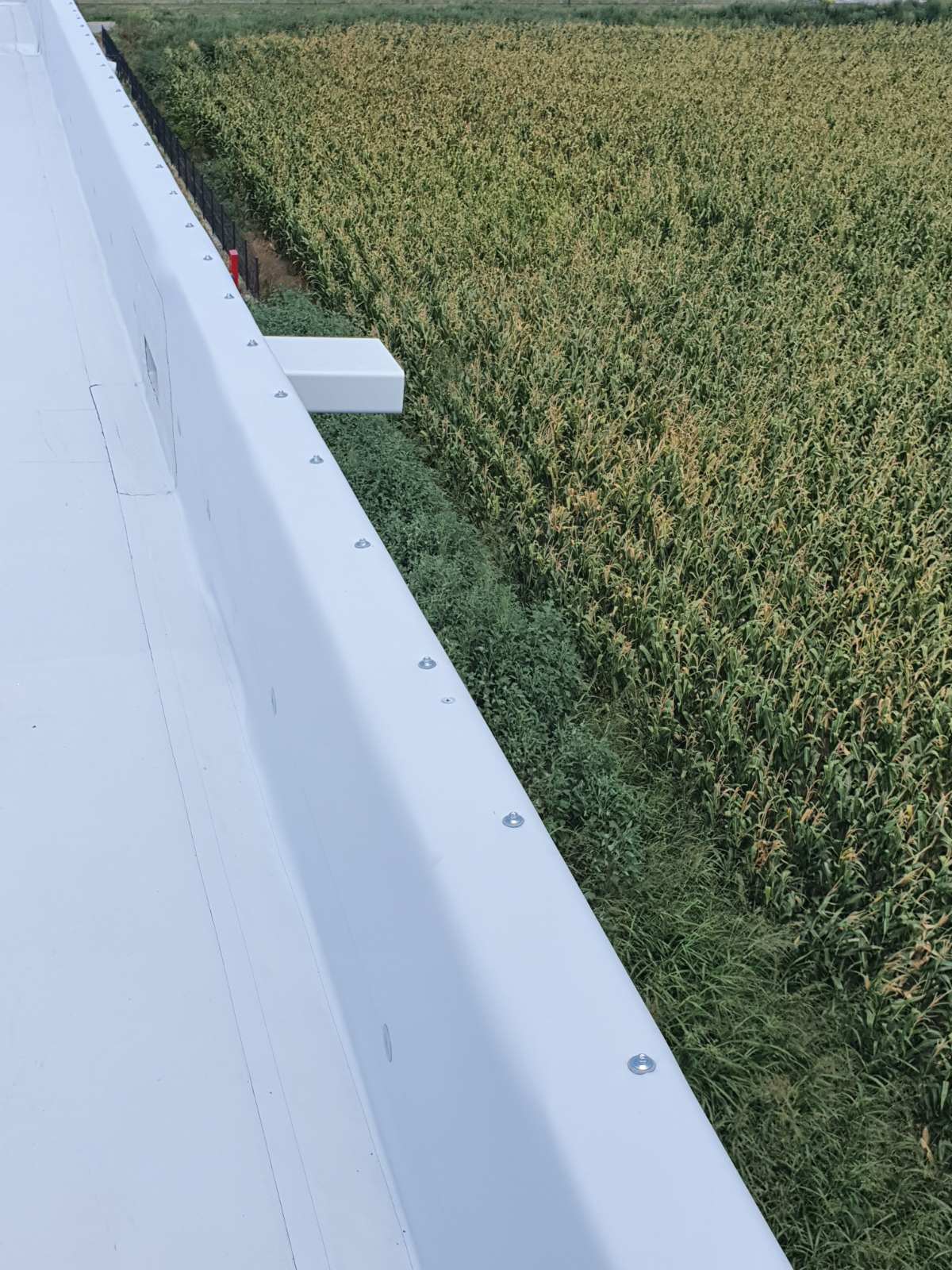
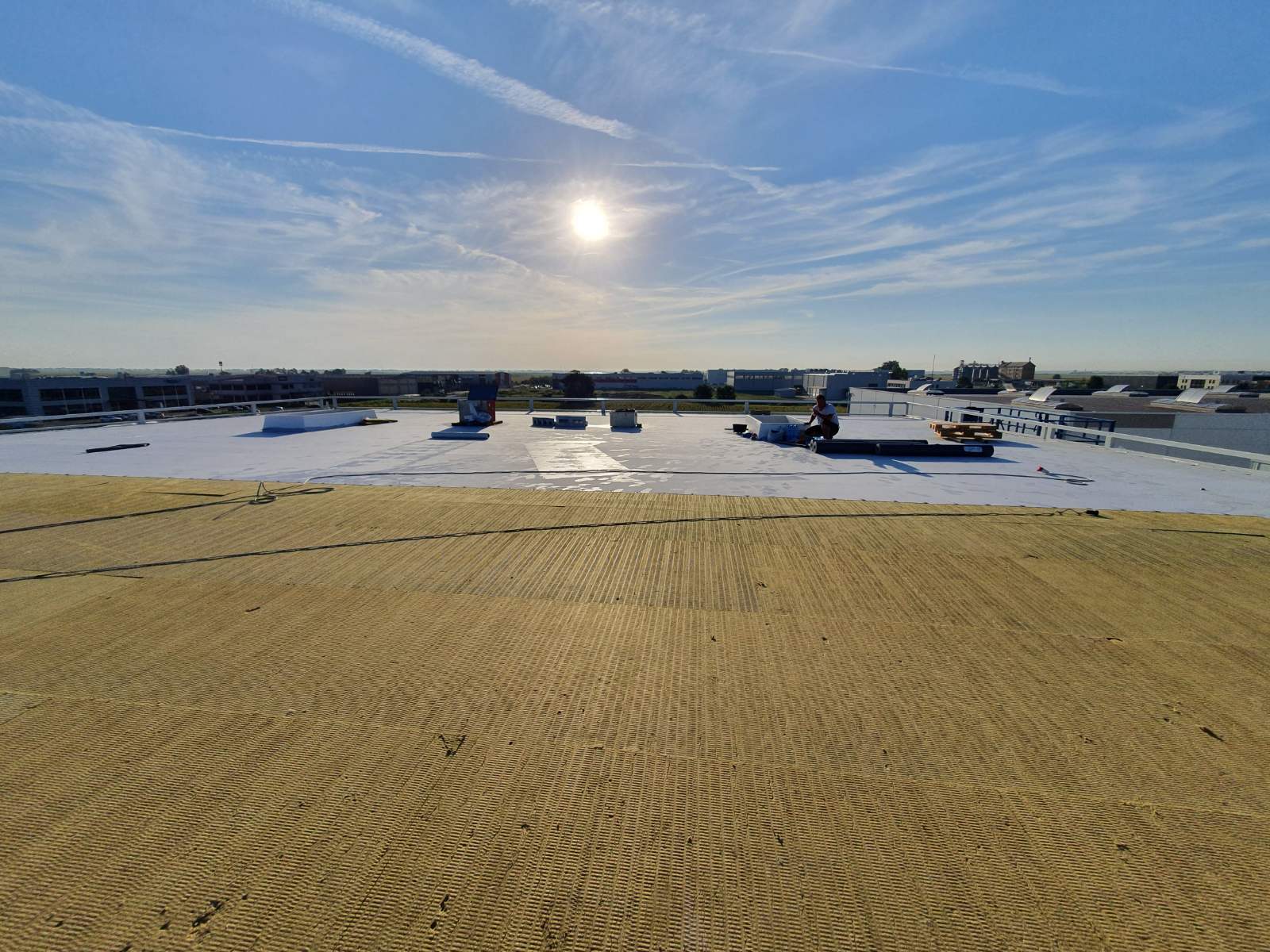
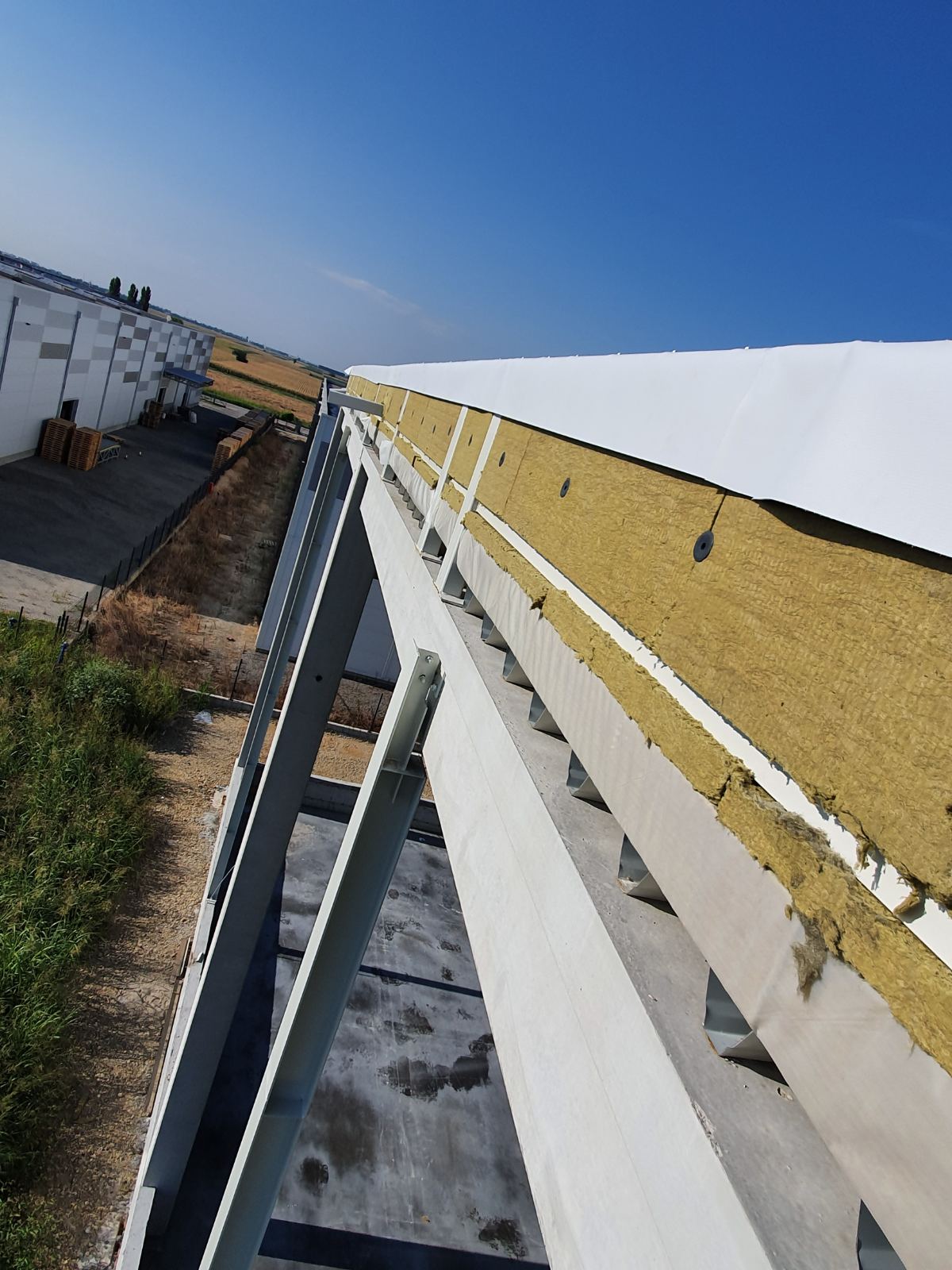
Photos during installation:
Upon project completion, the investor receives:
- A workmanship warranty from DVS Izolacija LLC
- A material warranty from the membrane manufacturer
In other words, the investor receives a complete warranty on the roof system.
This approach, combined with internal quality control, ensures that the investor receives a roof installed in accordance with professional standards, without the need for an external supervisory authority, and with a guarantee that the works were executed professionally, accurately, and according to applicable regulations.
Upon completion, the following documentation is provided to the investor:
- Construction log sheets
- Construction diary
- Handover report with warranty period
- Technical datasheets for installed materials
- Wind load calculation
- Certification documents for installed materials
- Fire resistance certification for the installed roofing system
- Maintenance and operation manual for waterproofing by DVS Izolacija LLC
- Waterproofing membrane manufacturer’s warranty
All works on this project were carried out professionally, meticulously, and within the shortest possible timeframe.
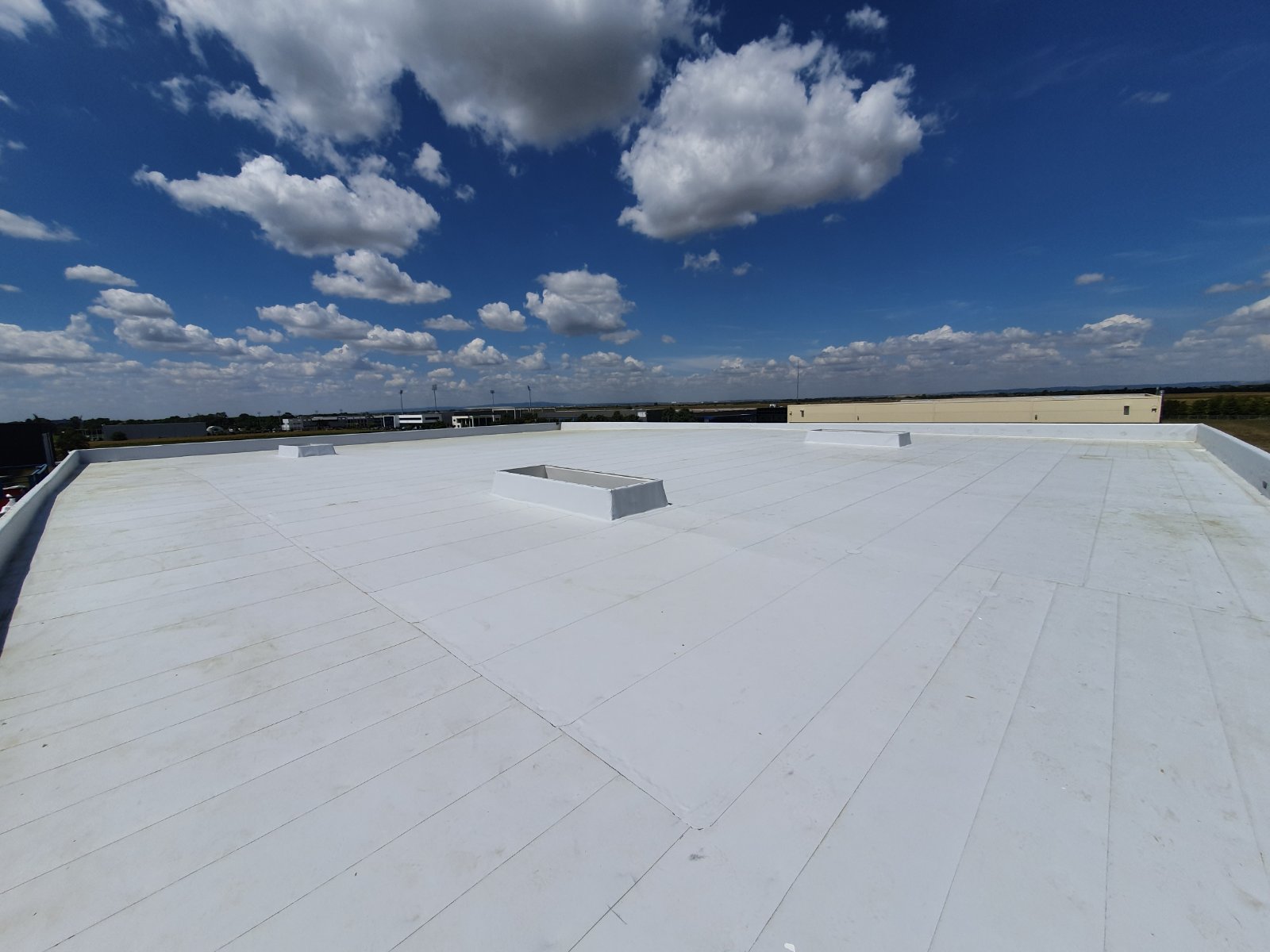
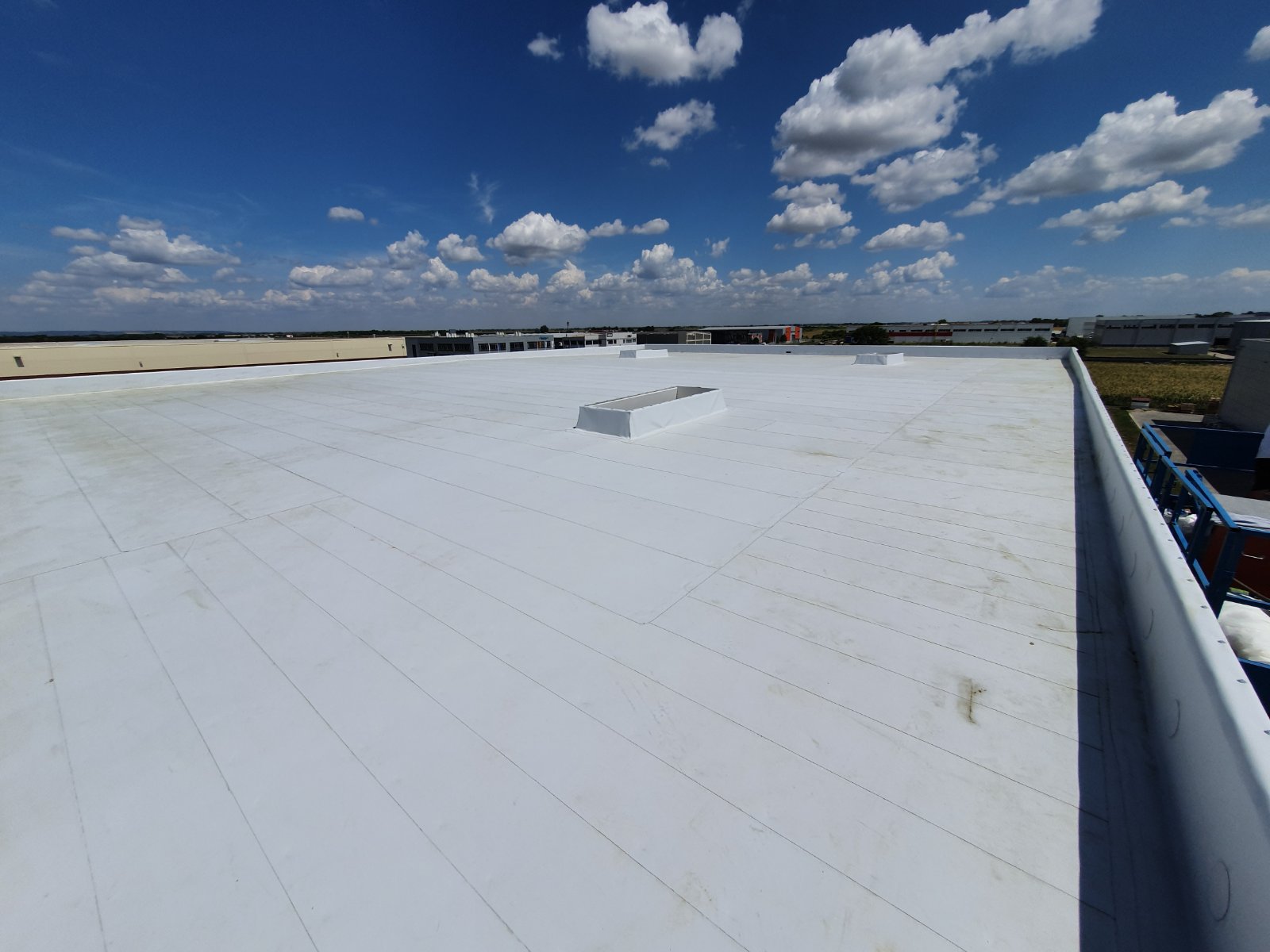
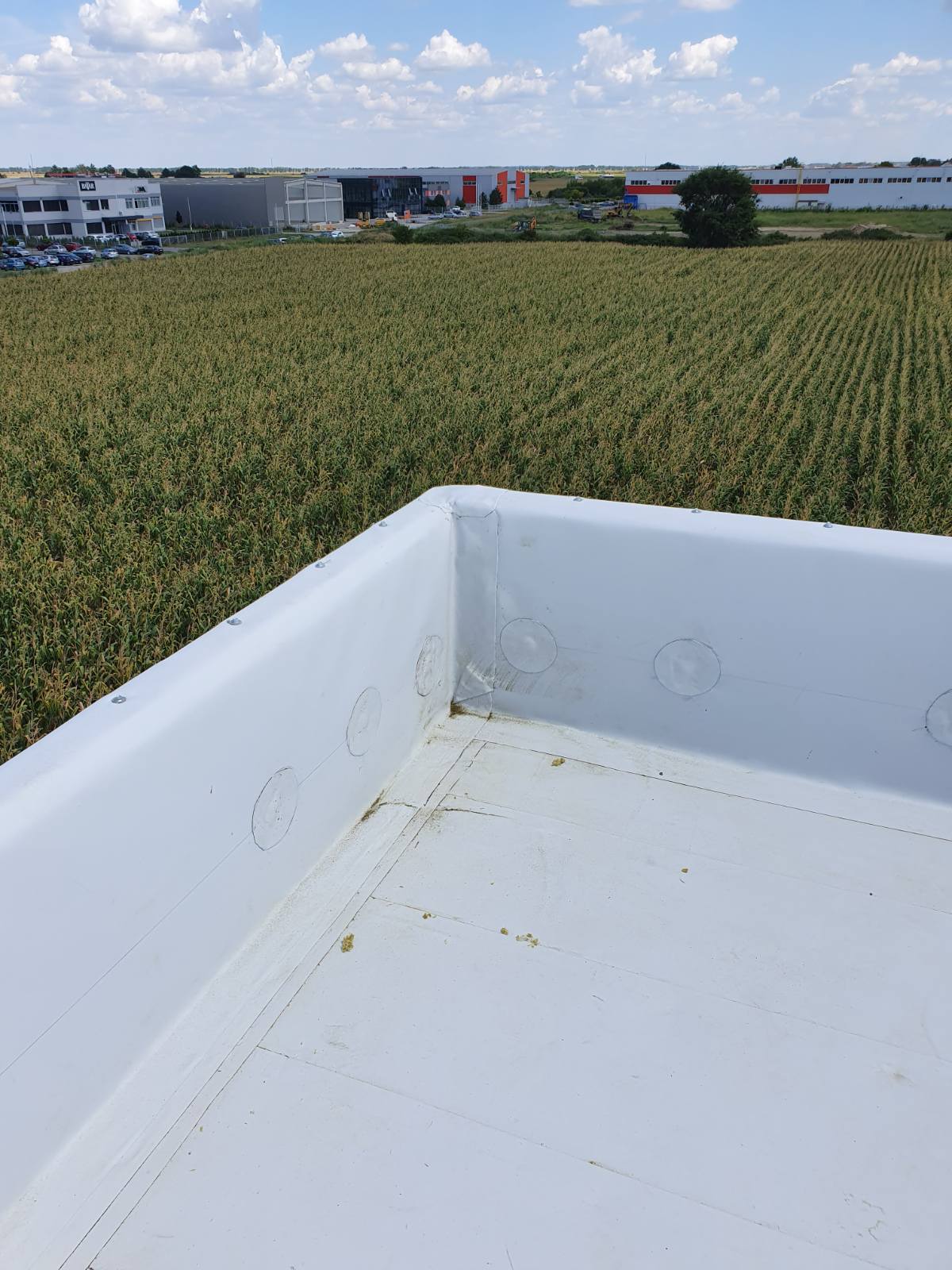
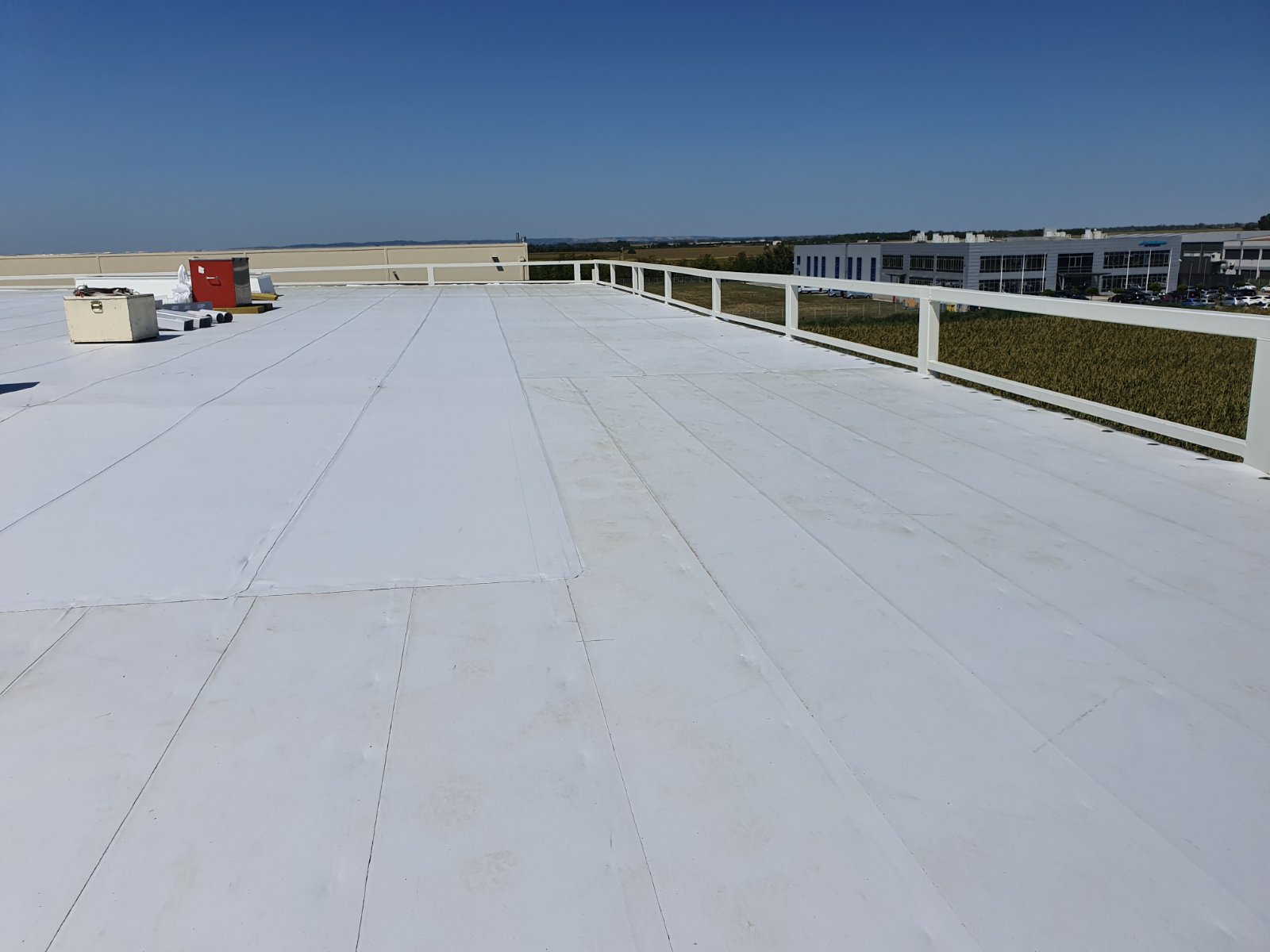
- Installed waterproofing membrane ‘Sikaplan G-15’ area: approx. P = 850 m².
- Installed thermal insulation ‘Roofrock 50 Plus 15 cm’ area: approx. P = 760 m².
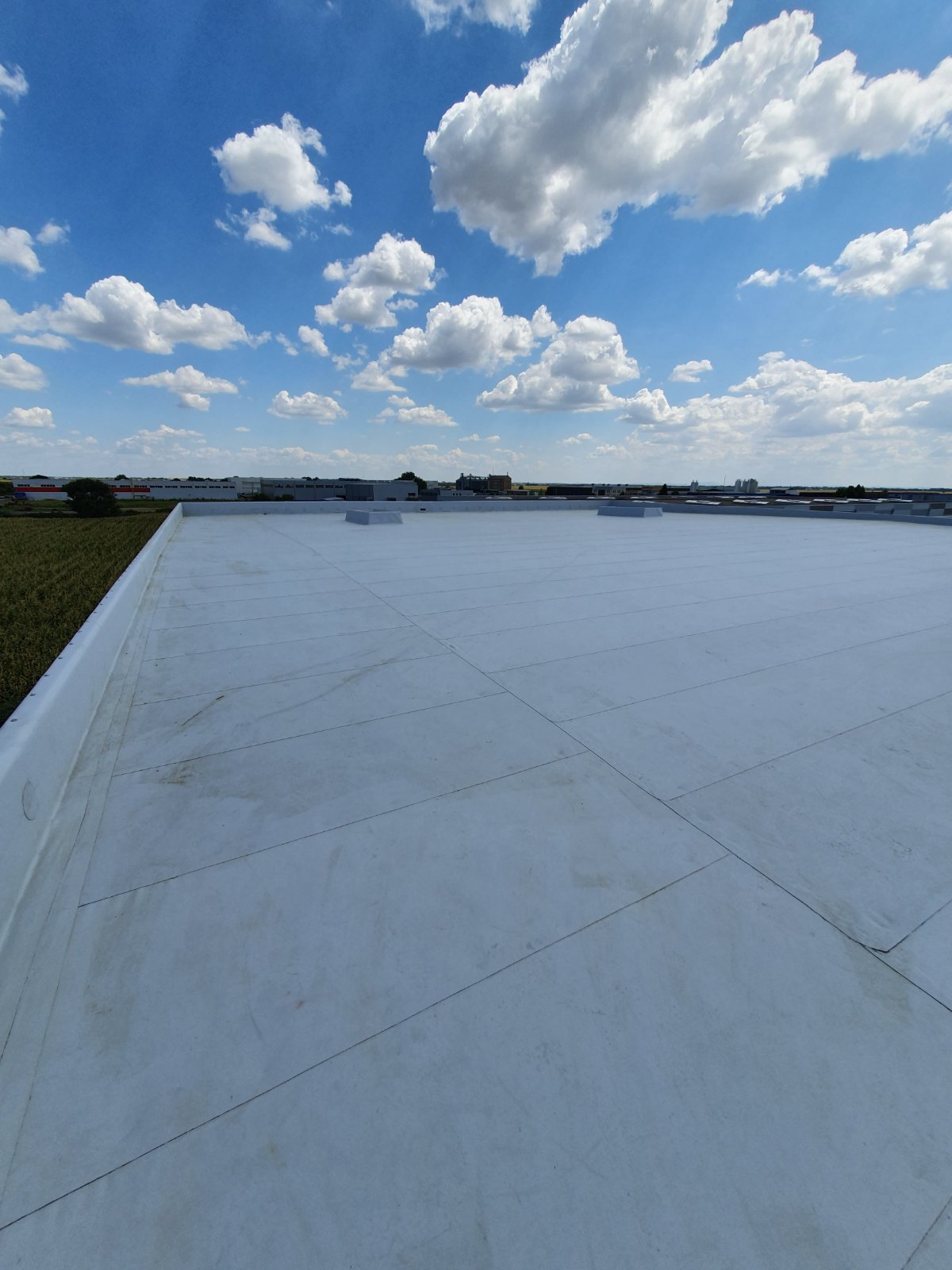
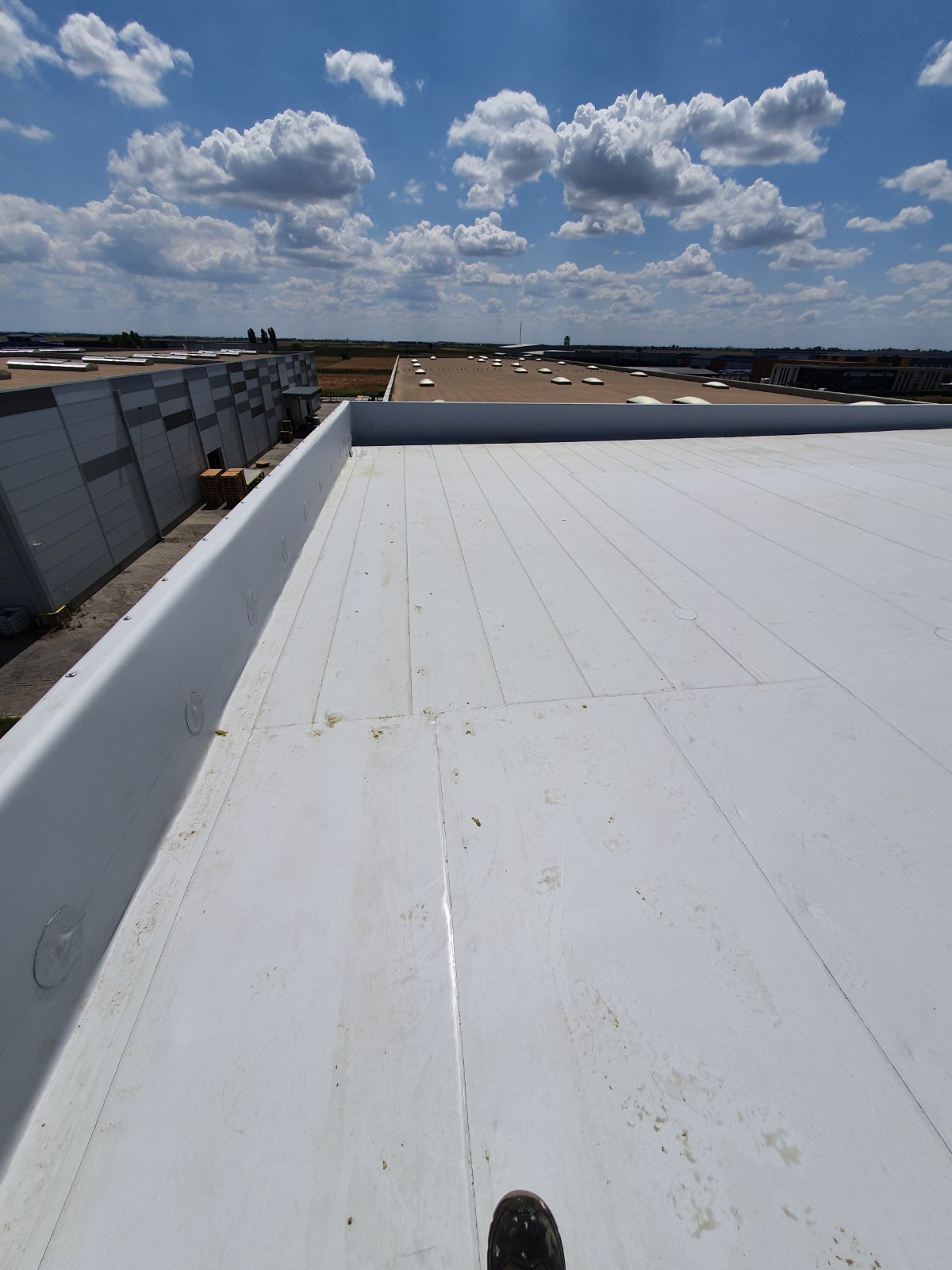
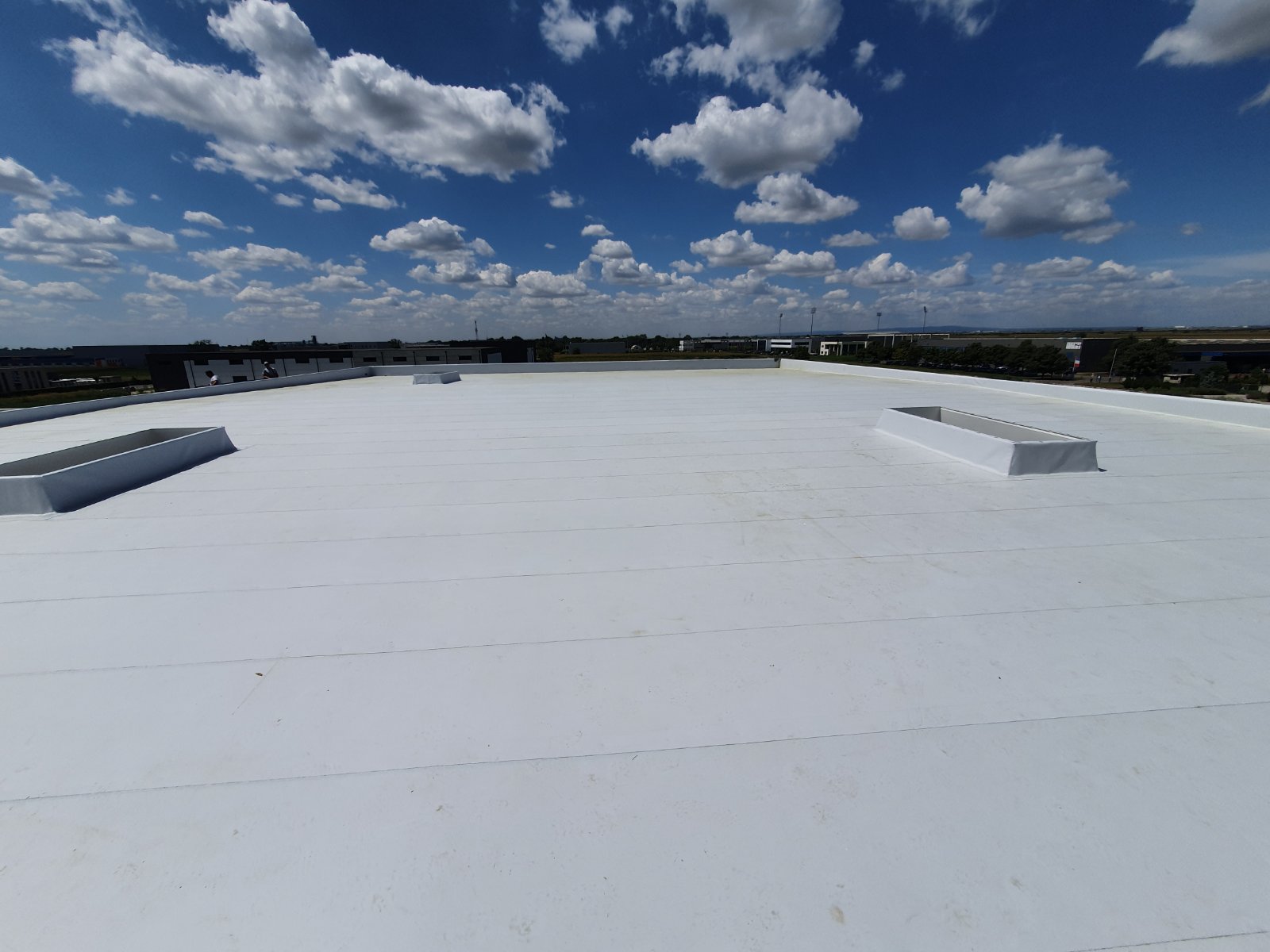
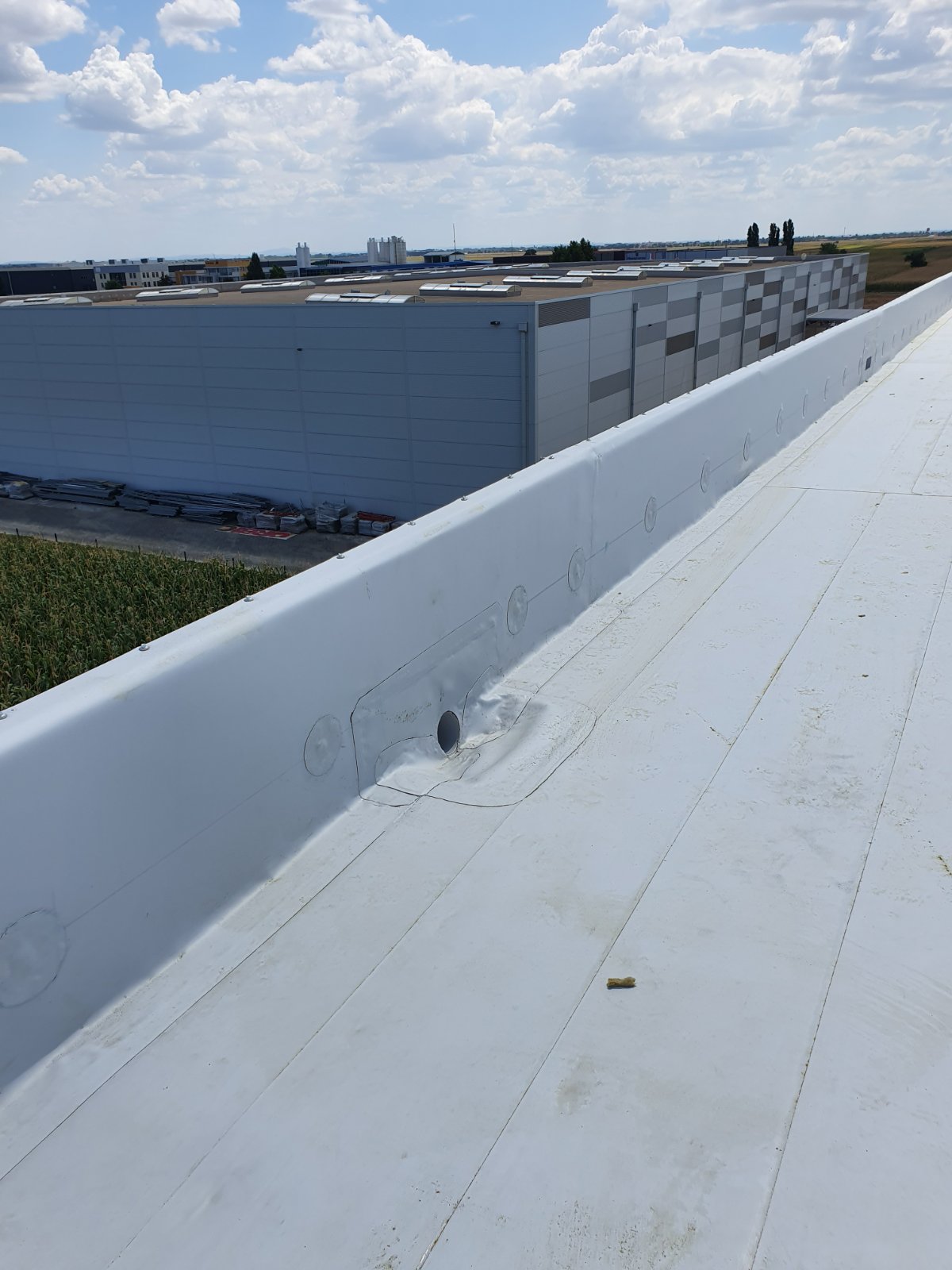
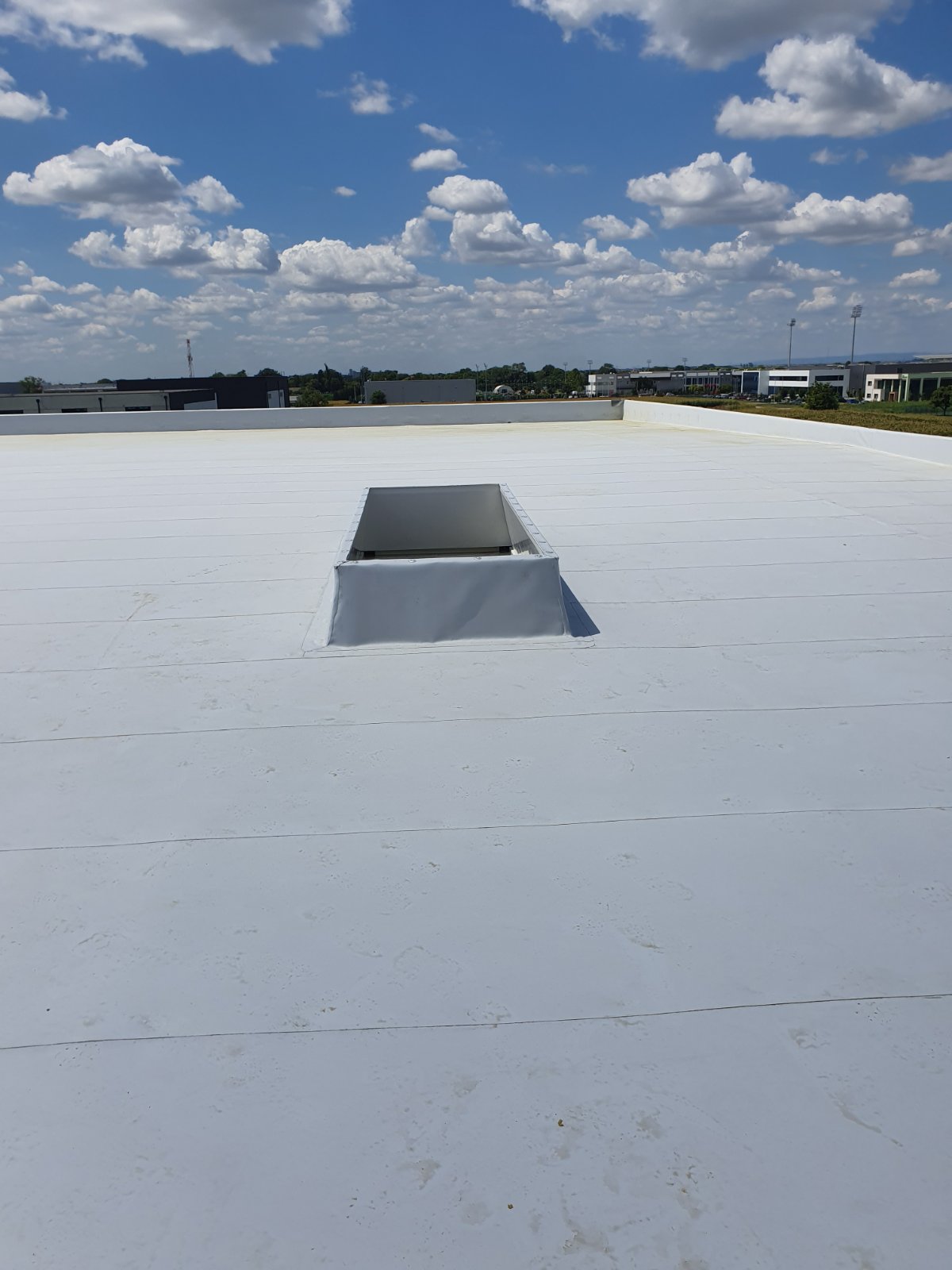
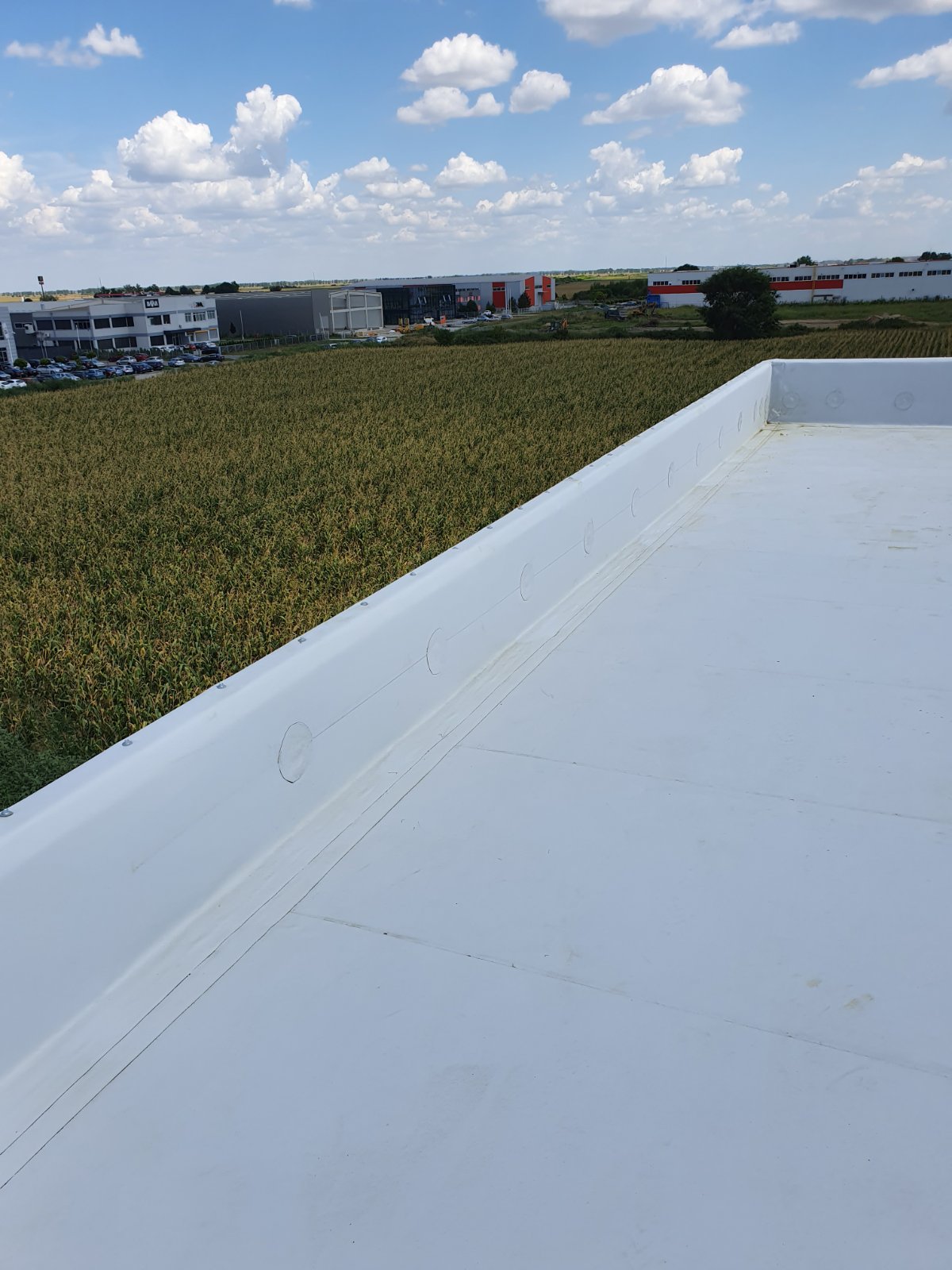
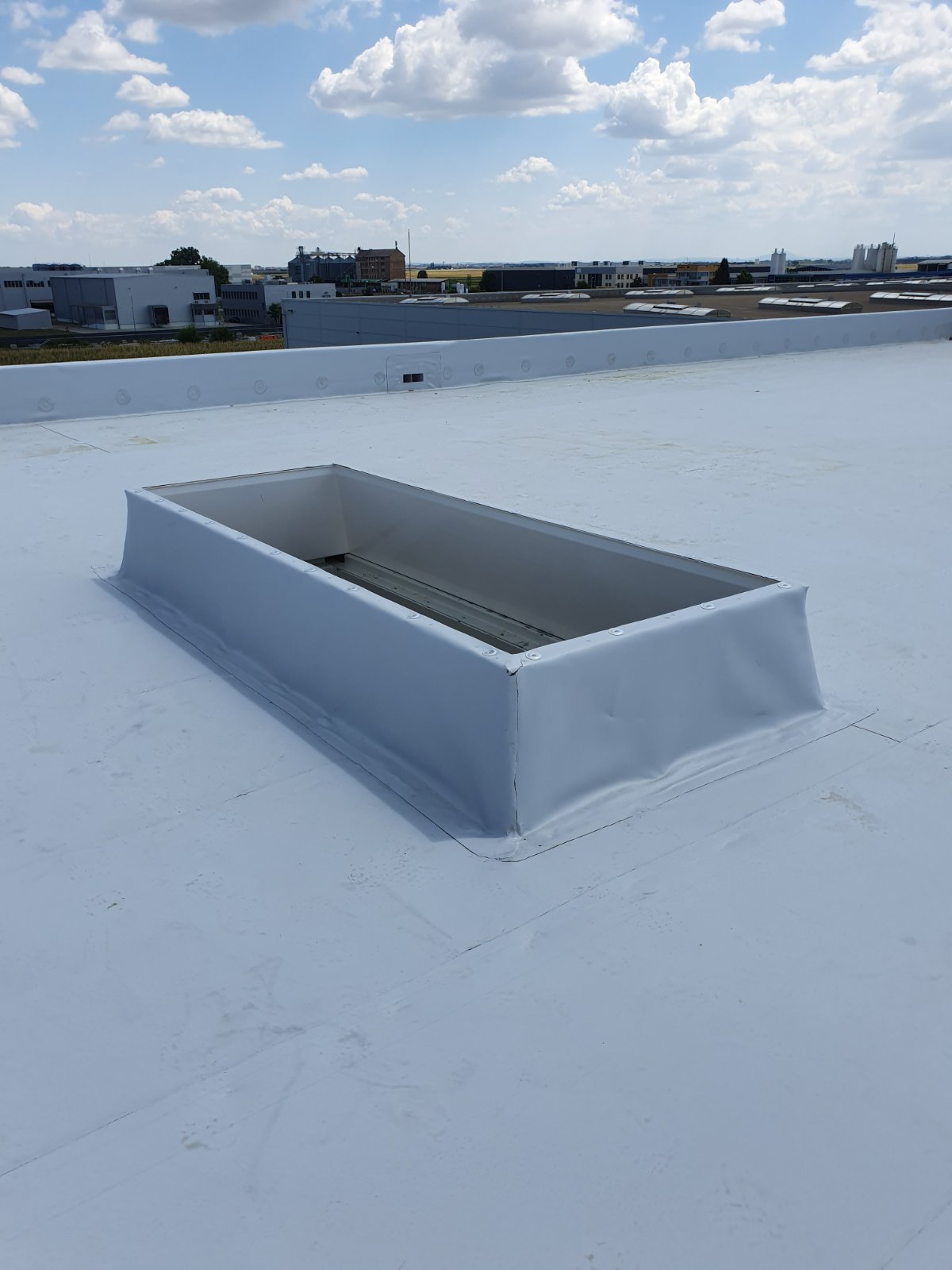
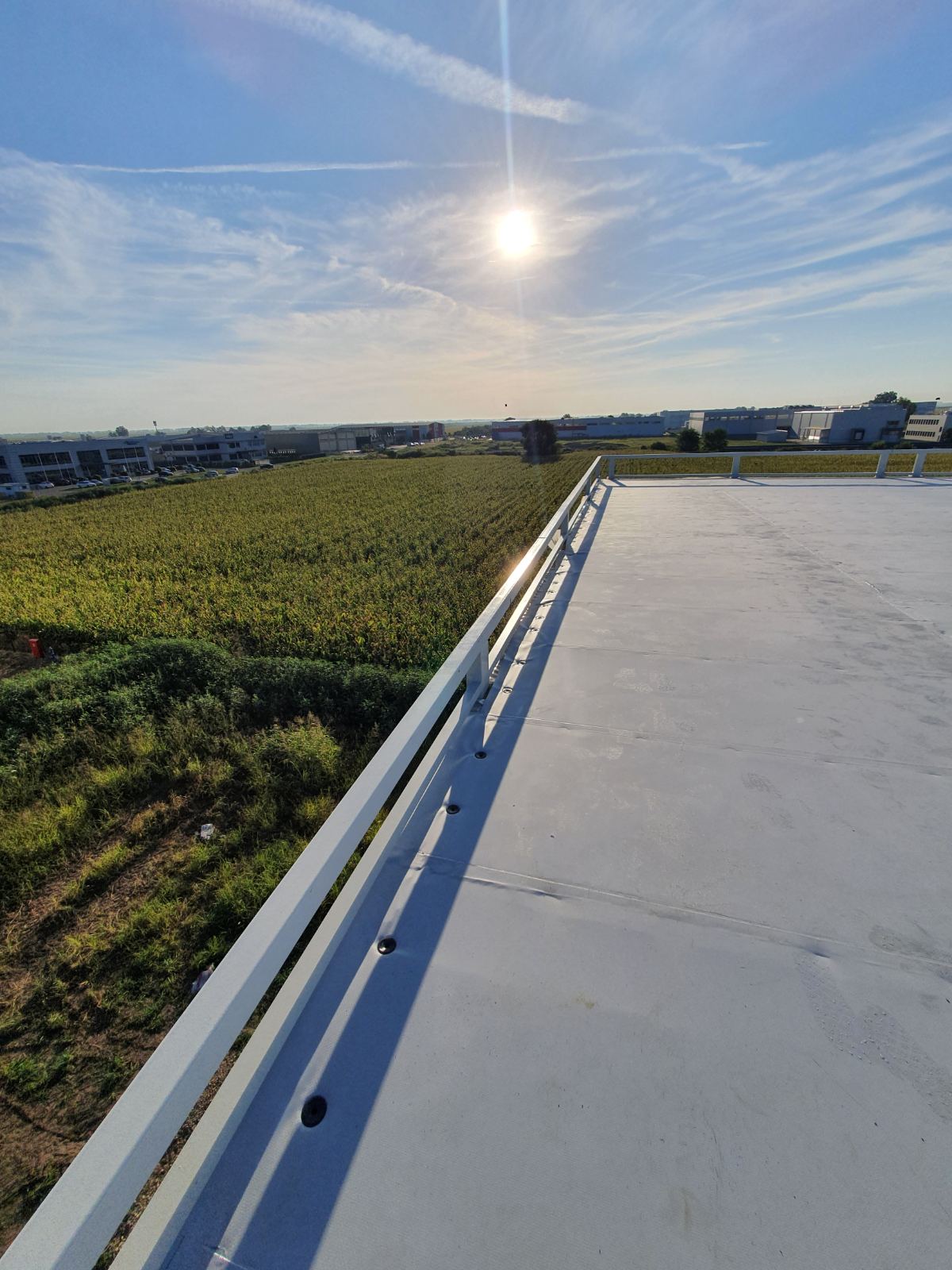
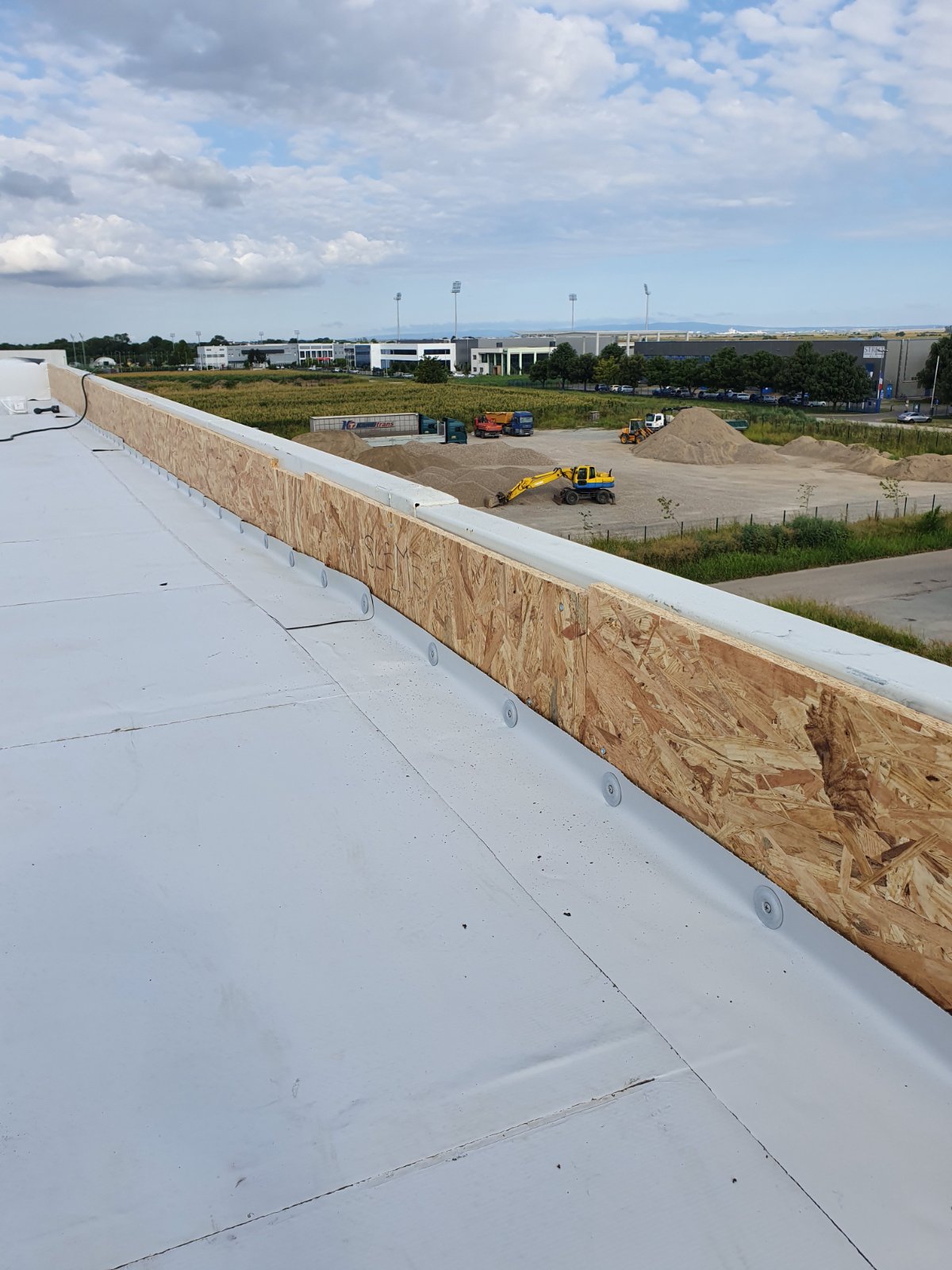
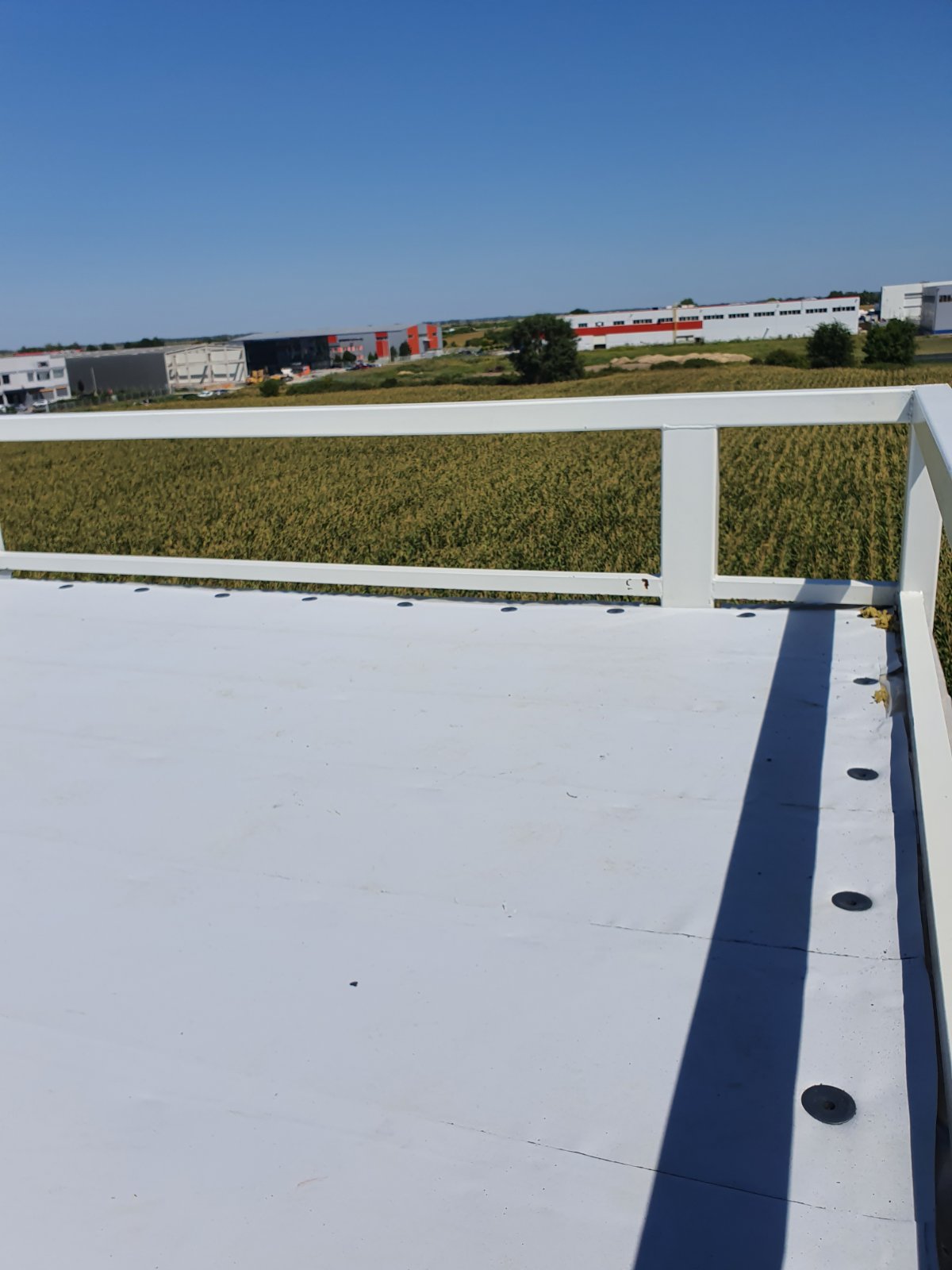
Photos after completion of the works: