- 07.03.2023.
- -
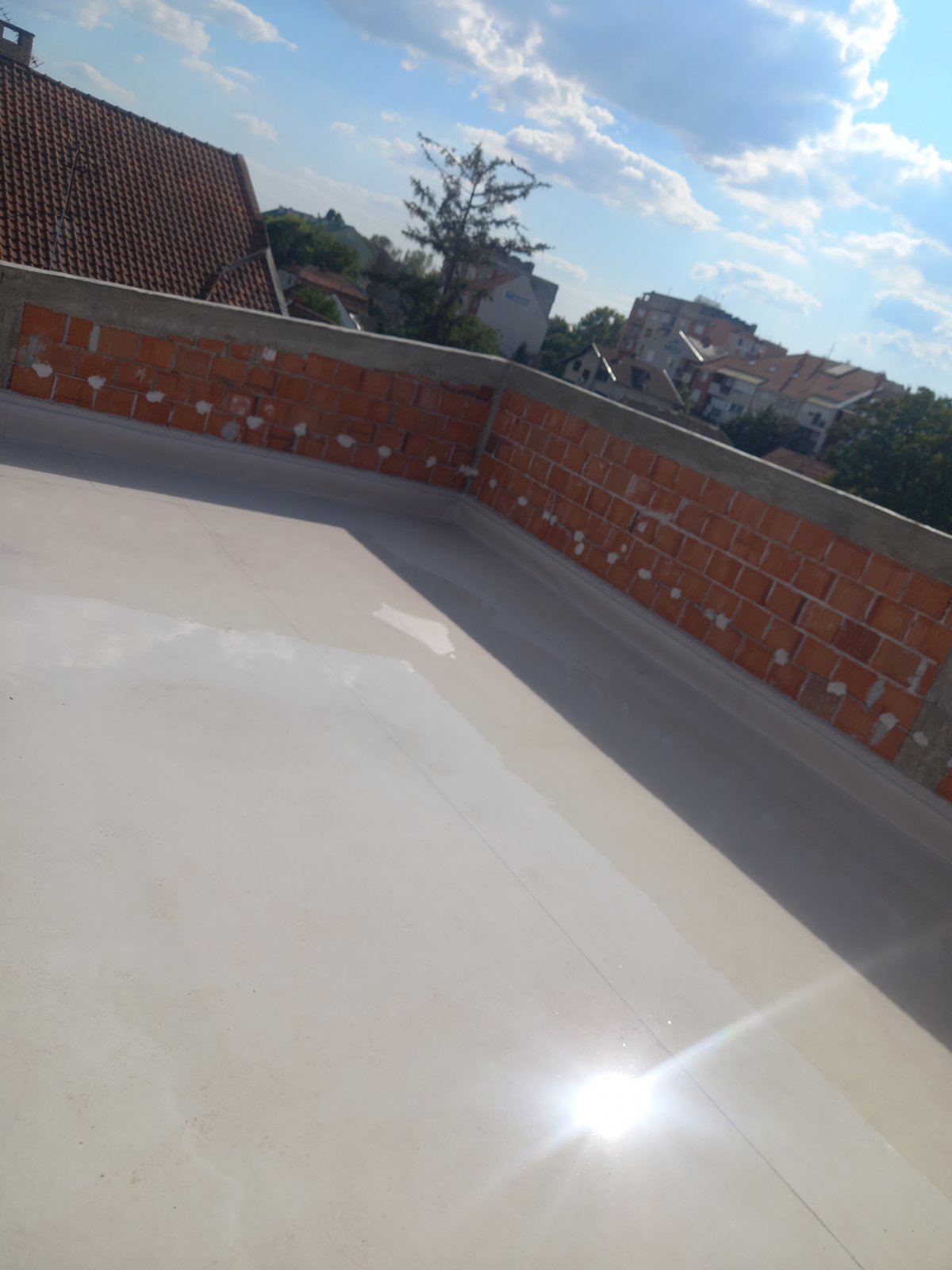
Depending on the investor’s requirements and the feasibility of execution based on the roof (or terrace) structure, it is possible to conduct a waterproofing integrity test known as the ‘roof hydrotest‘.
This type of testing can be performed on both new constructions and renovated roof waterproofing systems. The hydrotest can only be conducted if the roof structure has sufficient load-bearing capacity to withstand the weight of the accumulated water on the flat roof, which must be approved by the project designer, the responsible contractor, or the site supervisor.
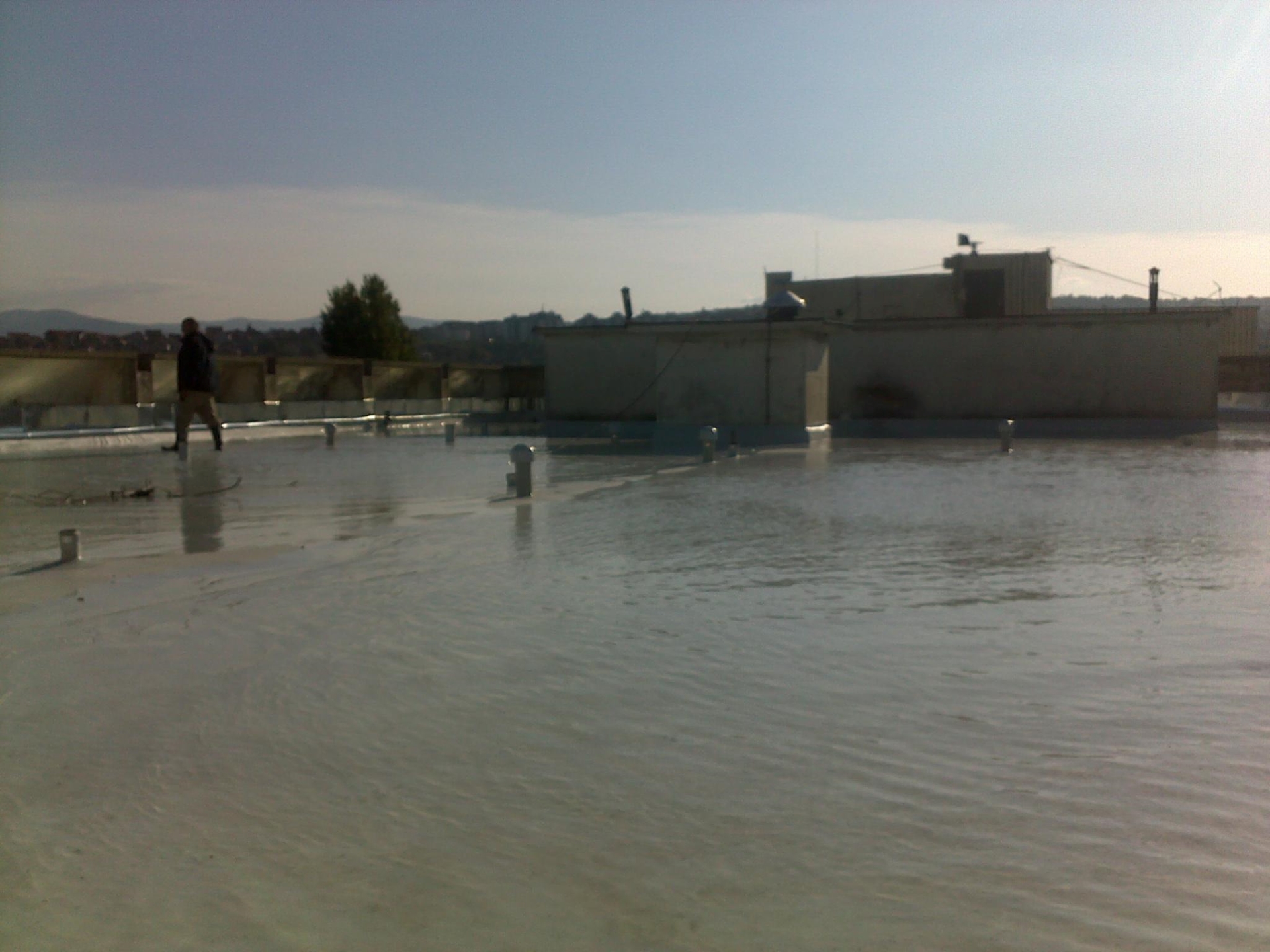
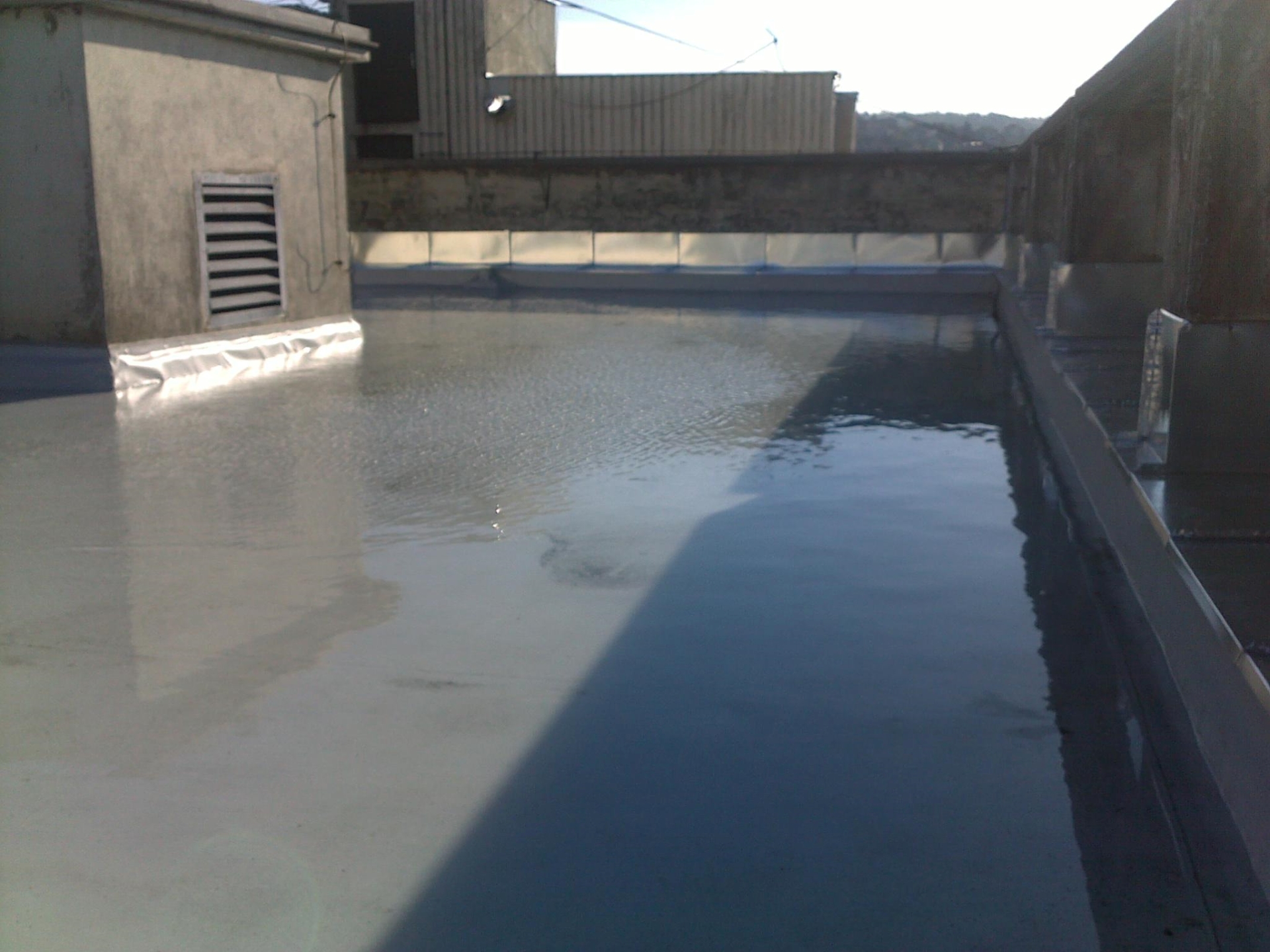
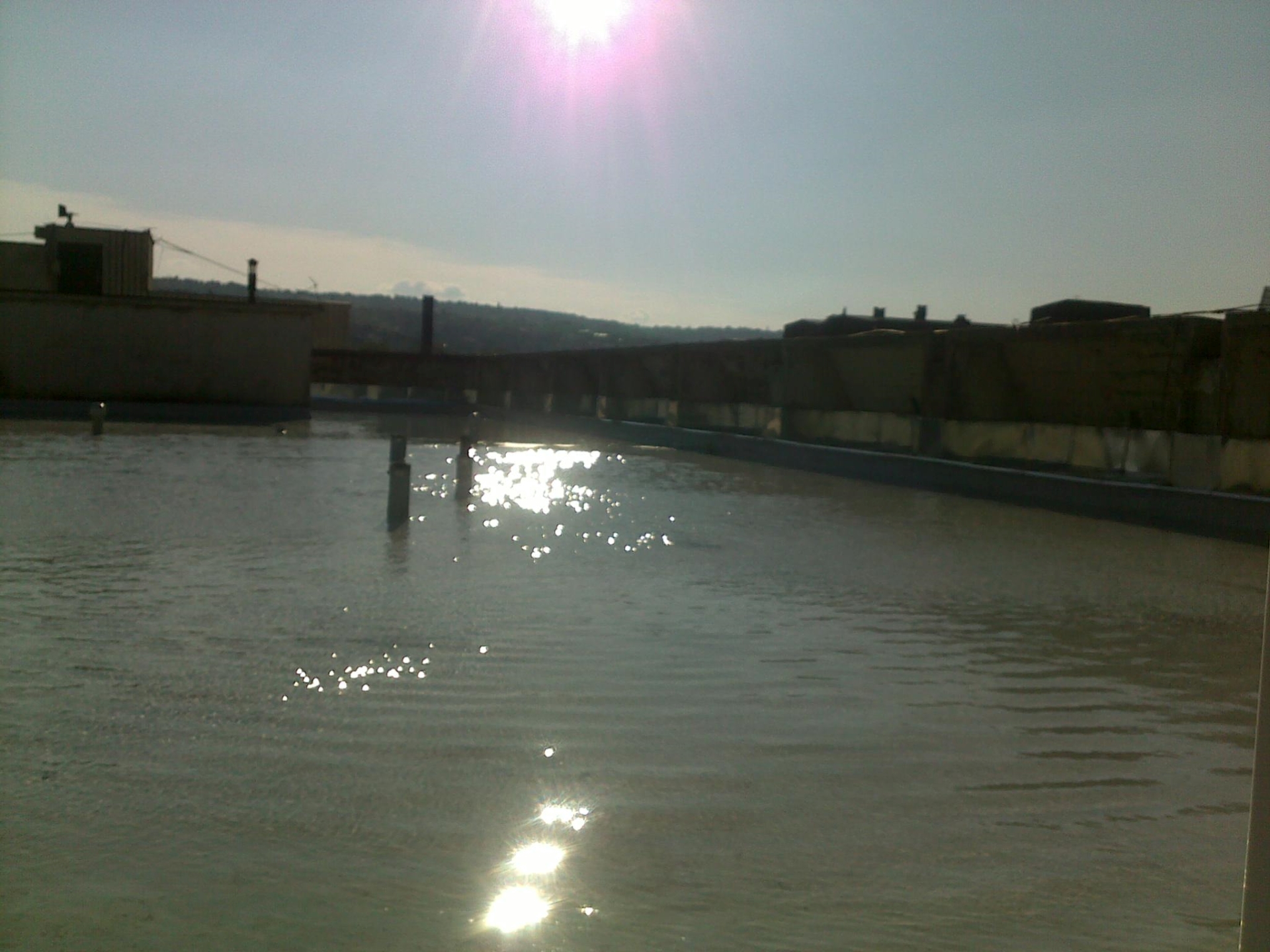
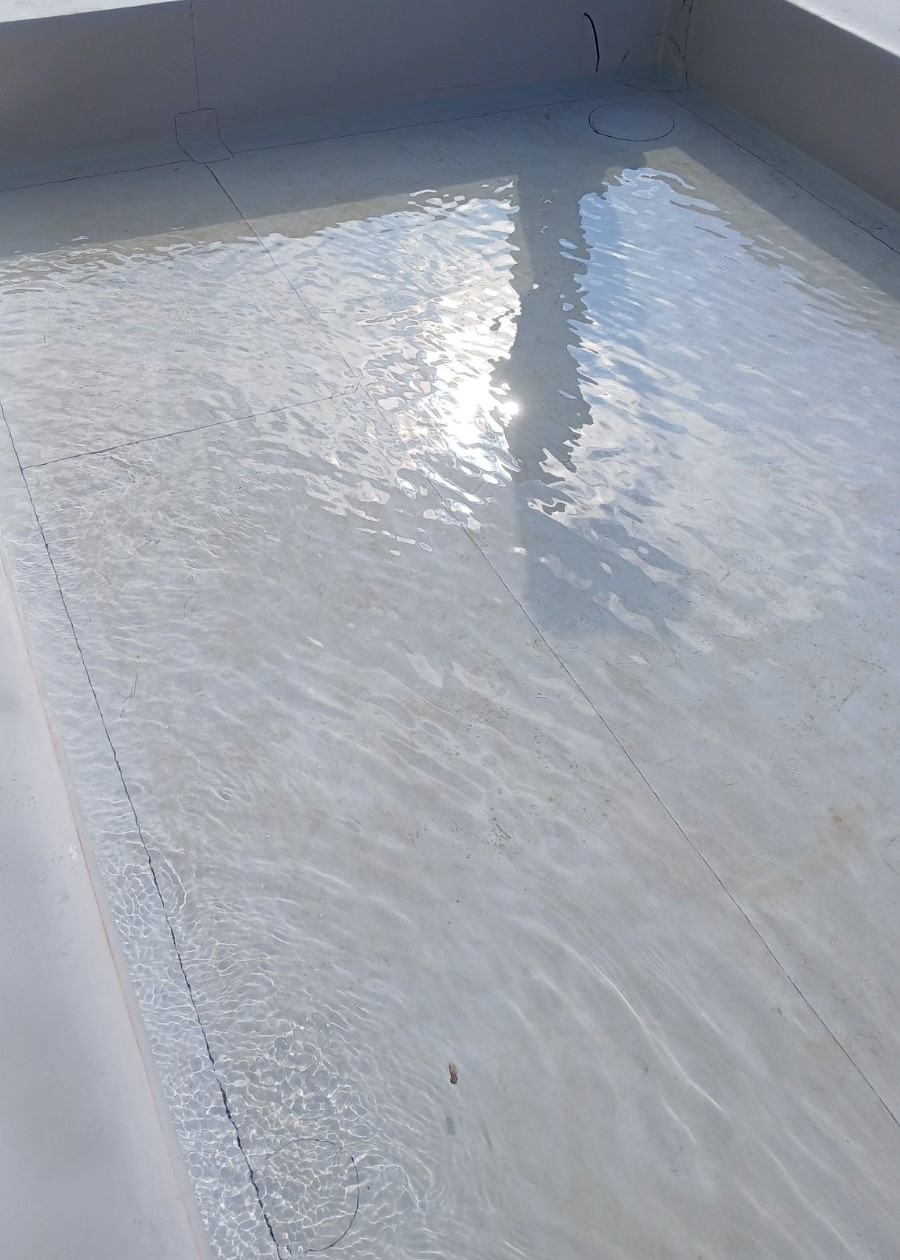
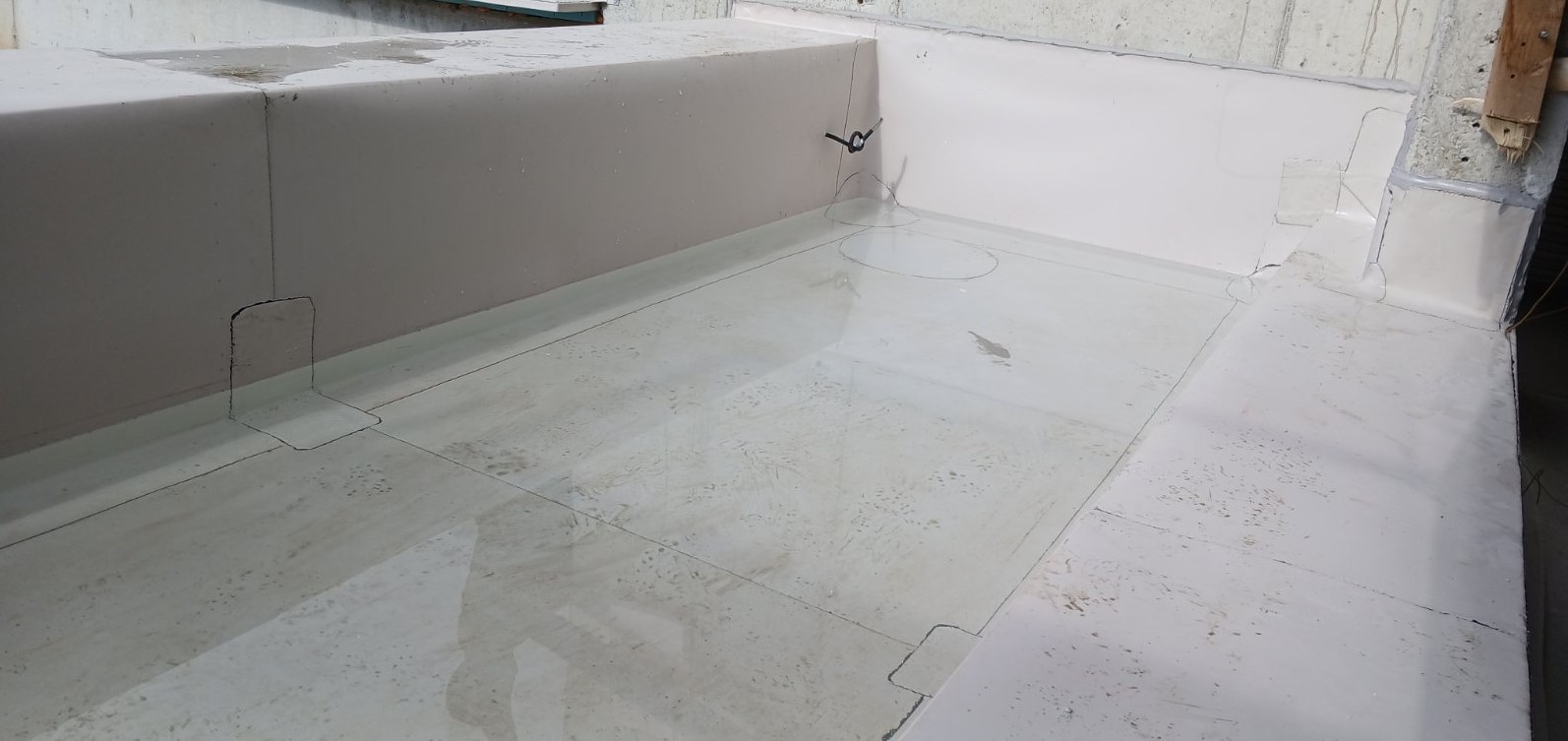
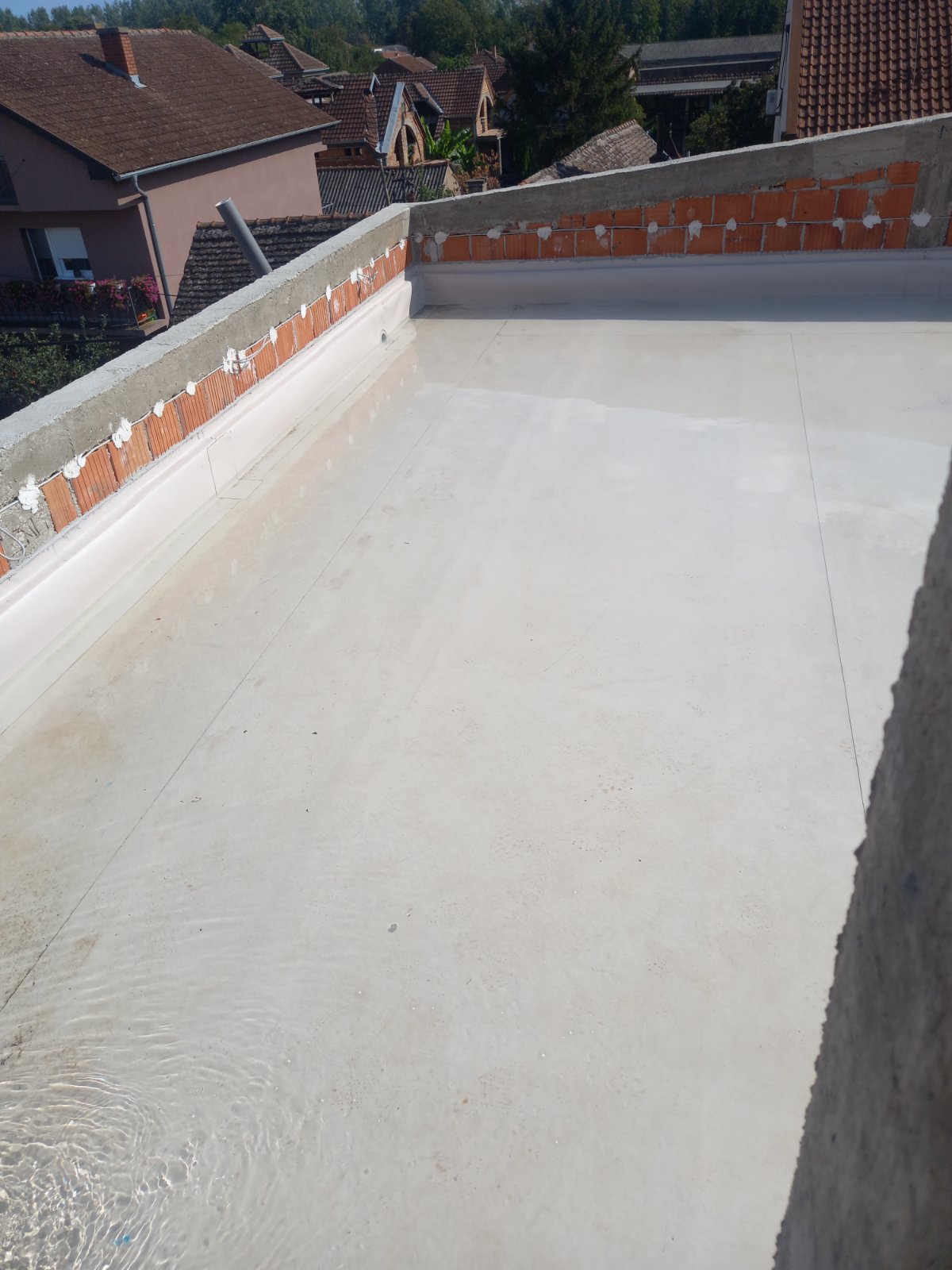
The principle of the “roof hydrotest” involves a thorough inspection of the newly installed waterproofing system, including a visual surface check, an inspection of welded seams, and a review of silicone-sealed elements. Next, all drainage outlets are sealed by welding waterproofing membrane patches, effectively closing off roof drainage. Water is then poured onto the roof surface until it covers the entire plane or reaches a height permitted by the structural capacity of the roof.
The duration of the hydrotest depends on the type of roof and its layered composition, typically ranging from 24 to 48 hours. However, upon request from the site supervisor or investor, the test can be extended.
It is recommended that the hydrotest be performed during summer or dry periods before the installation of the waterproofing membrane. This ensures that the roof layers do not contain trapped moisture, which could otherwise lead to water seepage from within the roof structure due to the pressure of the test water above the waterproofing layer. This is particularly important for renovated roofs that were previously leaking or exposed to moisture.
If waterproofing is applied during the autumn or winter in dry conditions, vapor vents can be installed to facilitate the drying of the roof layers and allow moisture to escape due to indoor heating. In such cases, the hydrotest may be postponed for 30 to 60 days after installation, depending on weather conditions.
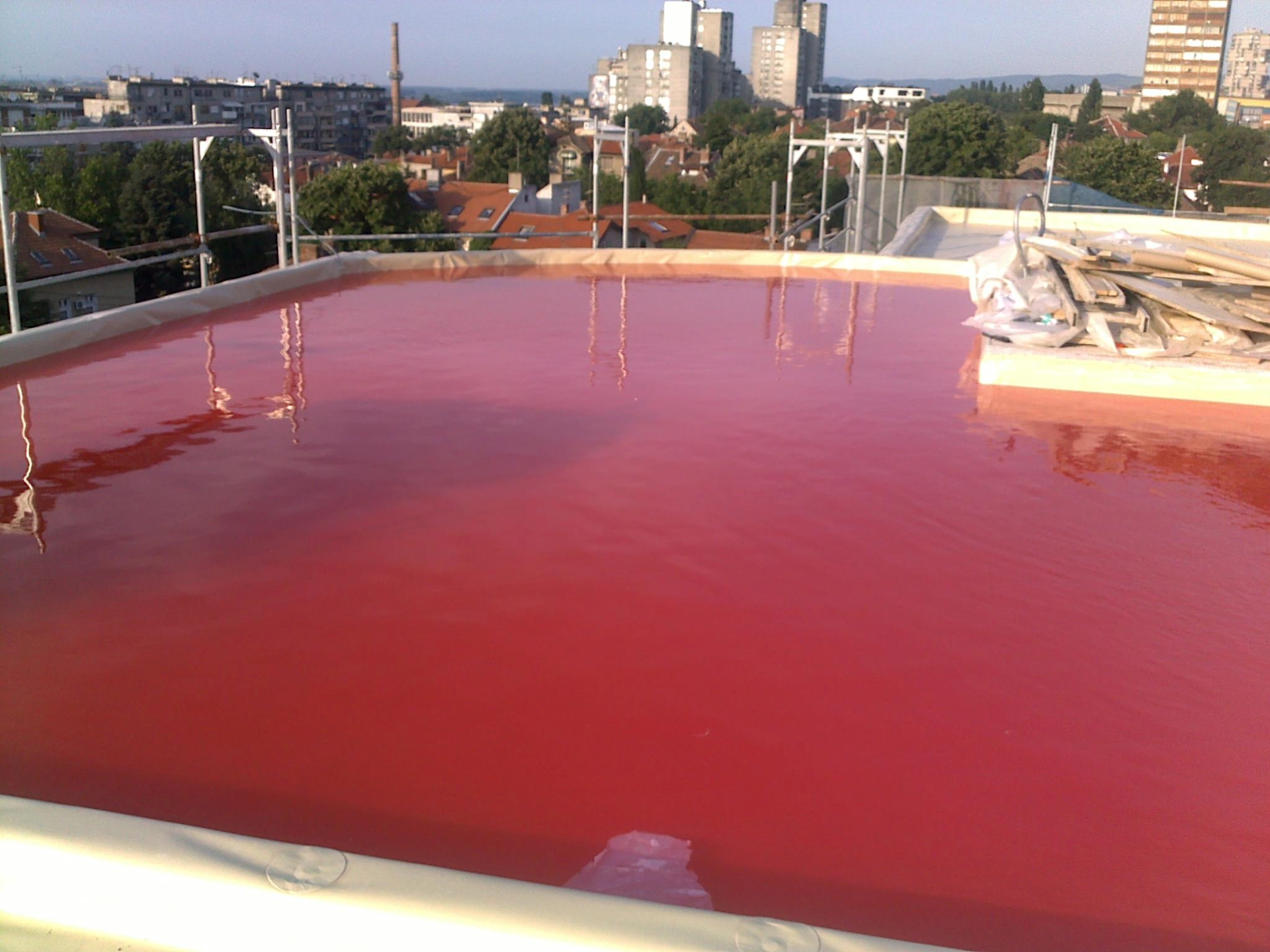
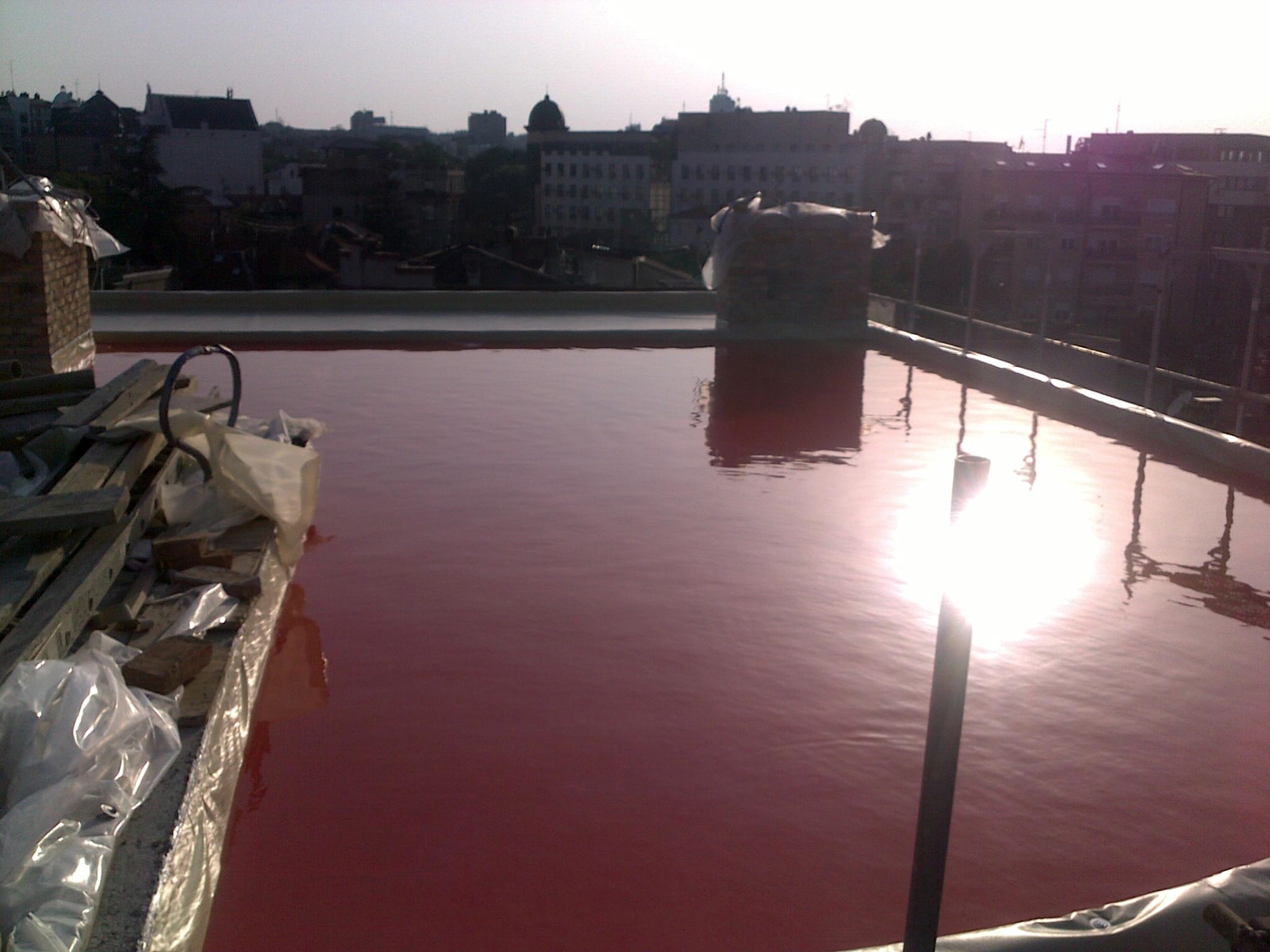
To enhance test accuracy, a dye can be added to the water during the hydrotest, allowing for precise identification of leaks. This helps determine whether the source of water ingress is residual moisture trapped within the roof layers or newly introduced test water above the waterproofing system.
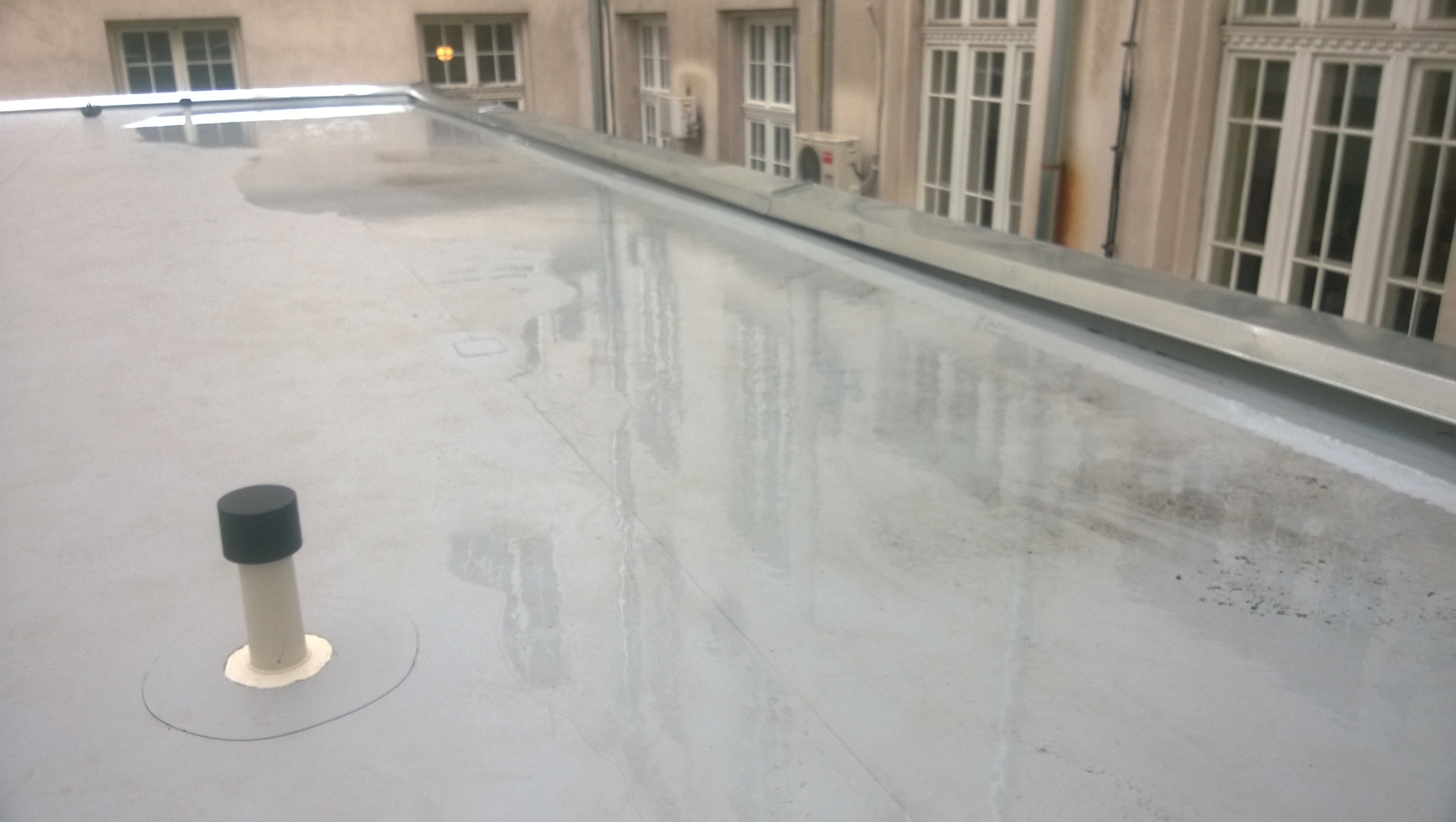
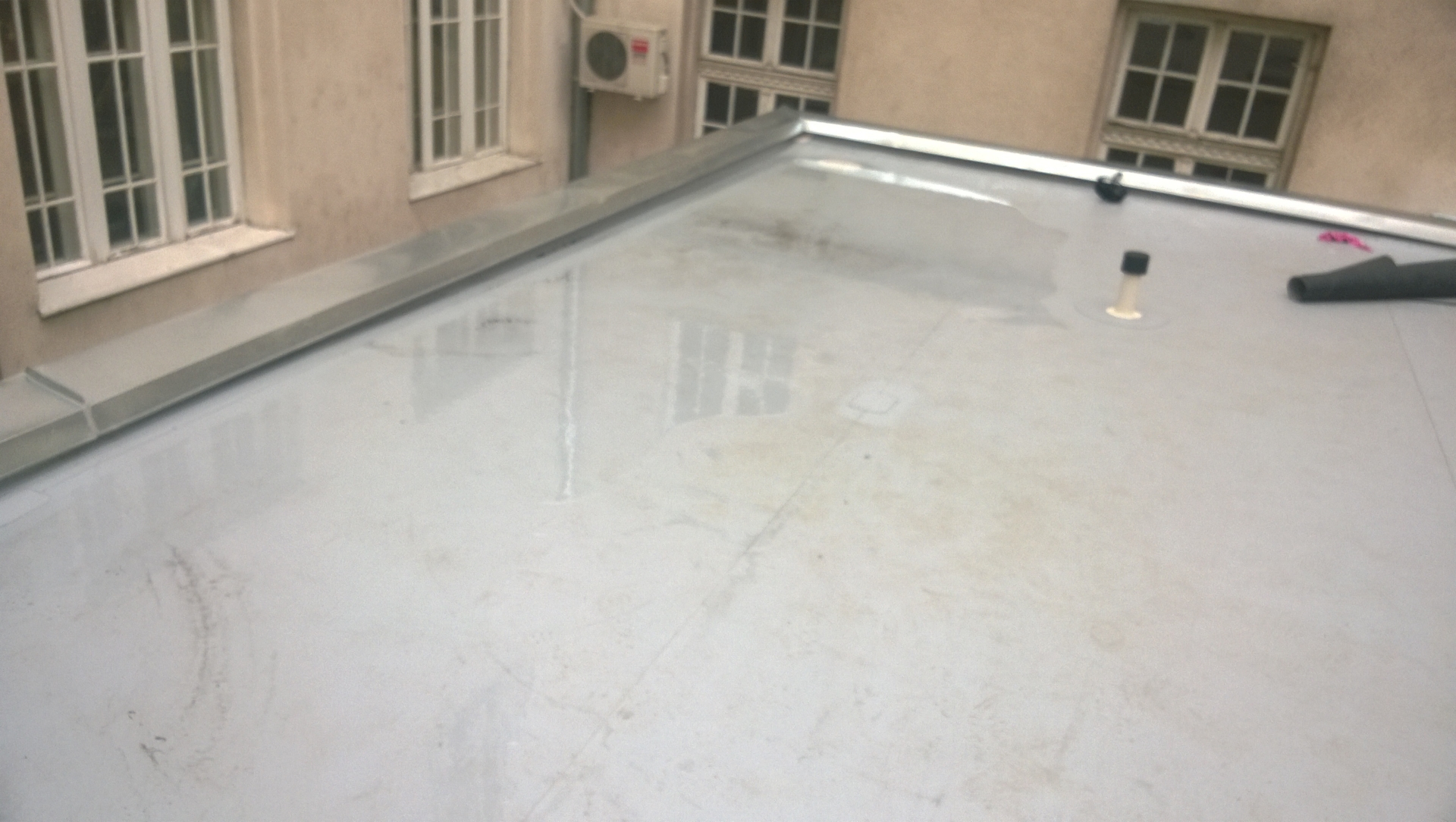
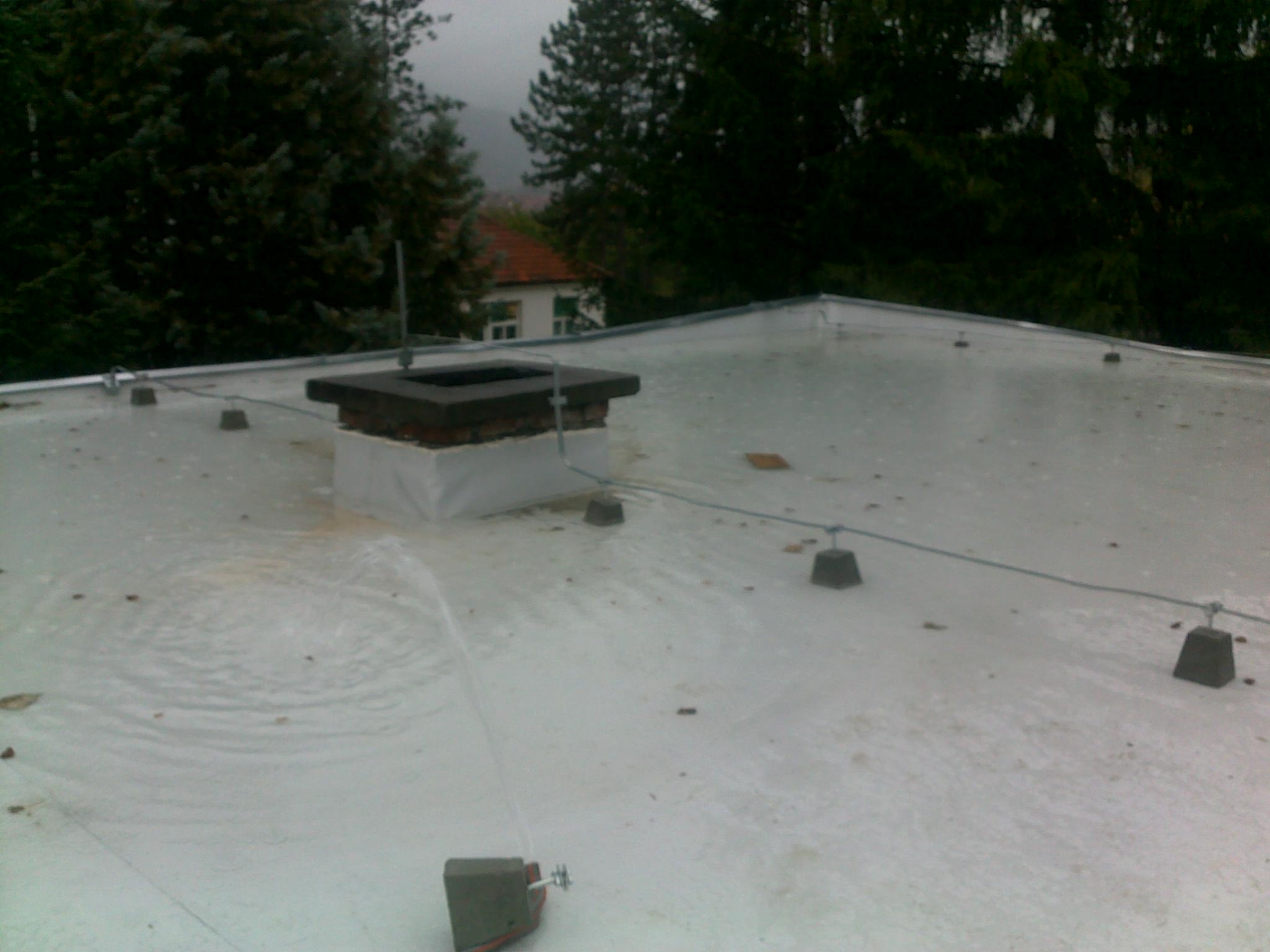
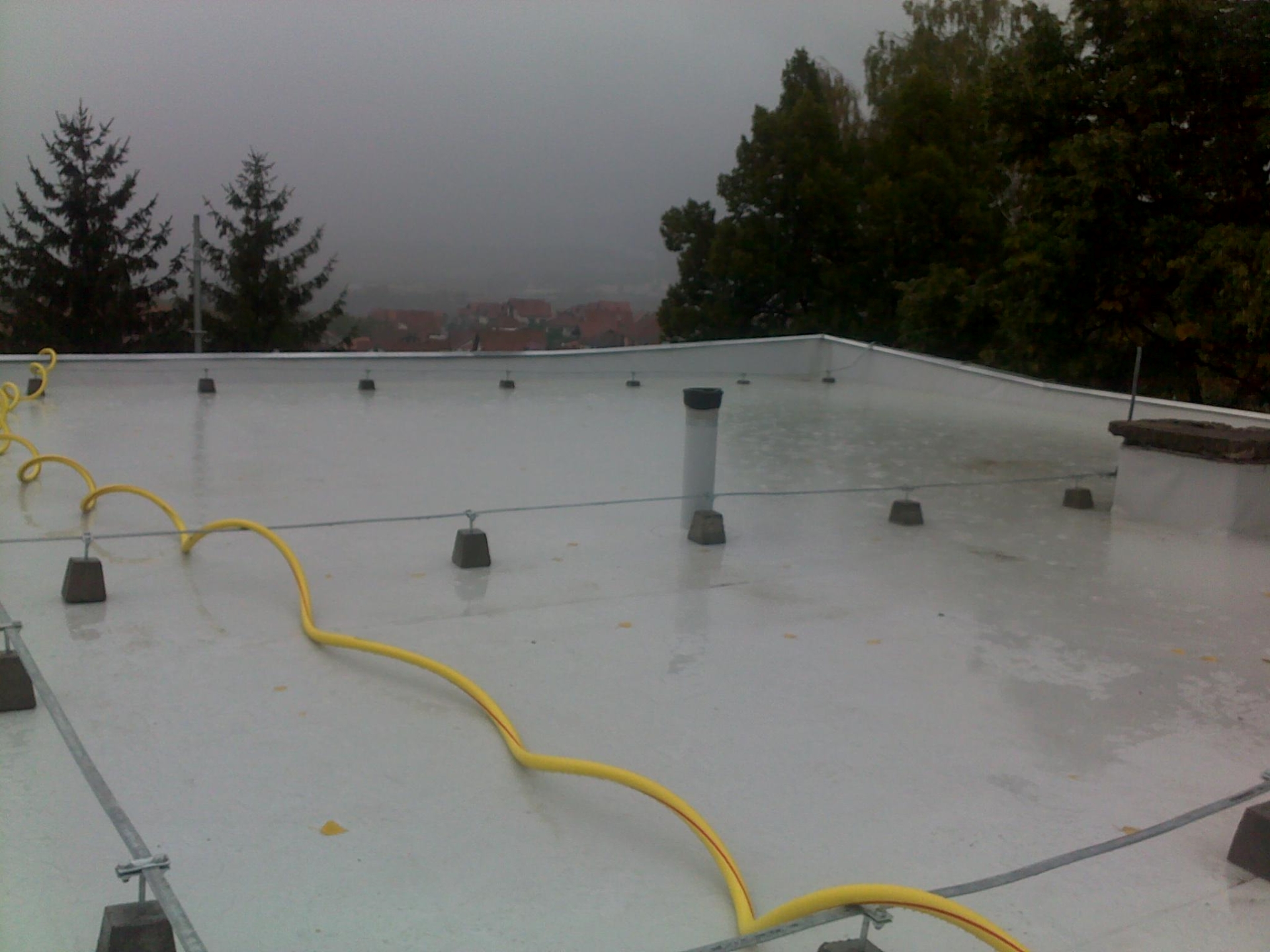
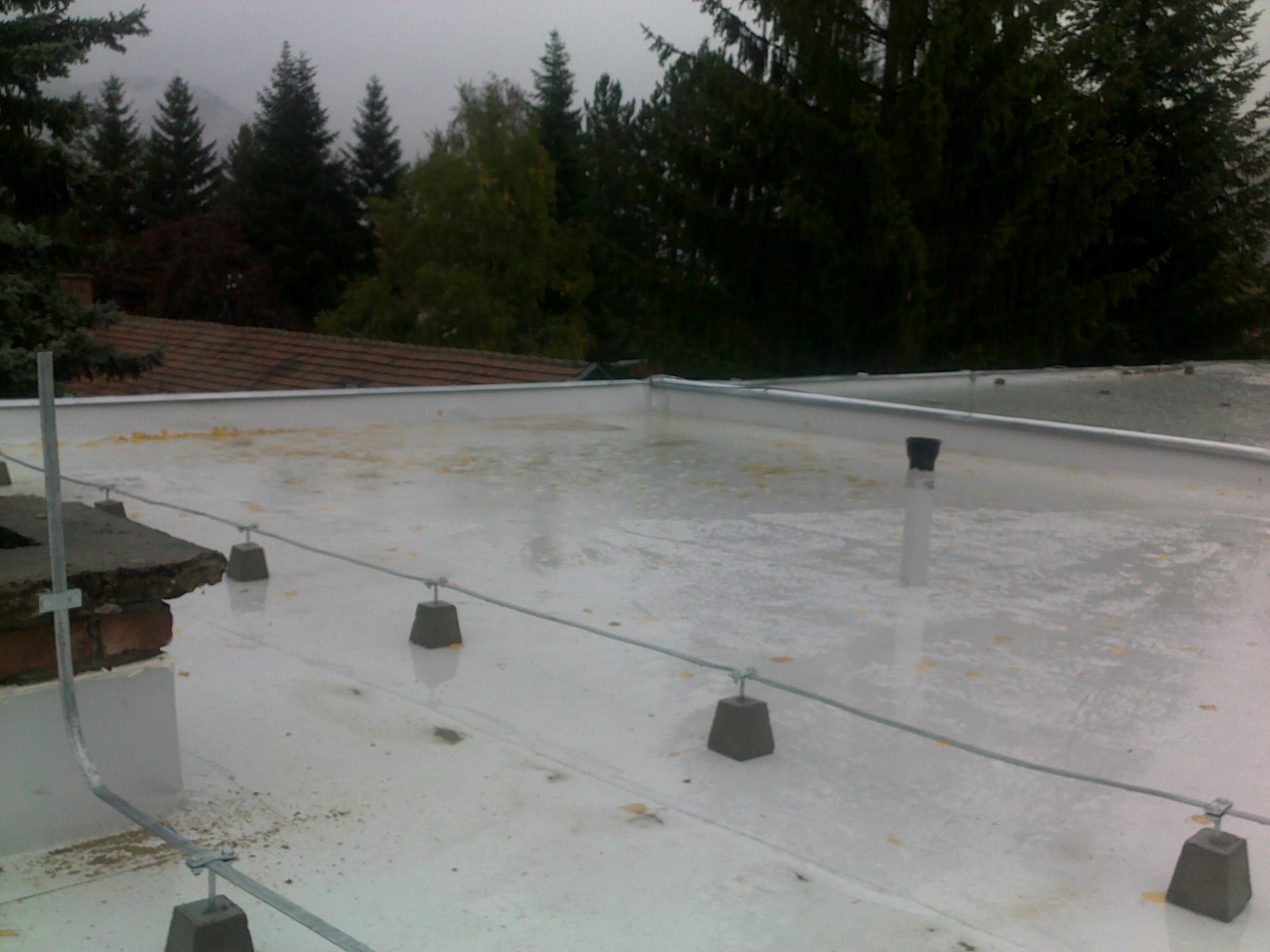
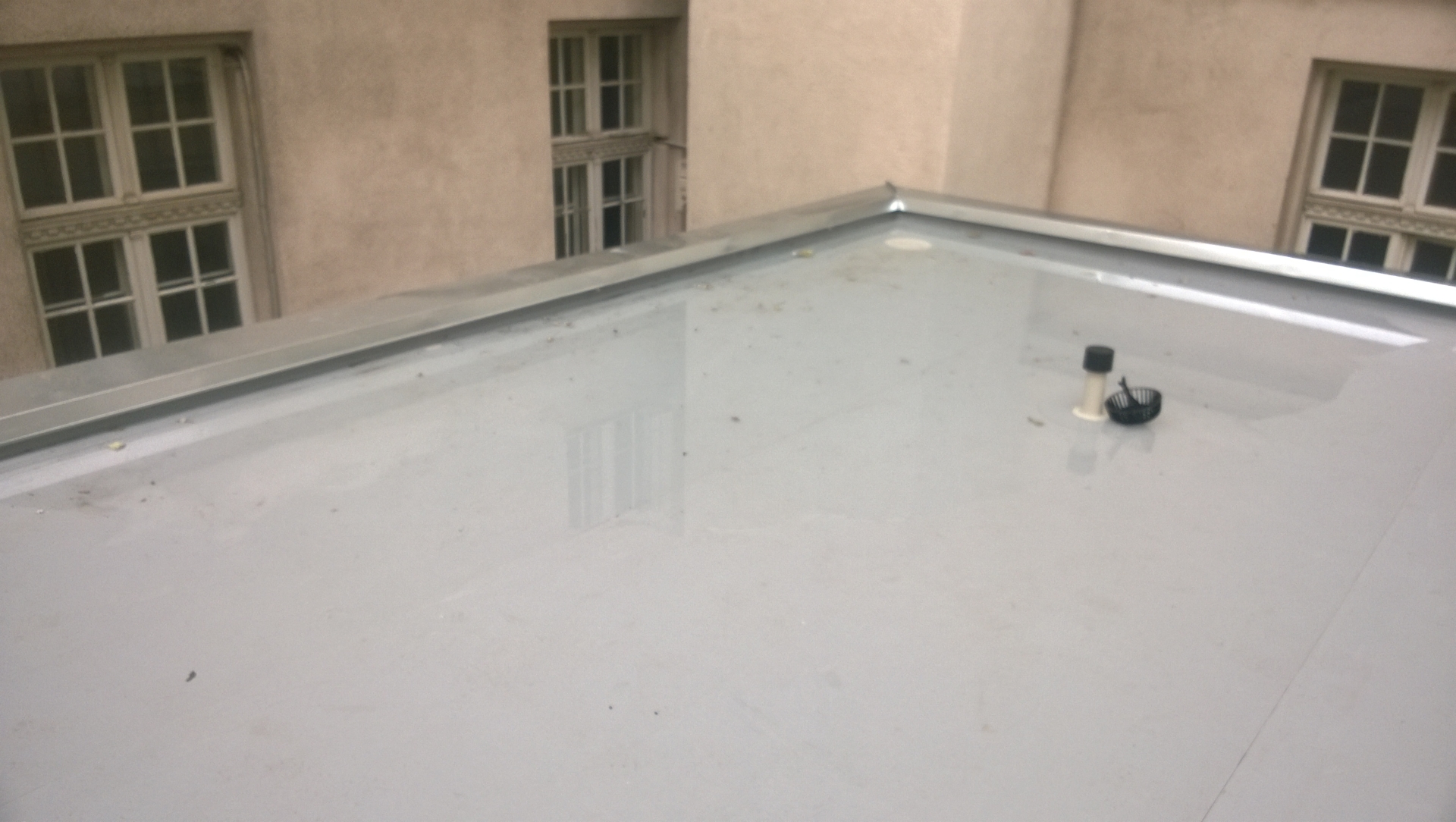
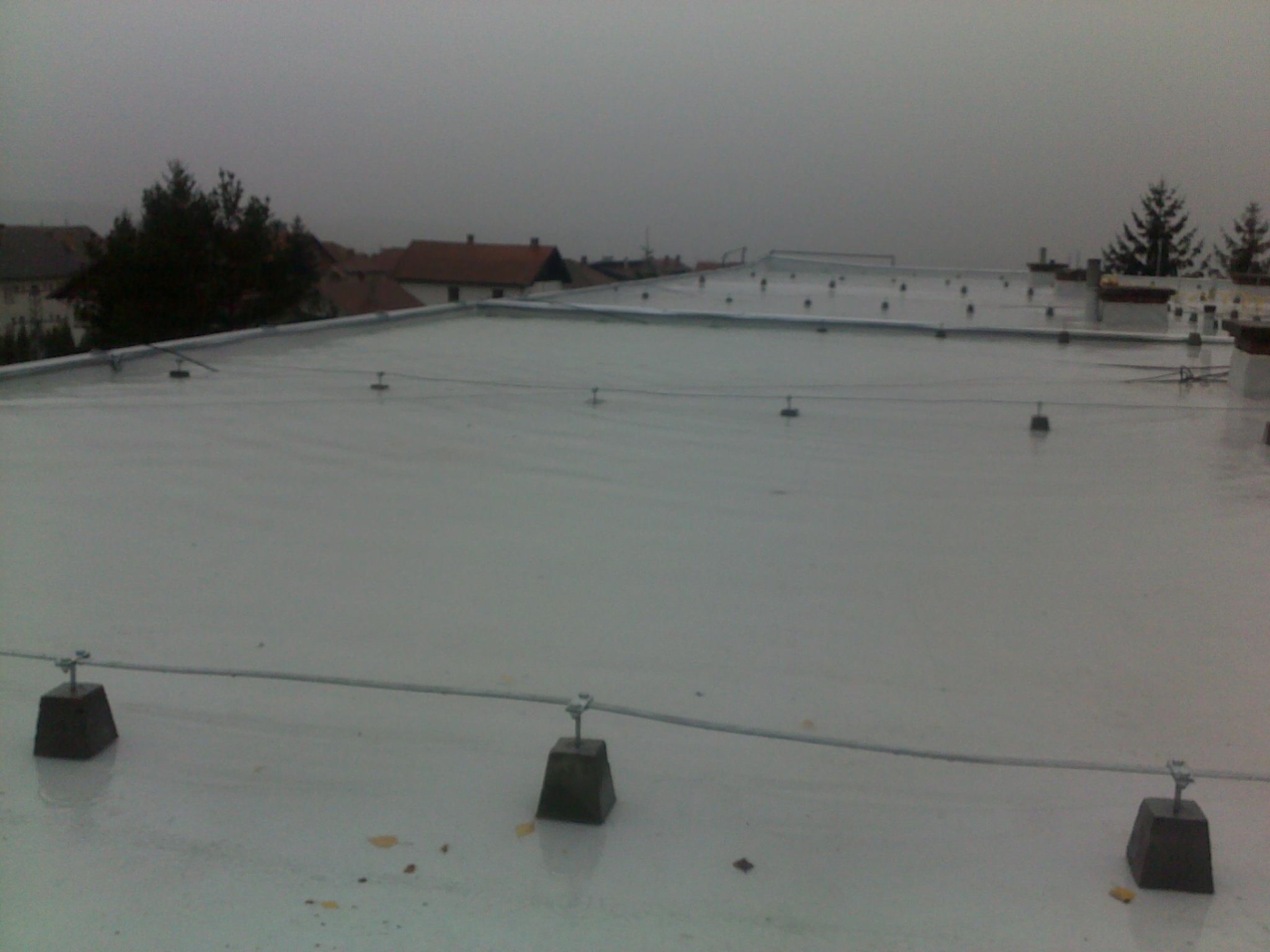
Attached are photographs of several flat roofs where hydrotesting has been performed.