- 15.04.2024.
- -
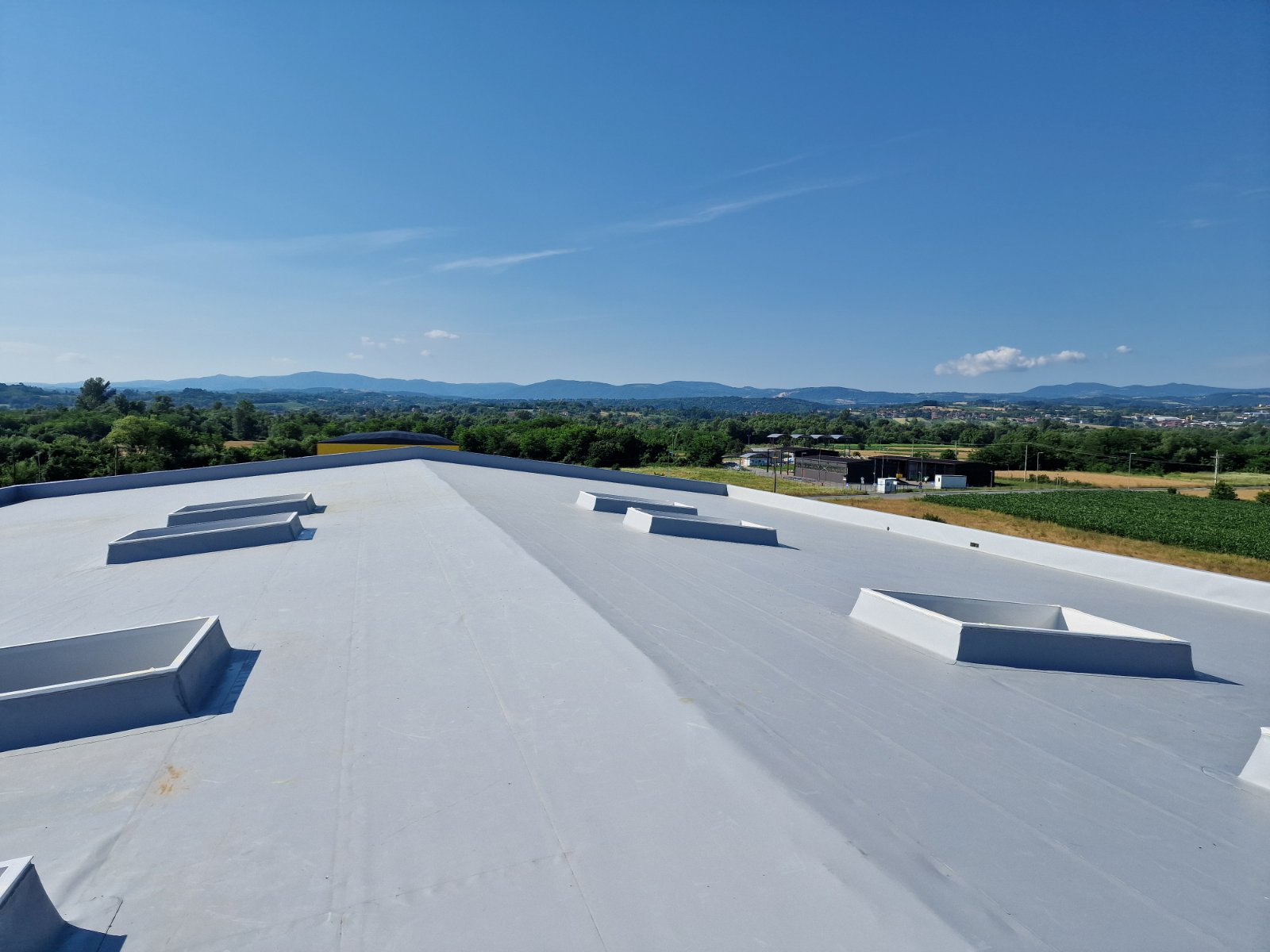
The investor submitted a request for the construction of a flat roof on a commercial building in Valjevo.
On this occasion, they expressed a desire for all roof layers to be adapted to meet the requirements for installing a solar power plant.
The investor recognized the importance of renewable energy sources in time—in this case, photovoltaic panels for generating electricity for internal consumption.
During the detailed design and alignment of the flat roof layers (selecting appropriate materials), all key stakeholders were involved: the designers, supervising authority, waterproofing manufacturer, thermal insulation manufacturer, and our team as the contractor.
We welcome this proactive approach from the investor, as it allows all critical elements to be addressed before the start of construction, preventing fundamental errors and the need for later system corrections.
For this project, the investor opted for high-quality materials with excellent performance characteristics:
- RC structural frame – with prefabricated concrete elements, long-span beams, and roof trusses
- TR 85 /280 /1 mm trapezoidal steel sheet roofing – increased sheet thickness (1 mm) for higher load-bearing capacity
- PE vapor barrier Sarnavap 2000E – greater thickness and higher water vapor diffusion resistance (Sd coefficient)
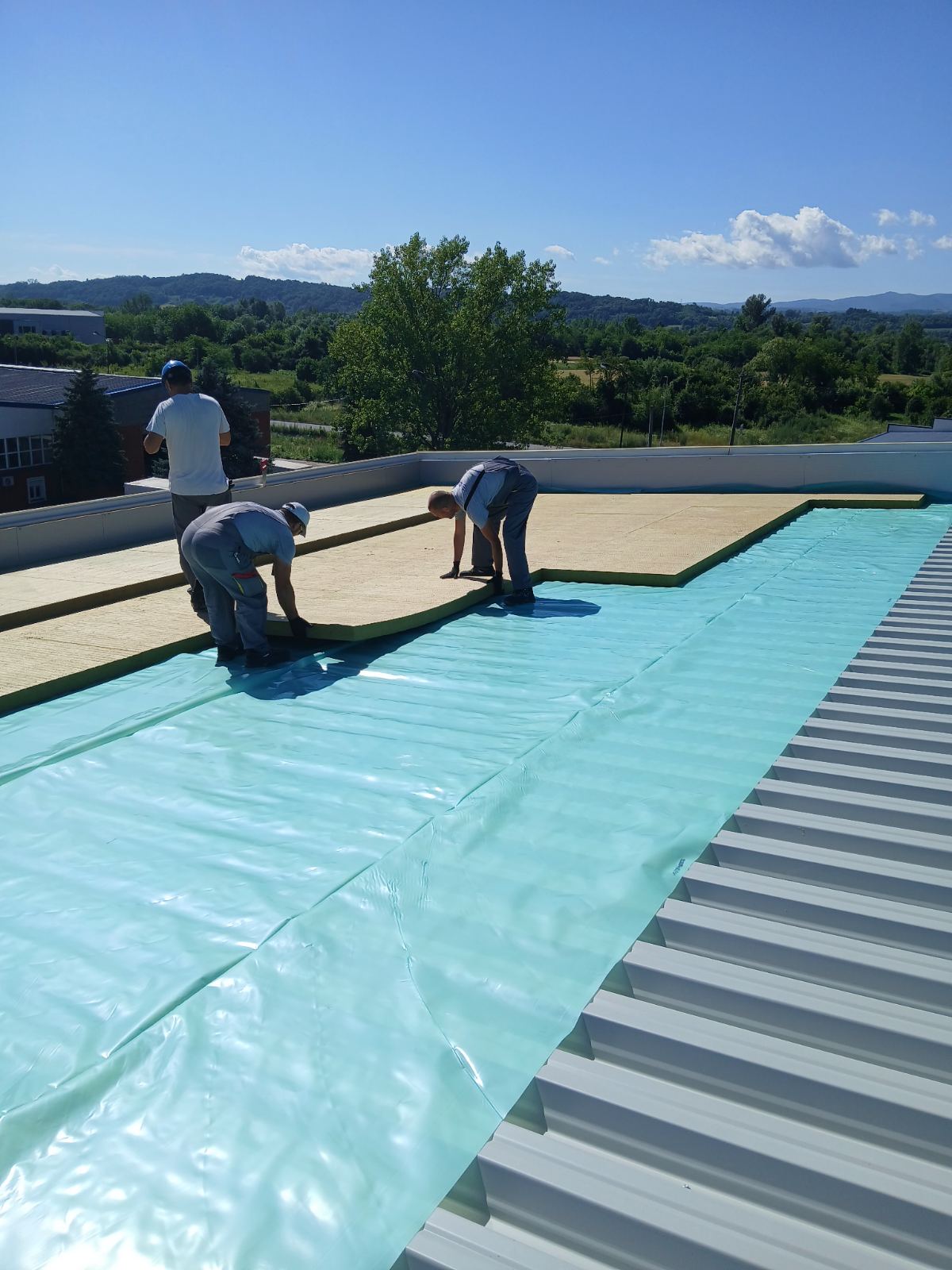
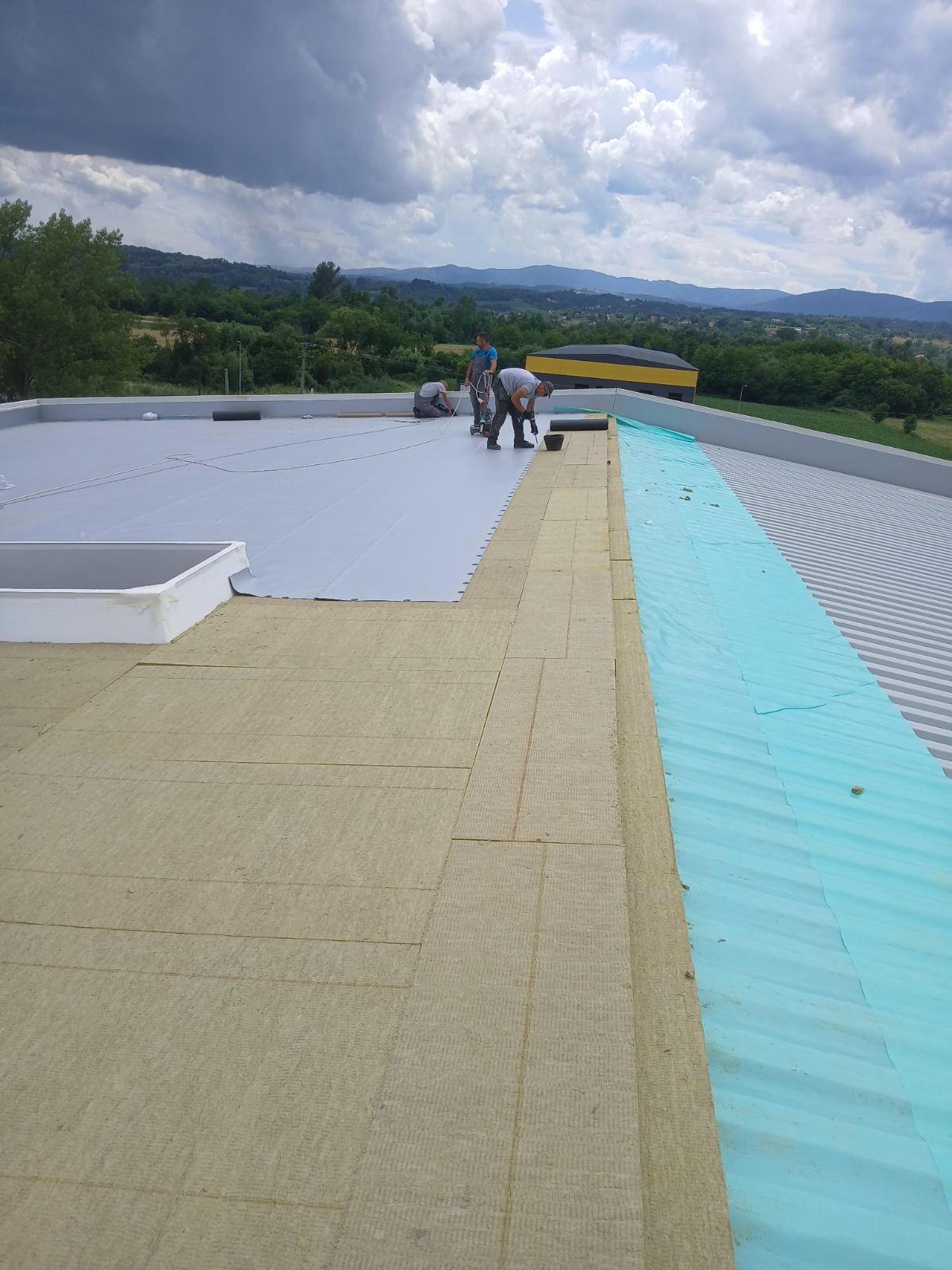
- First layer of thermal insulation: Dachrock 70 Plus, thickness 10 cm – high-density rock wool (compressive strength 70 kPa)
- Second layer of thermal insulation: Hardrock 1000, thickness 10 cm – dual-density high-compressive-strength rock wool (70 kPa)
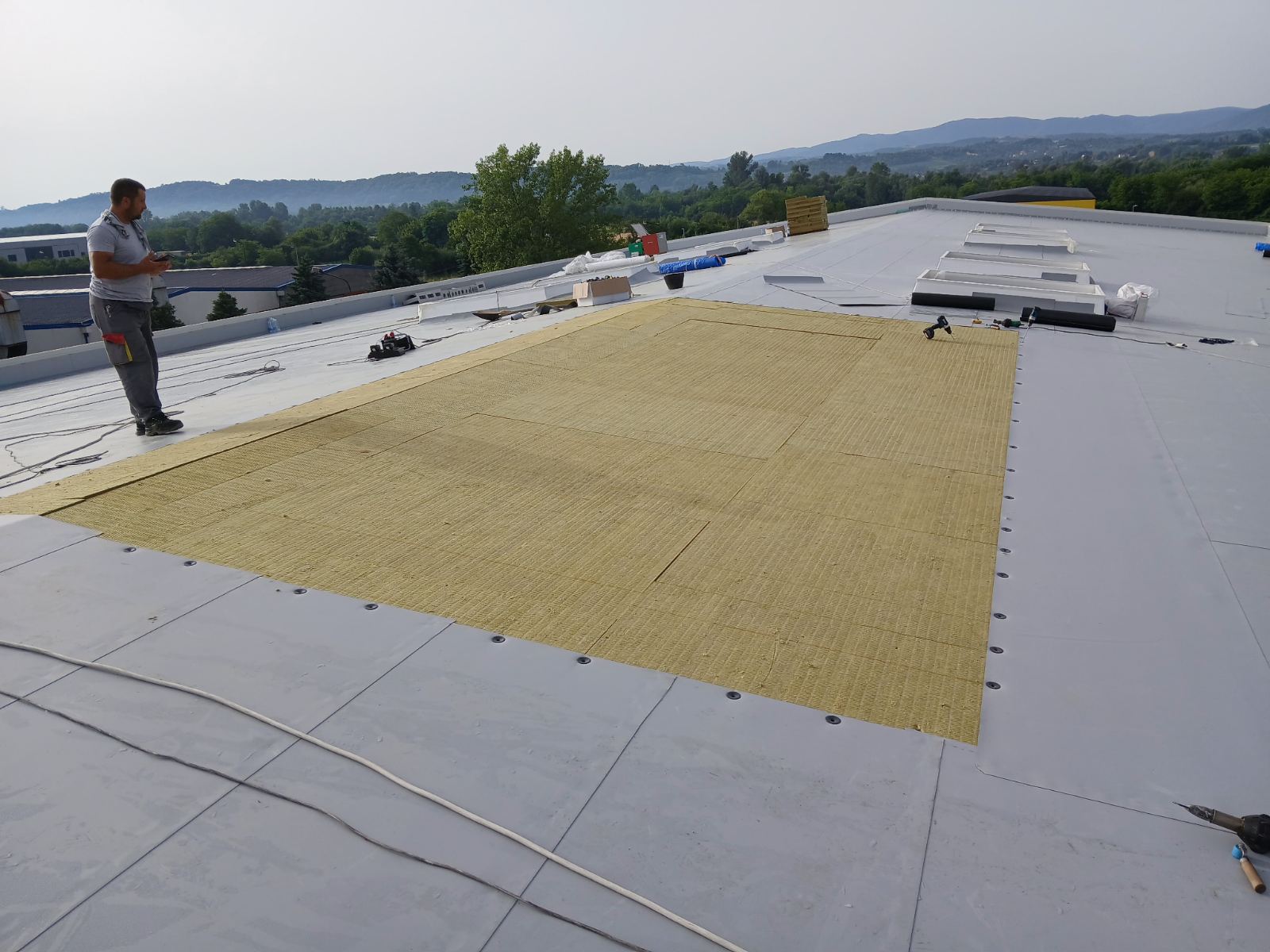
- Waterproofing membrane: Sarnafil TS 77-20, thickness 2 mm – excellent mechanical resistance and long service life
(*Items 1. and 2. were executed by separate contractors engaged by the investor.)
After coordinating the execution details with the designer, investor, and supervisor, we began detailed project development (construction design), preparing the material specifications, organizing logistics, and scheduling material deliveries and construction works.
To execute a flat roof with a waterproofing membrane, it is necessary to obtain a mechanical fixing layout calculation—known as a Wind Load Calculation—from the membrane manufacturer, which accounts for wind uplift forces.
Based on our request, both the membrane and mechanical fastener manufacturers provided the wind load calculation.
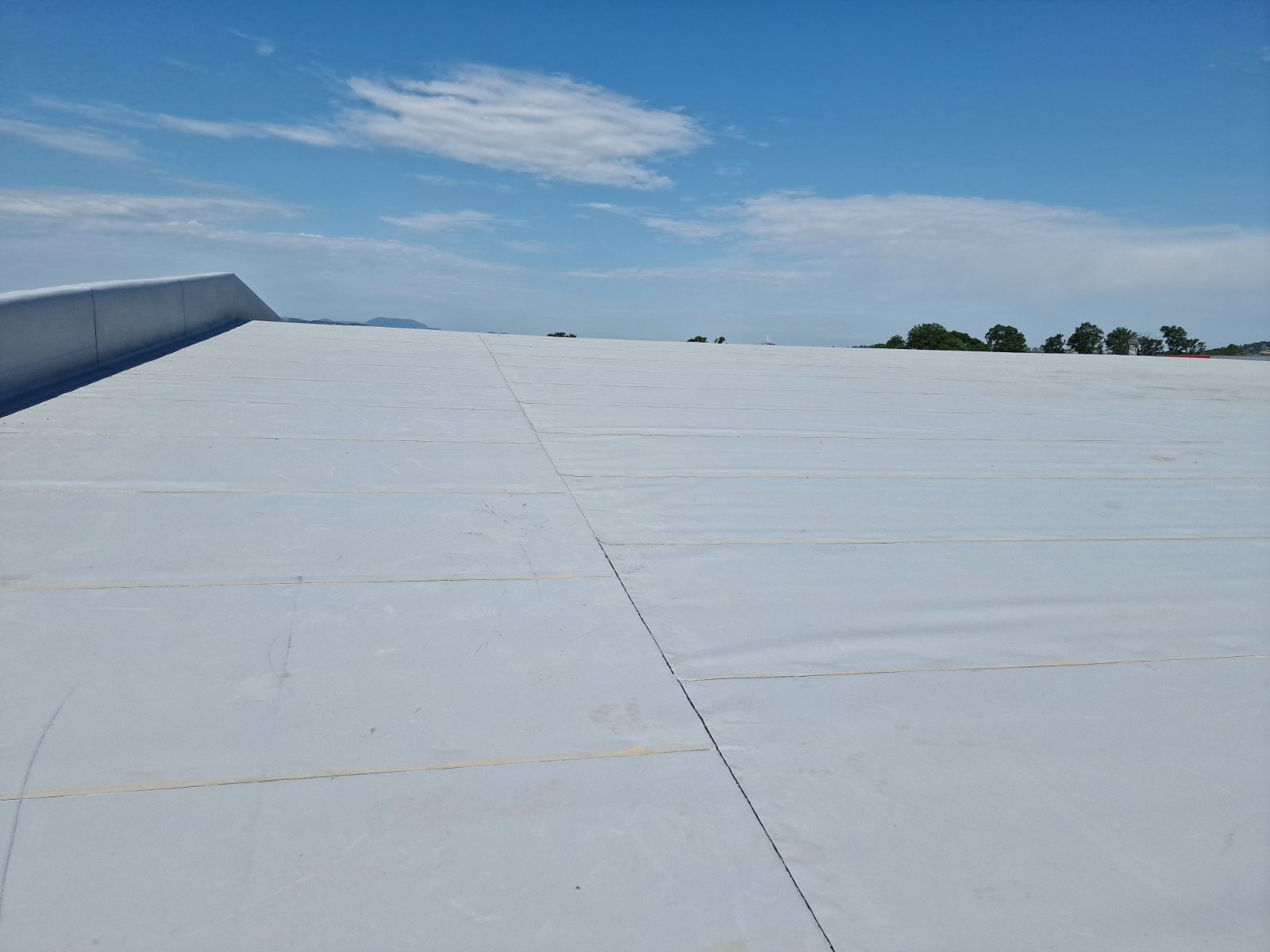
The result was a specification for denser mechanical fixing with narrower membrane strips. This method ensures that the waterproofing membrane can withstand extreme wind conditions, ensuring a secure and durable roof.
For the waterproofing team at ‘DVS Izolacija’, these works were routine, given their extensive experience with flat roof insulation systems.
There were some challenges due to poor weather conditions (strong winds and rain), but with careful planning by experienced field installers, the project was successfully and routinely completed.
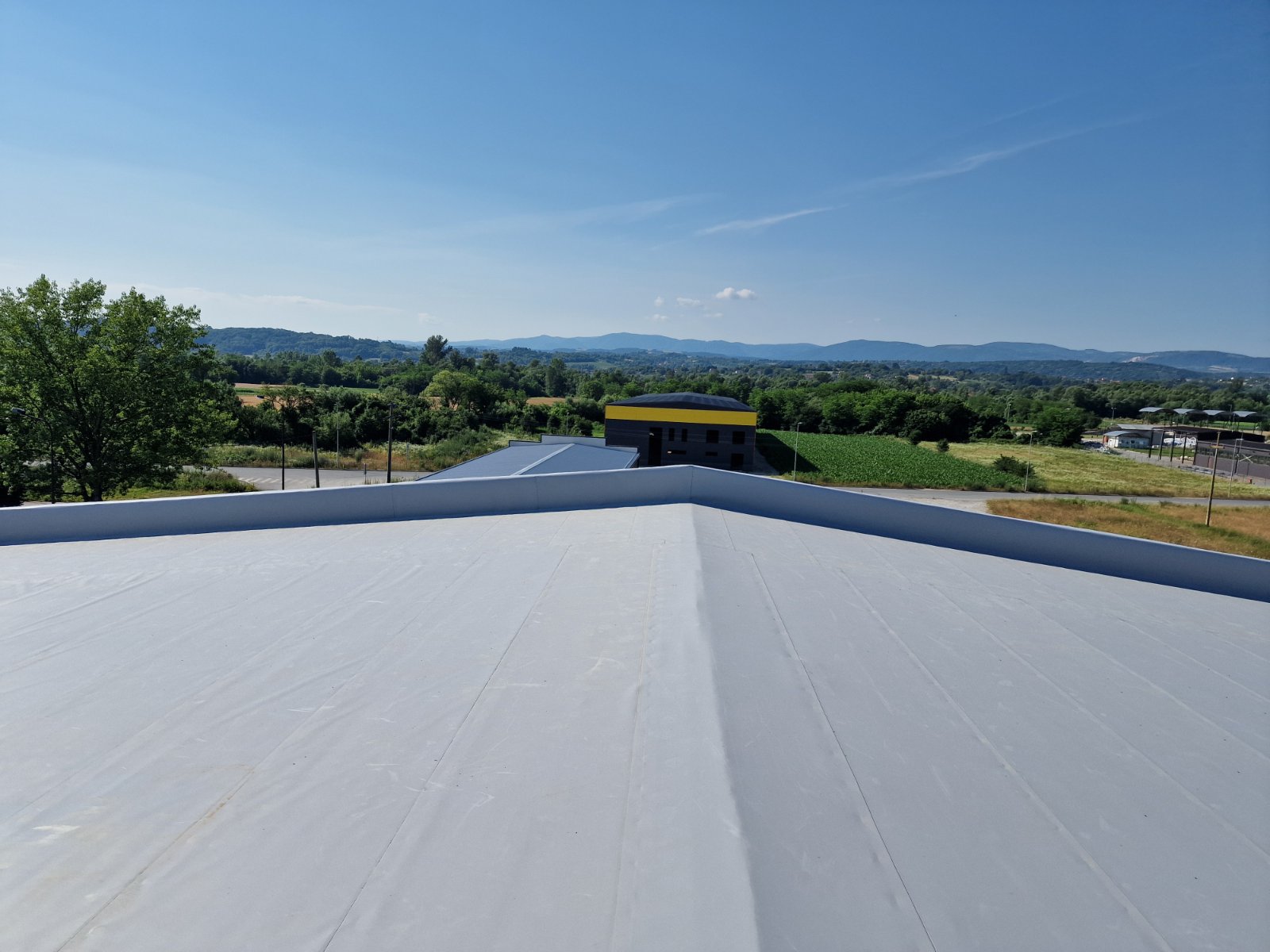
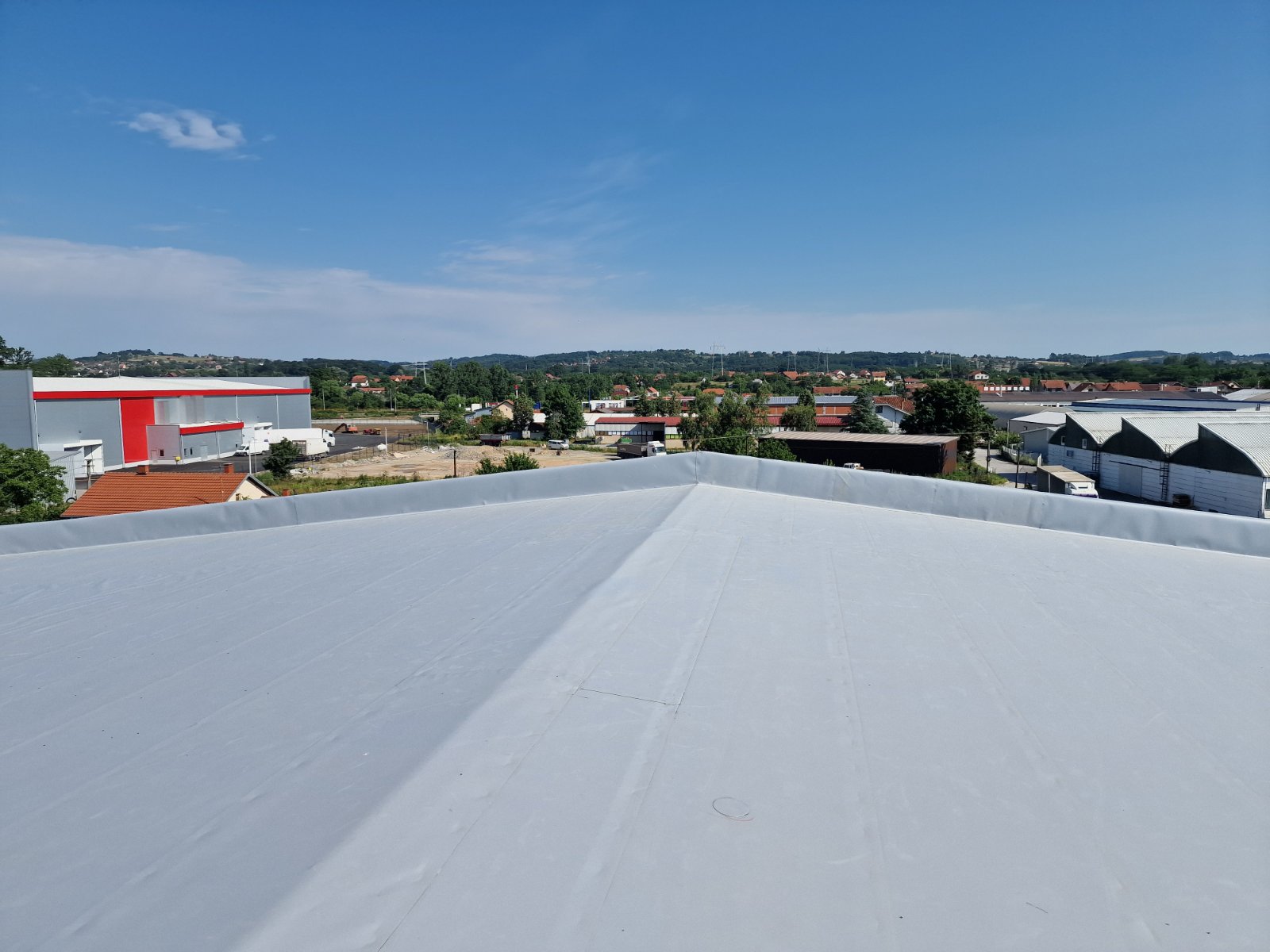
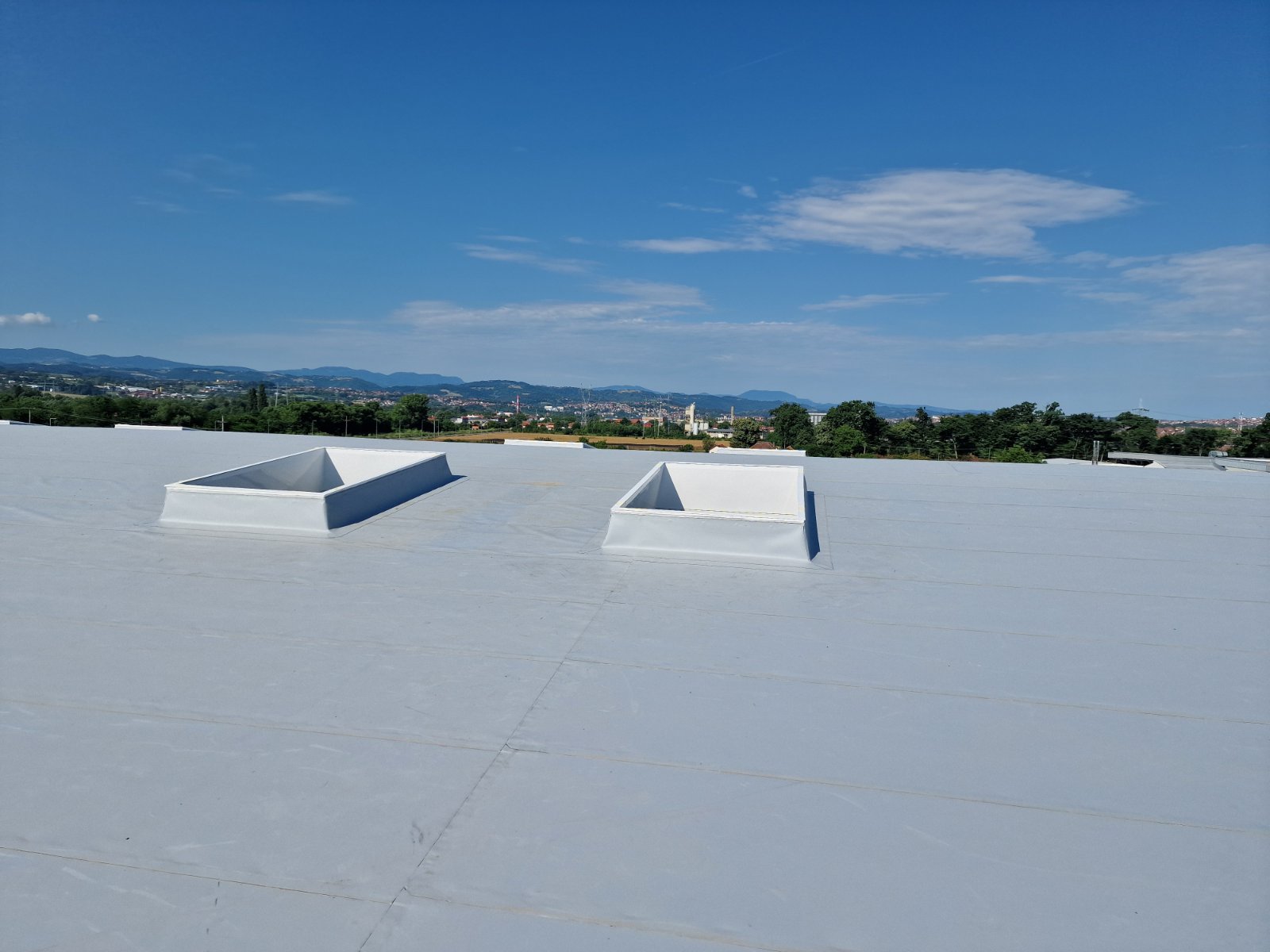
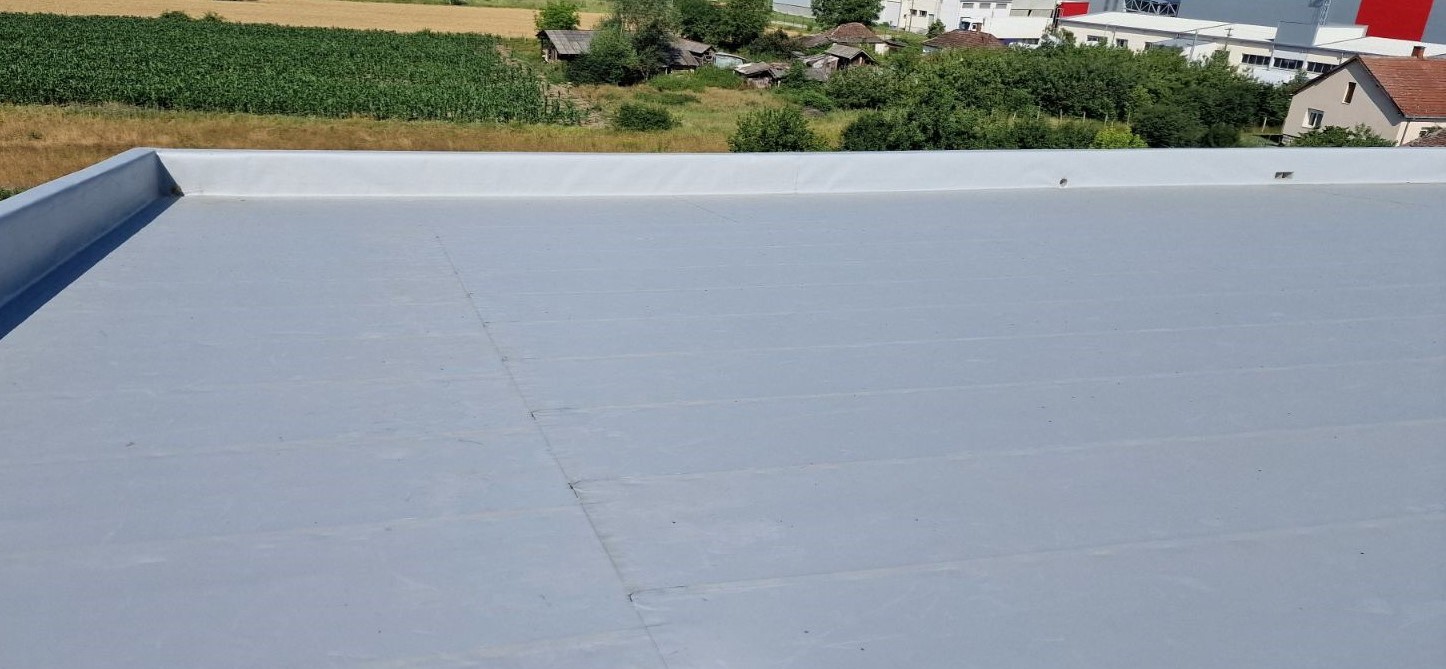
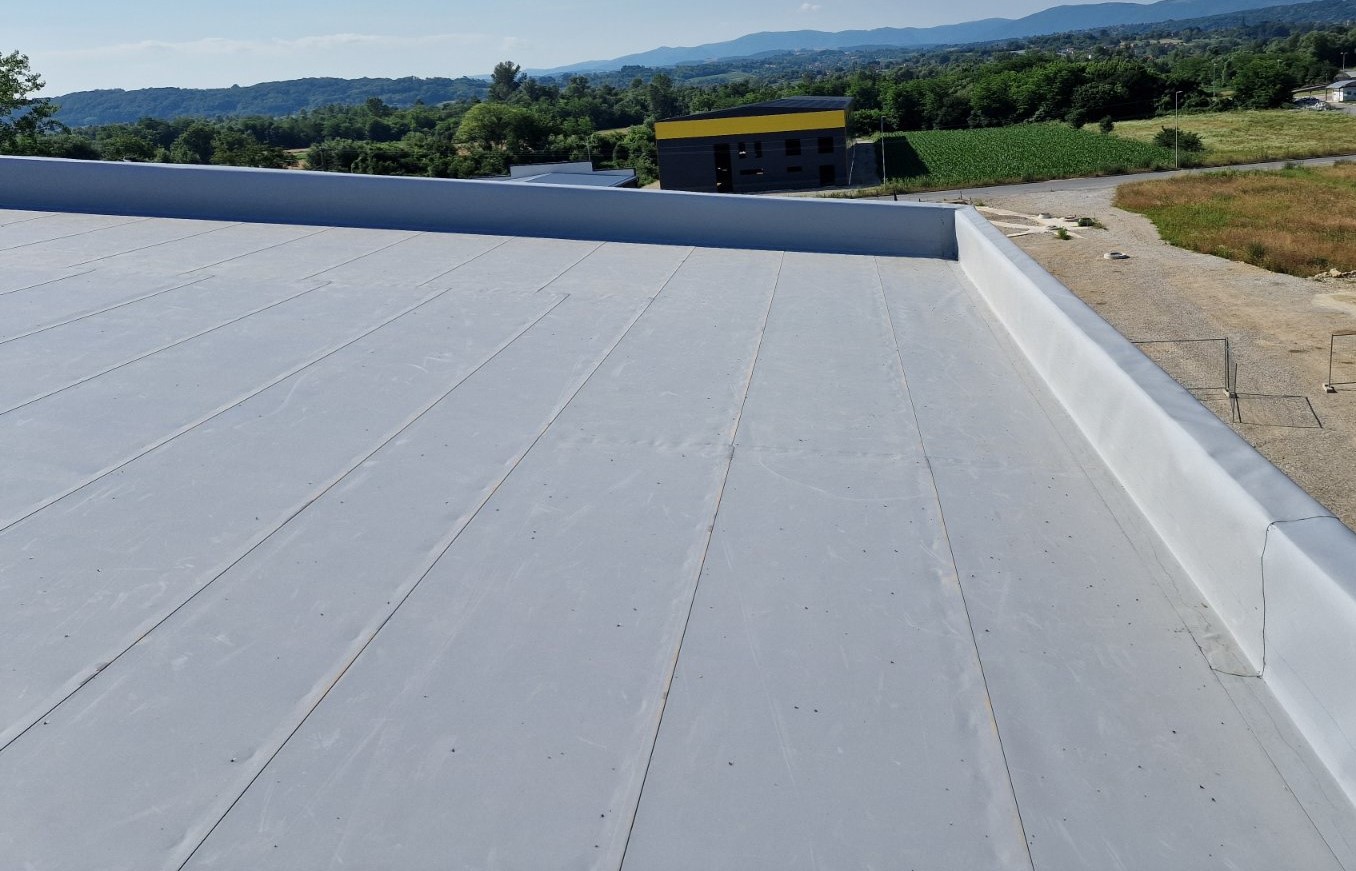
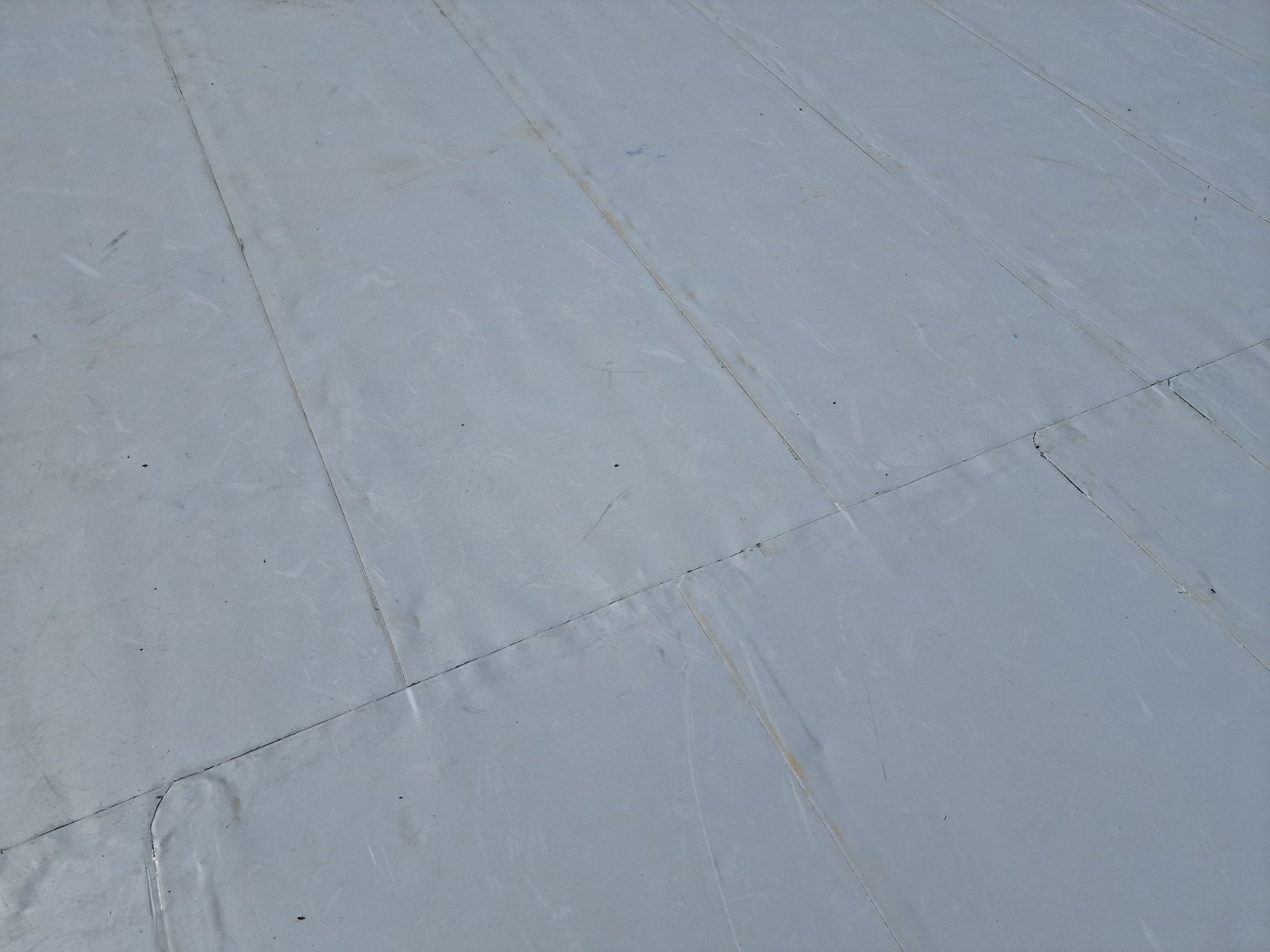
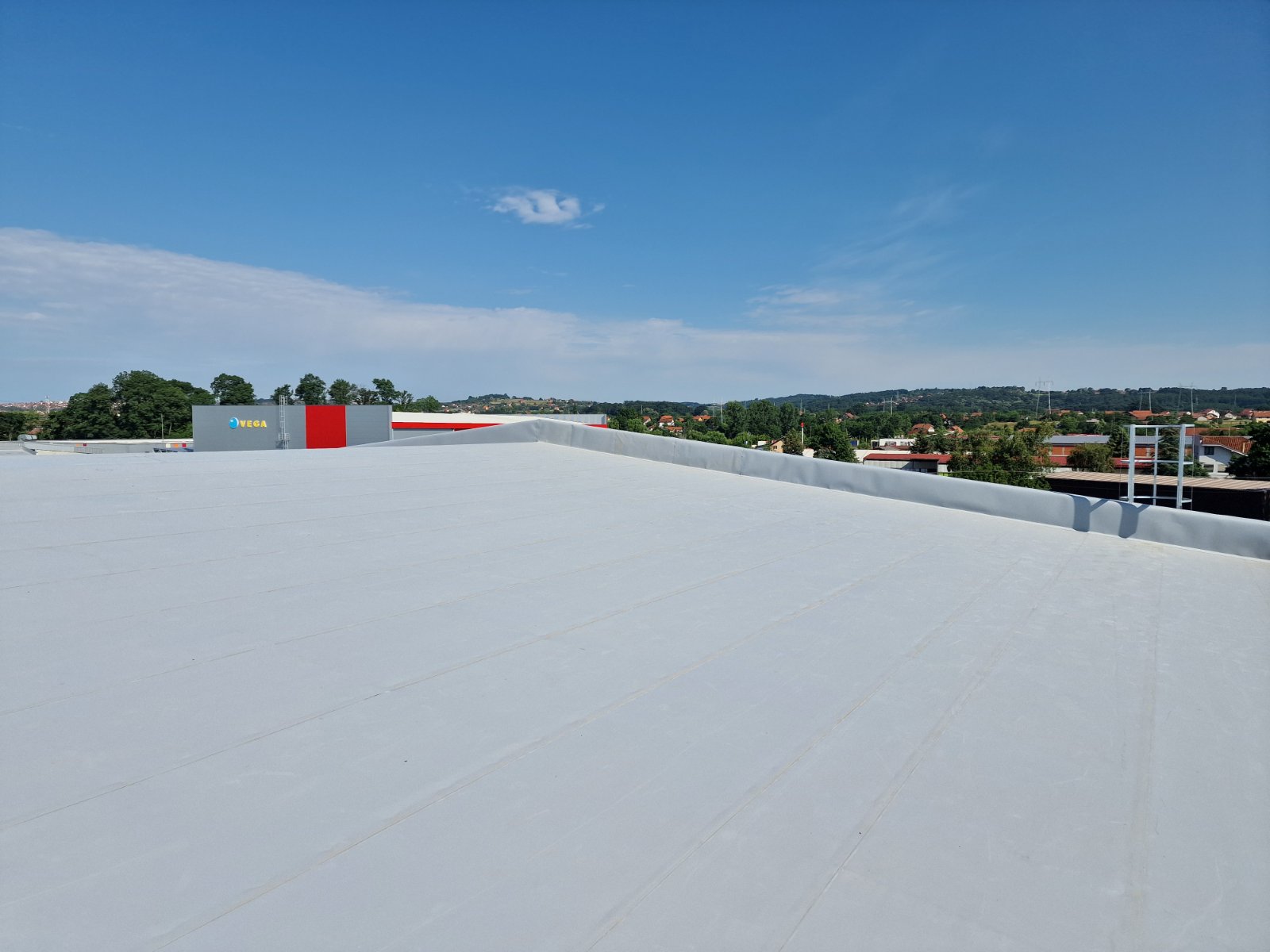
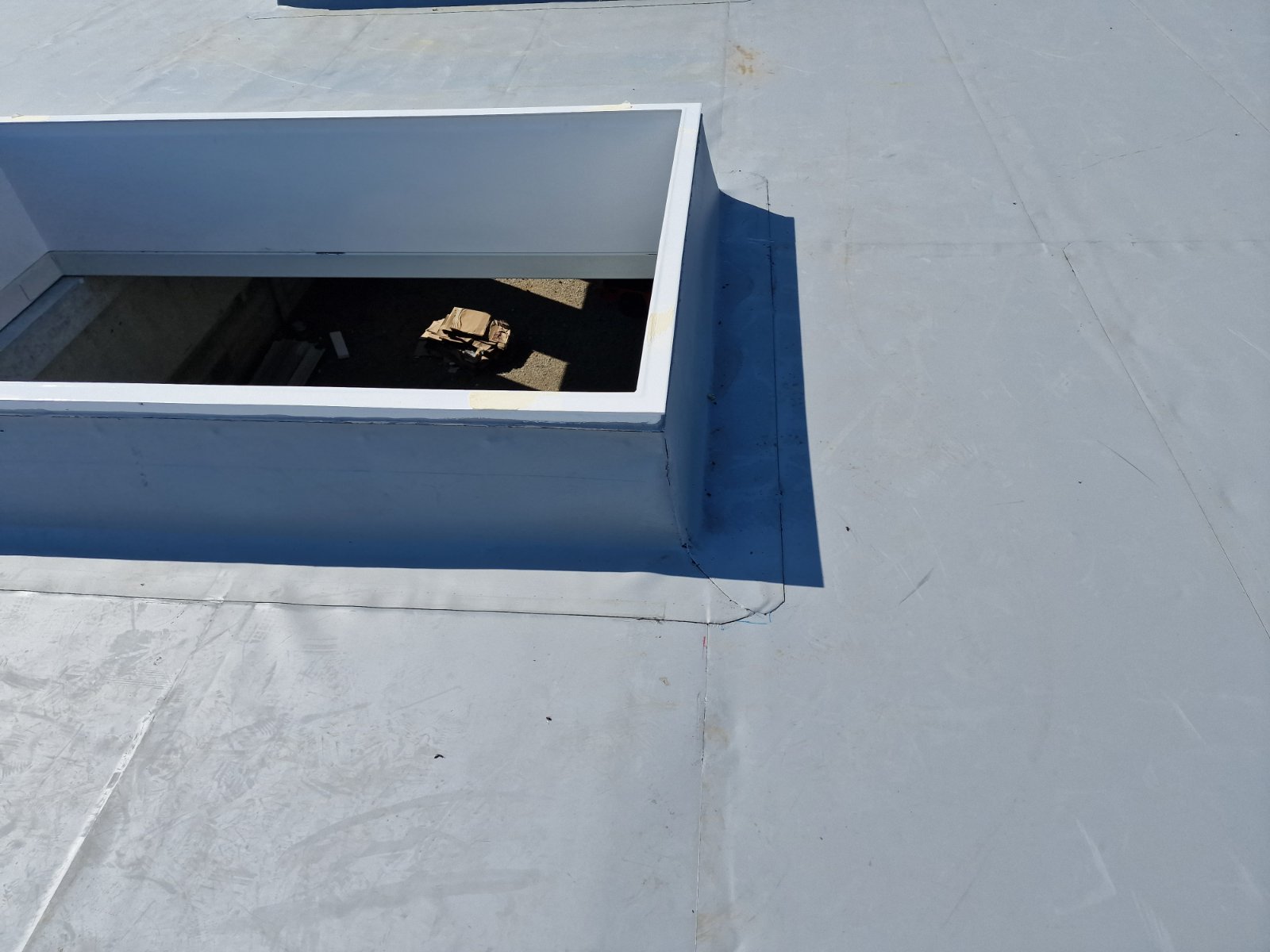
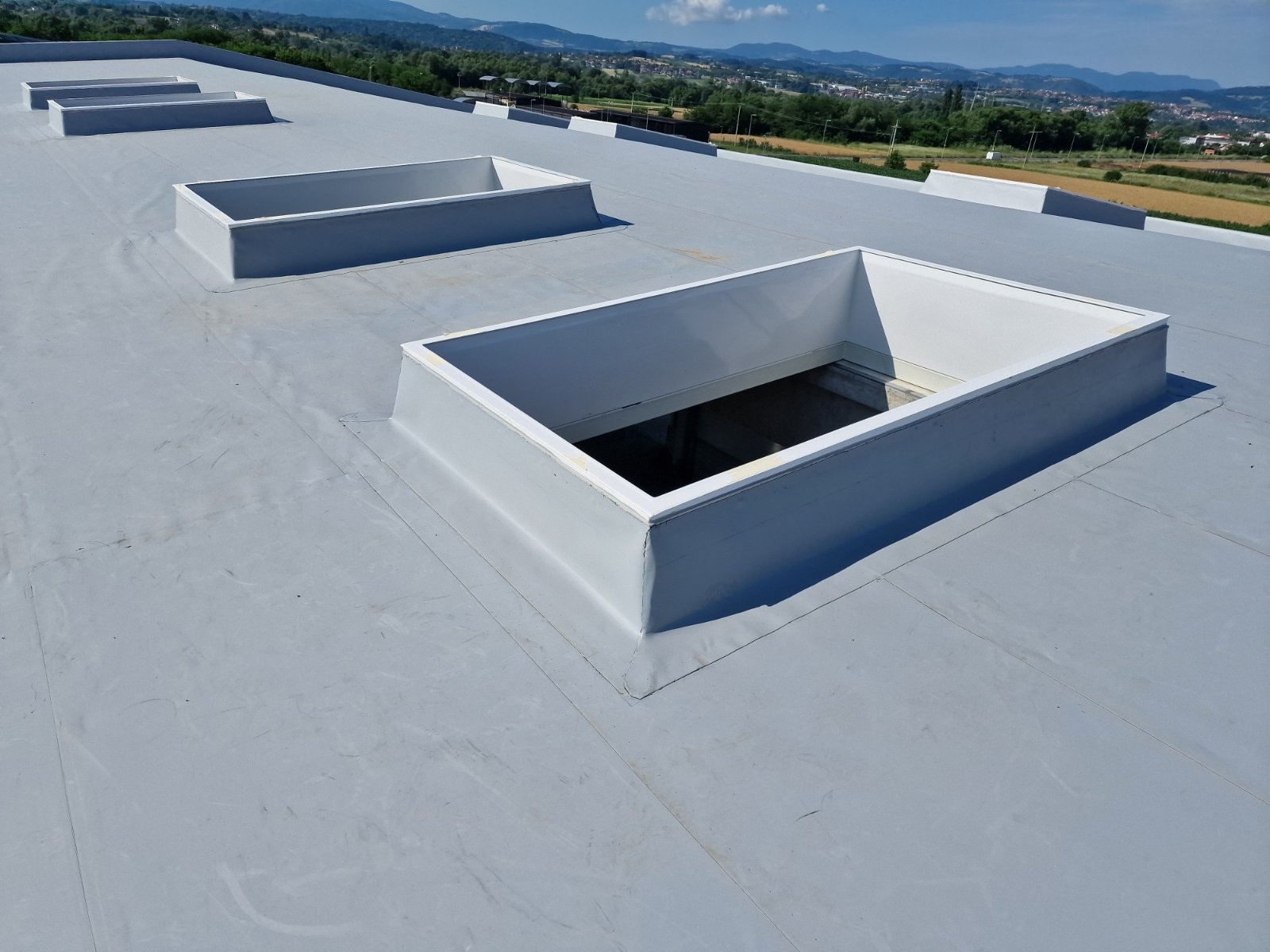
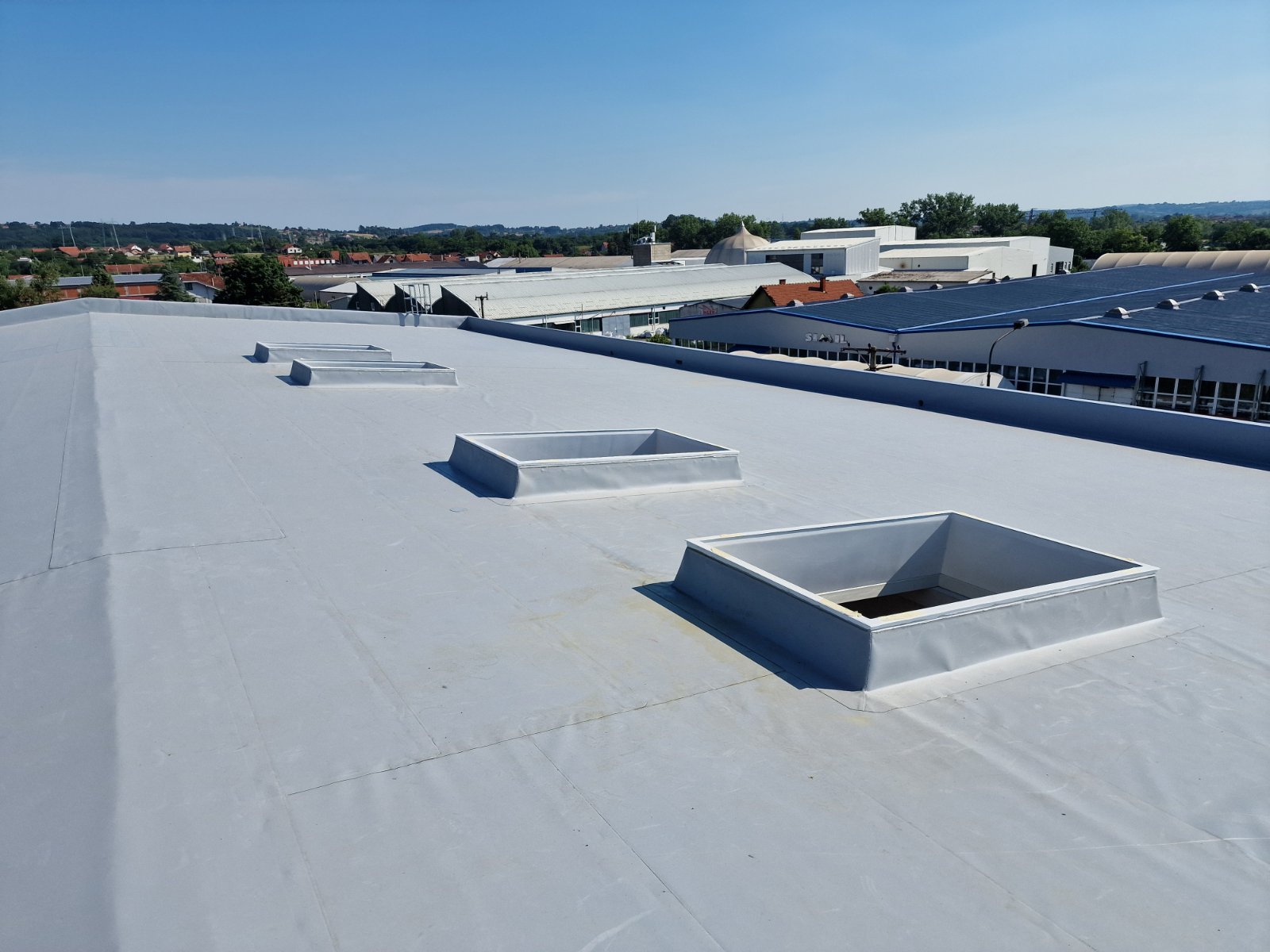
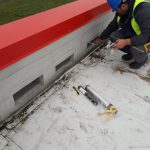
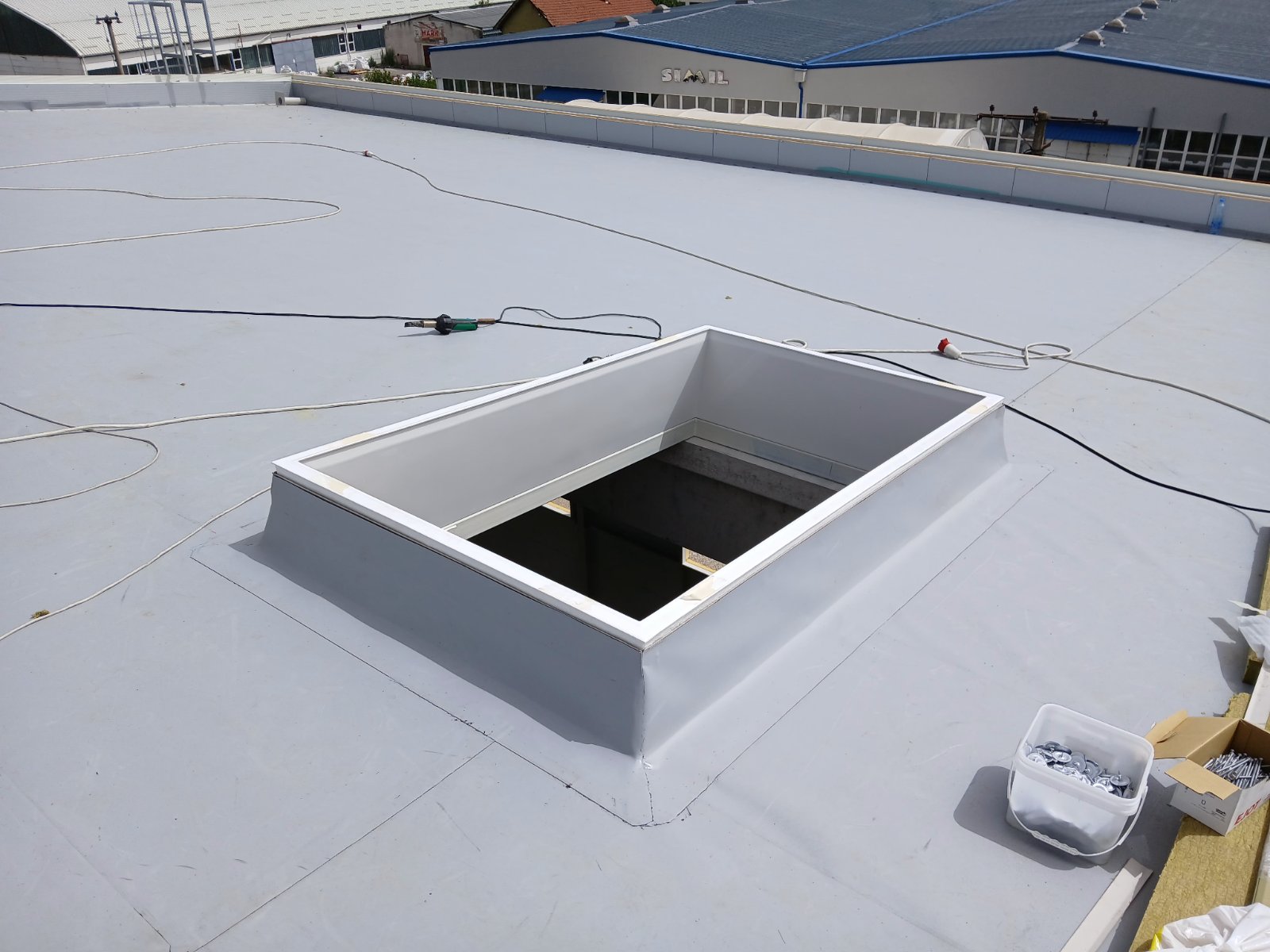
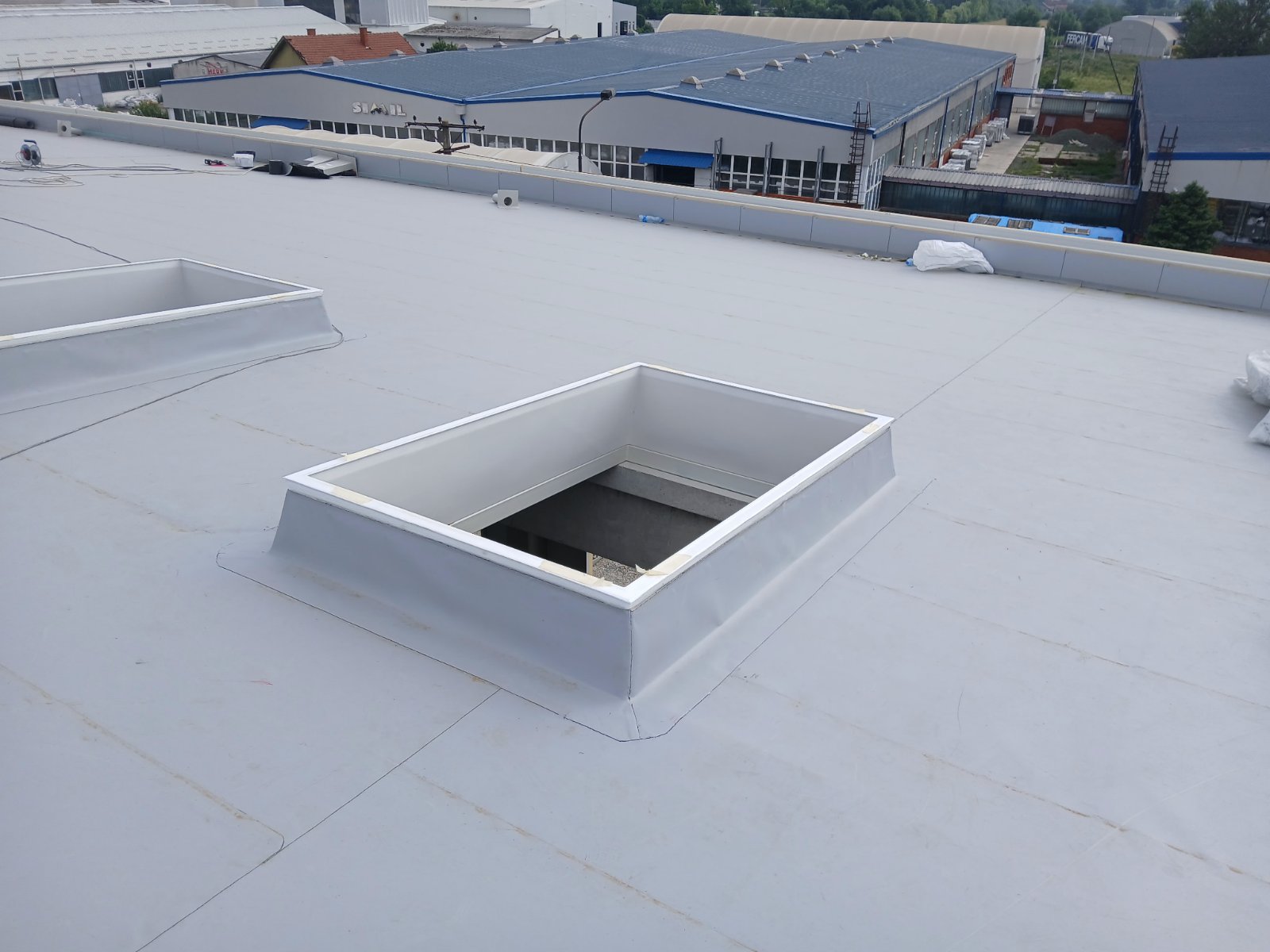
Photos during the works:
Advantages of Trapezoidal Sheet Metal Roofs
Compared to reinforced concrete roof slabs, trapezoidal sheet metal roofs have the advantage of protecting thermal insulation during the installation phase from rainwater ingress.
At the end of each working day, exposed areas are protected with plastic sheeting or vapor barrier membranes to prevent moisture ingress into the insulation layer.
If any water does penetrate the insulation, gravity causes it to drain off the sloped trapezoidal sheet surface.
Trapezoidal sheet roofs allow construction year-round, regardless of season.
Work is paused during unfavorable weather conditions (rain, snow, strong winds, extreme temperatures) for worker safety.
Flat roofs on RC slabs, which are typically horizontal, lack slope for drainage, increasing the risk of water retention and insulation saturation.
Installed elements on this project:
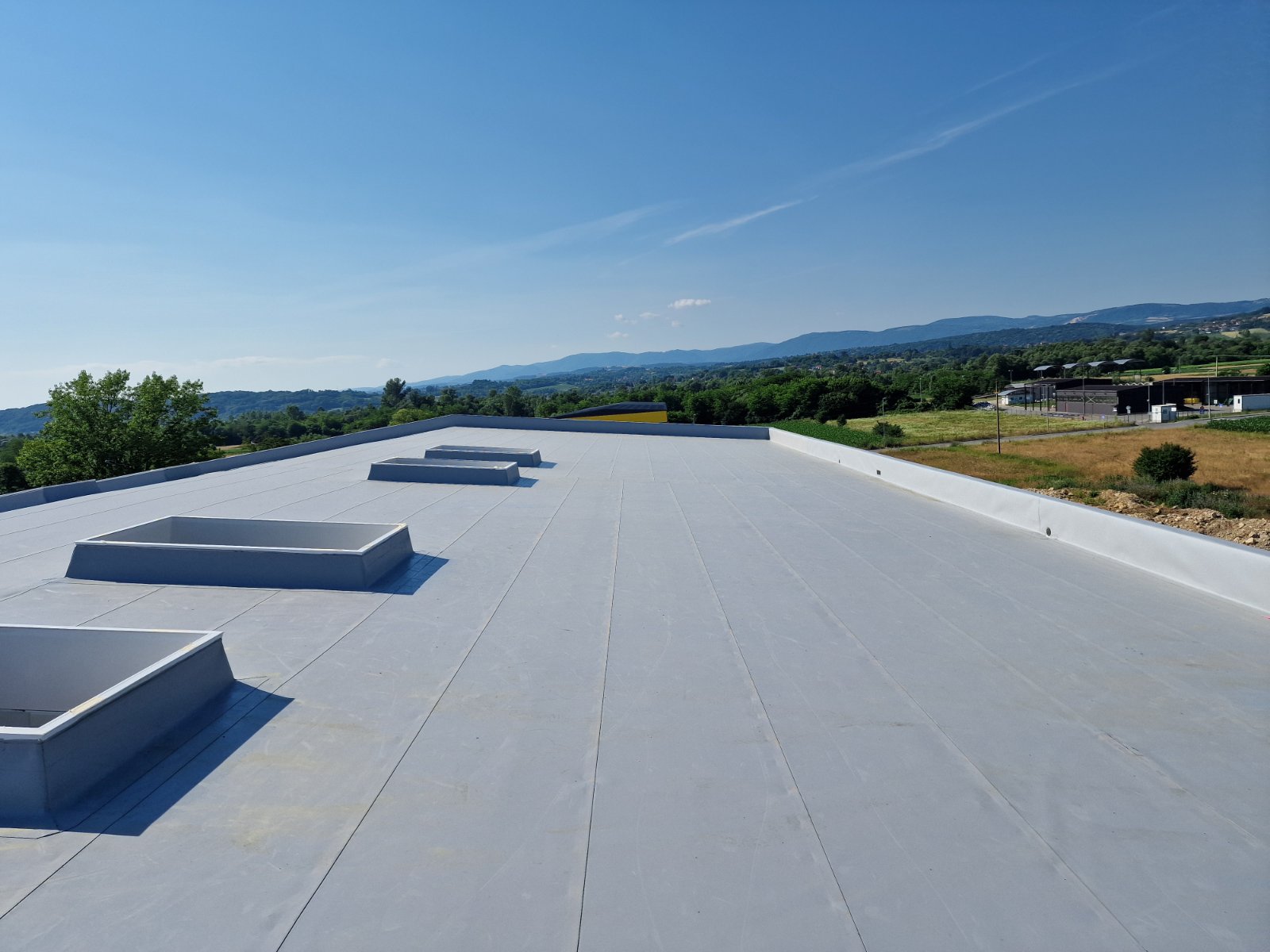
- Thermal insulation: 10 + 10 cm = 20 cm total thickness, surface area approx. 1,130 m²
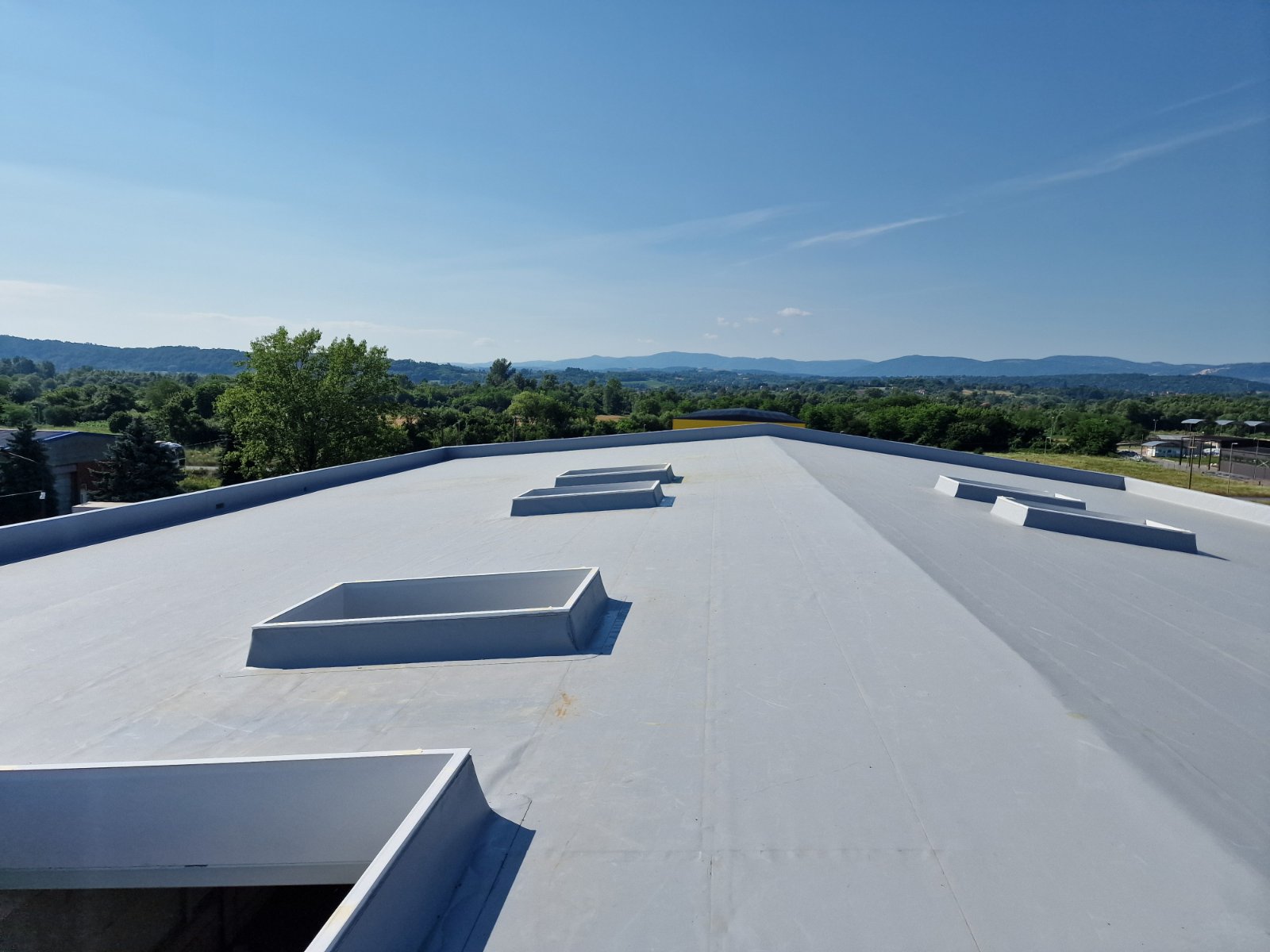
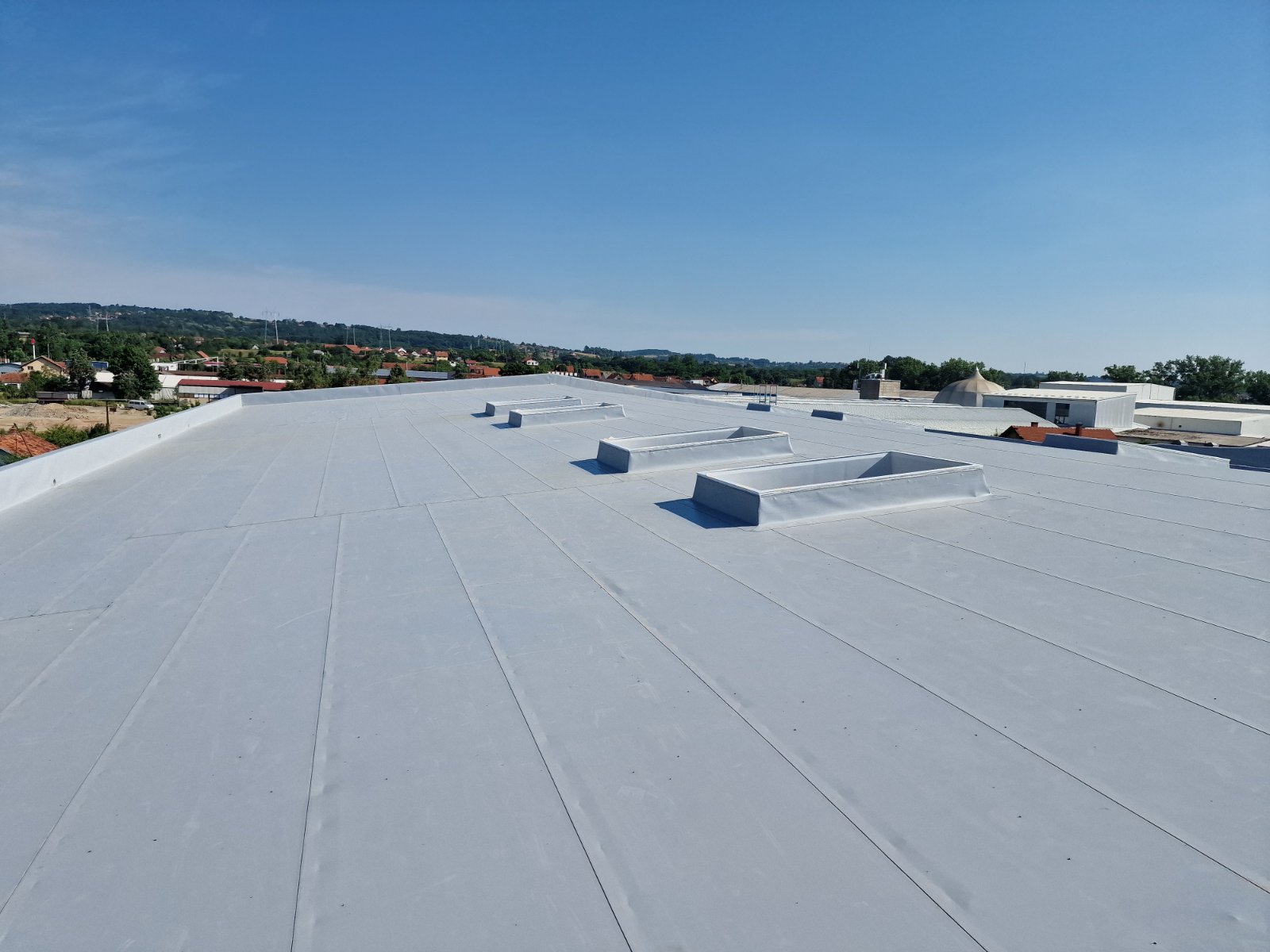
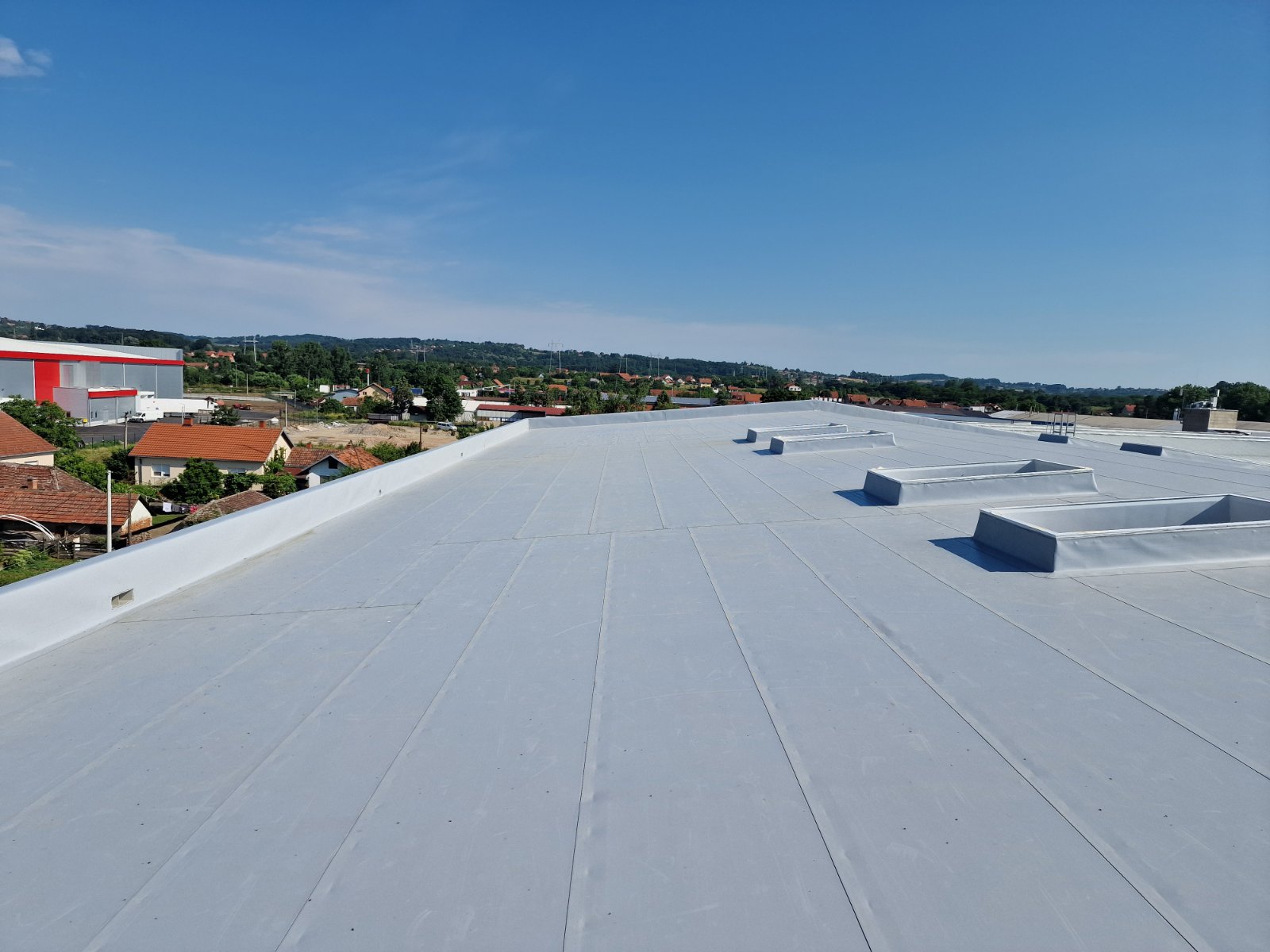
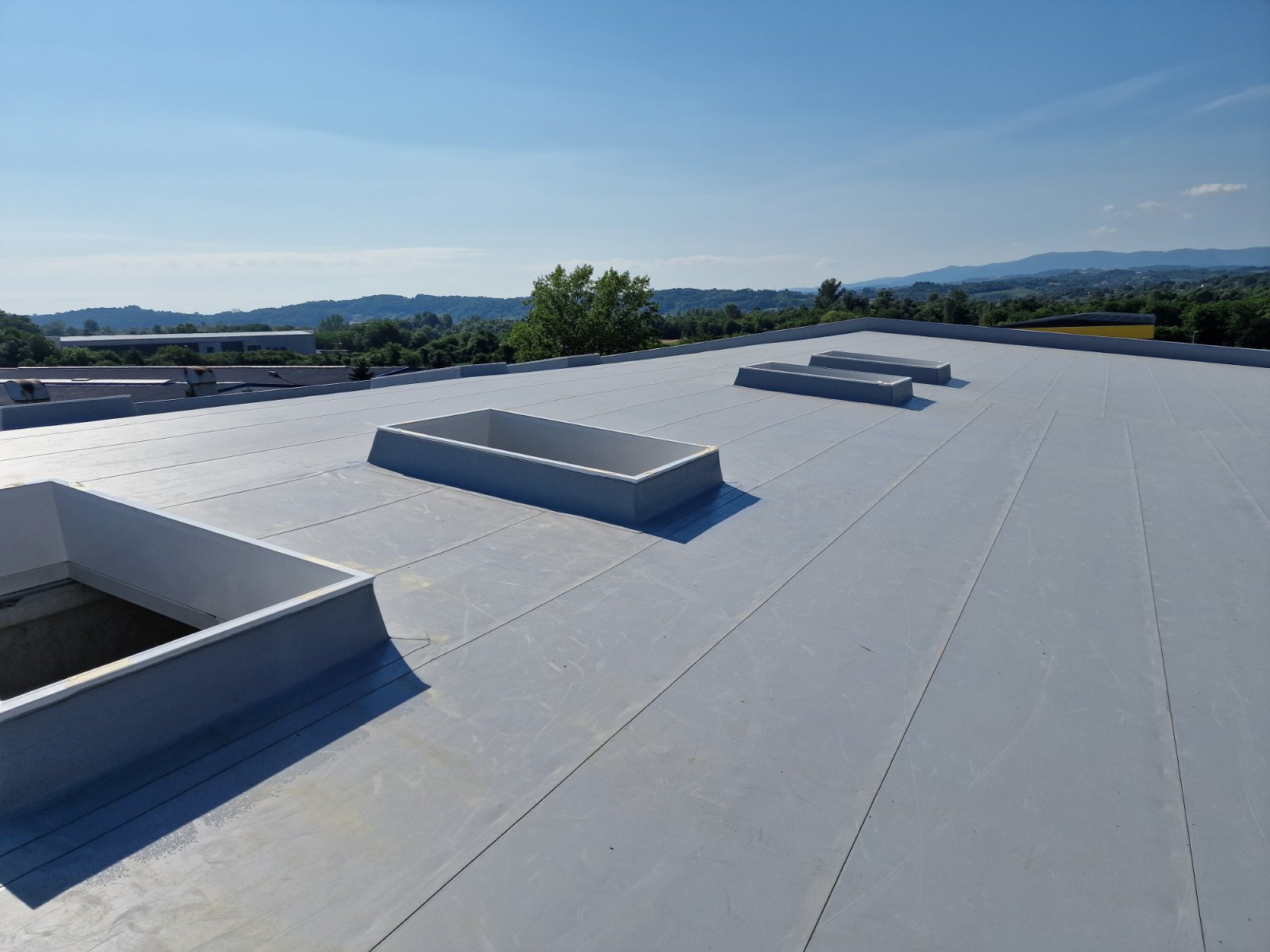
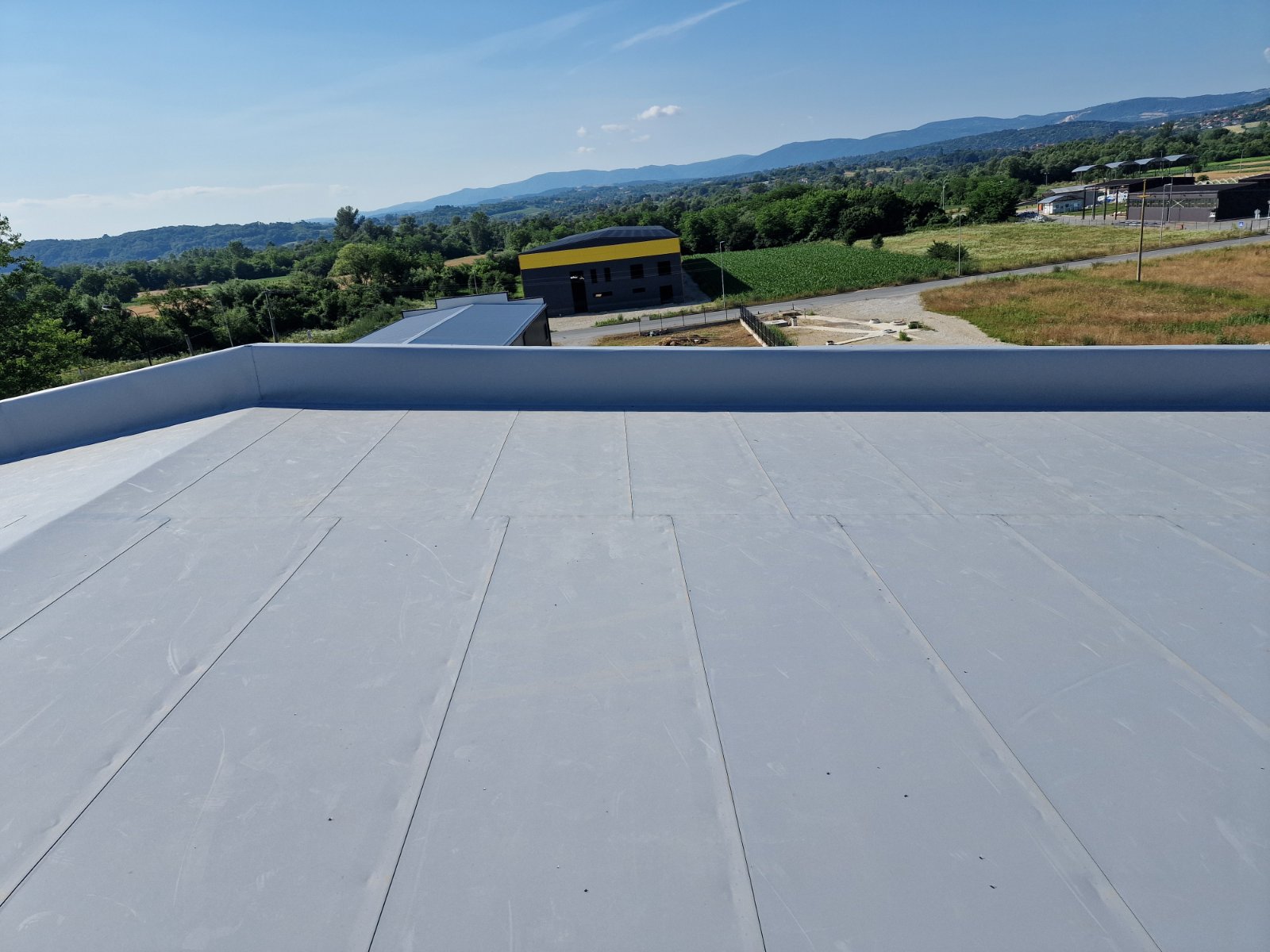
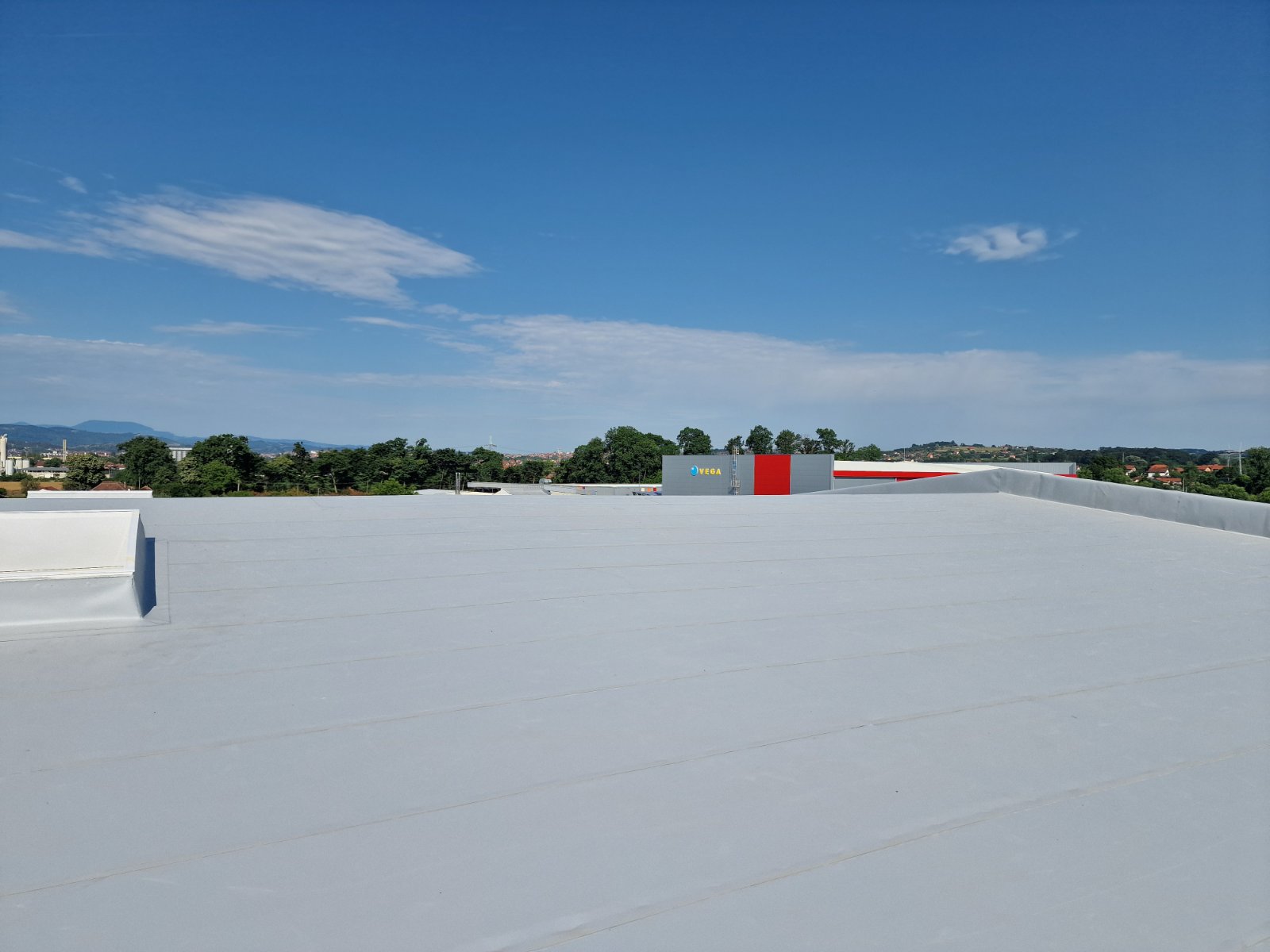
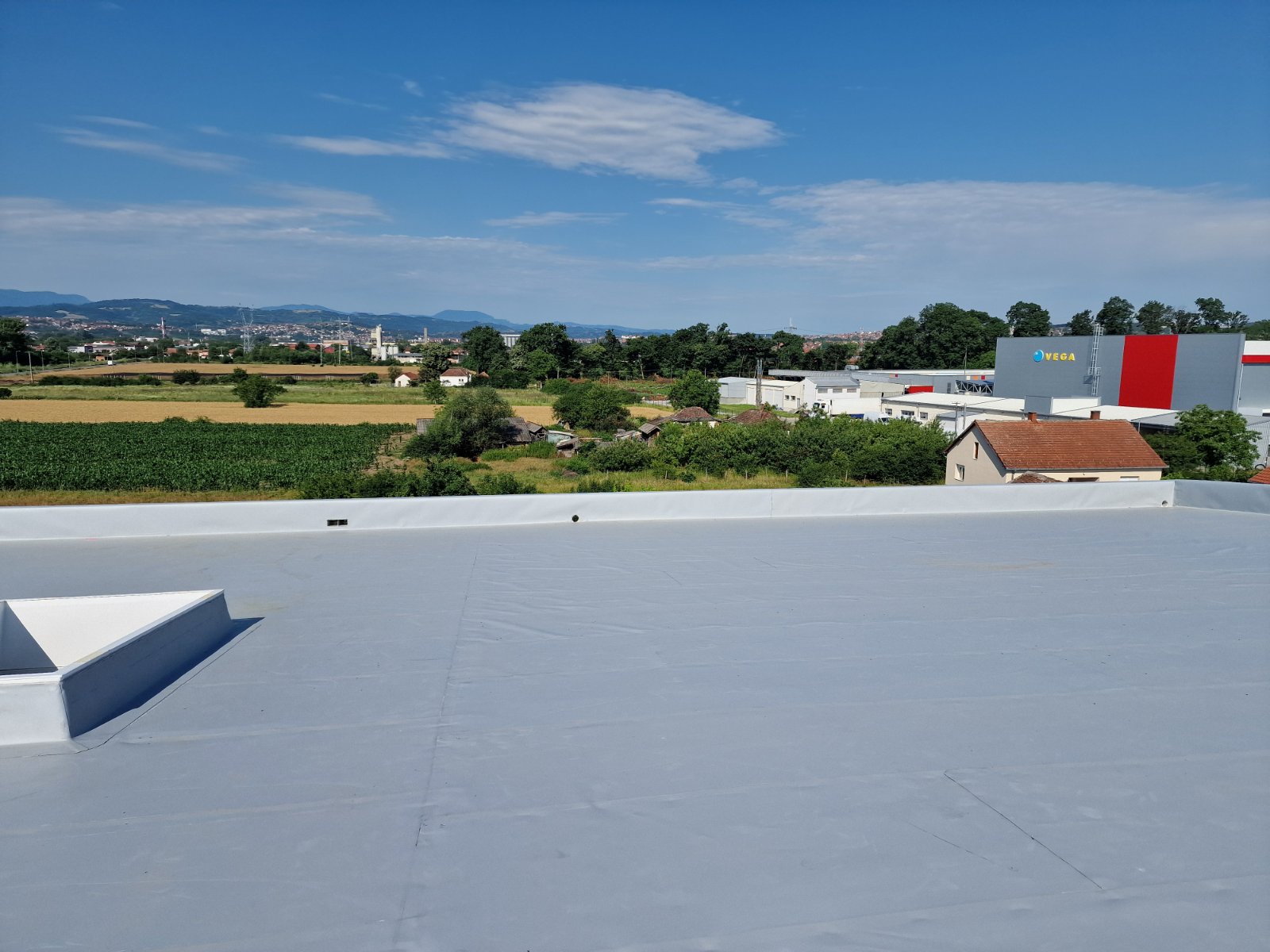
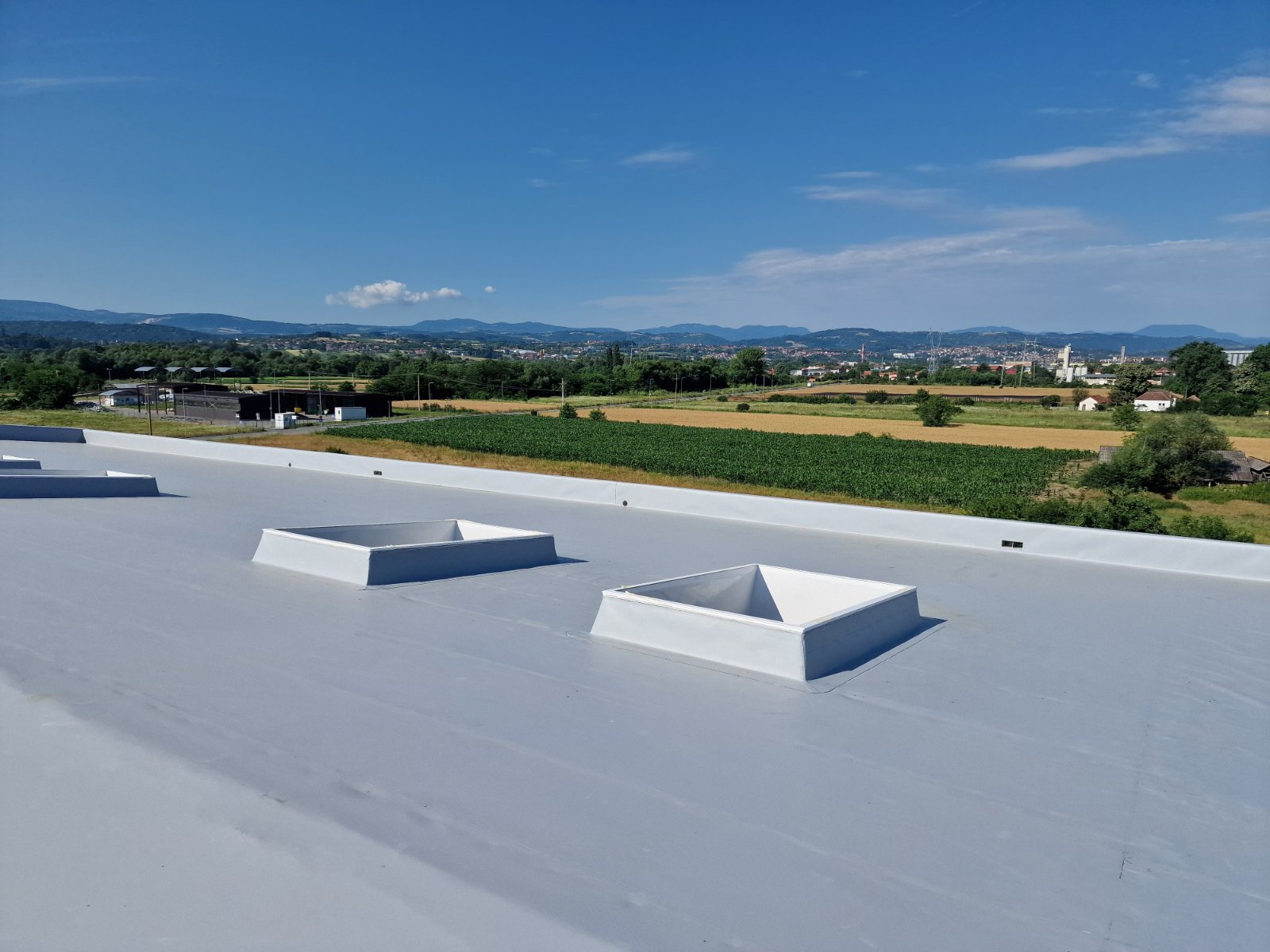
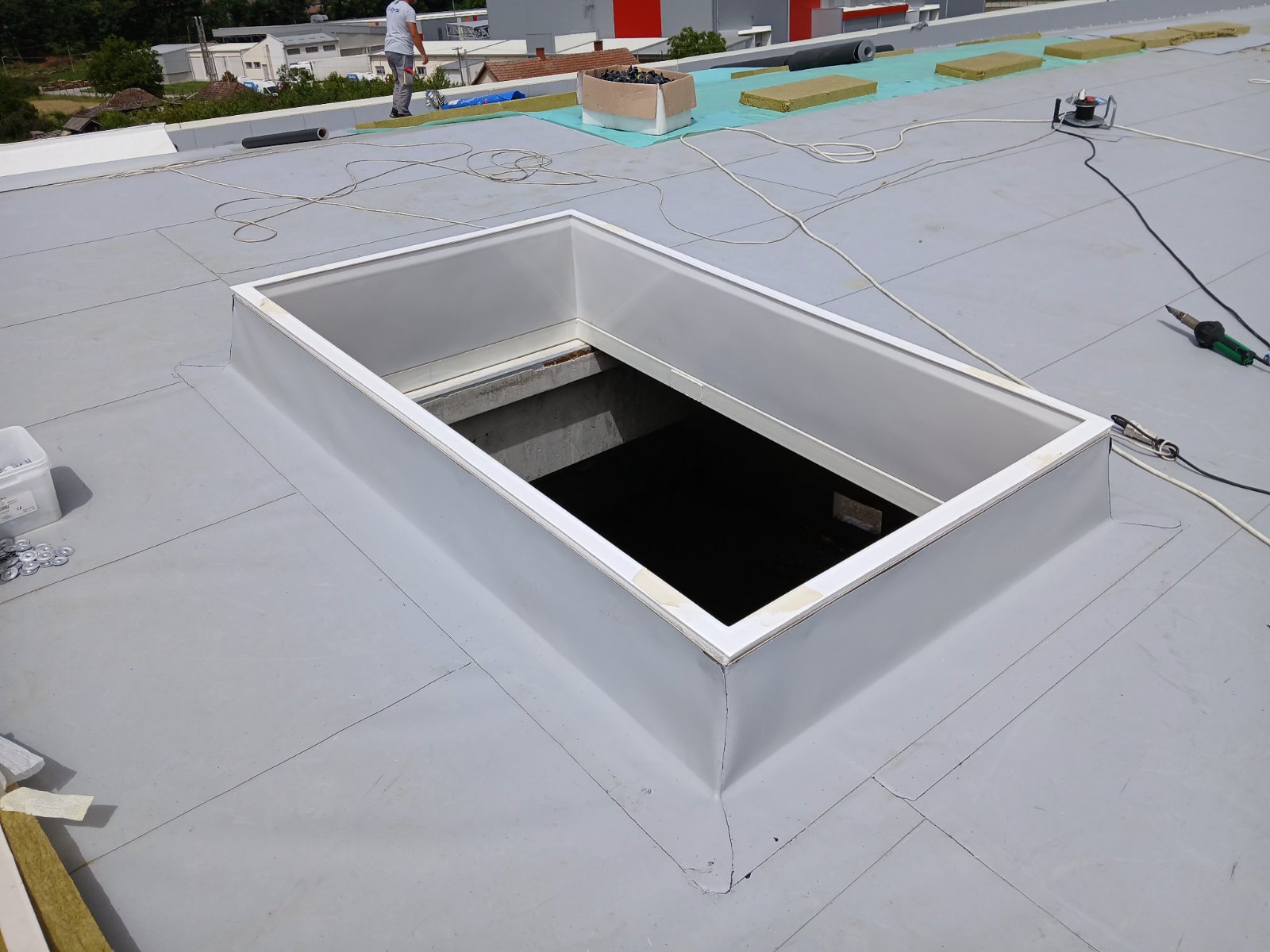
- Waterproofing: FPO membrane, thickness 2 mm, surface area approx. 1,250 m²
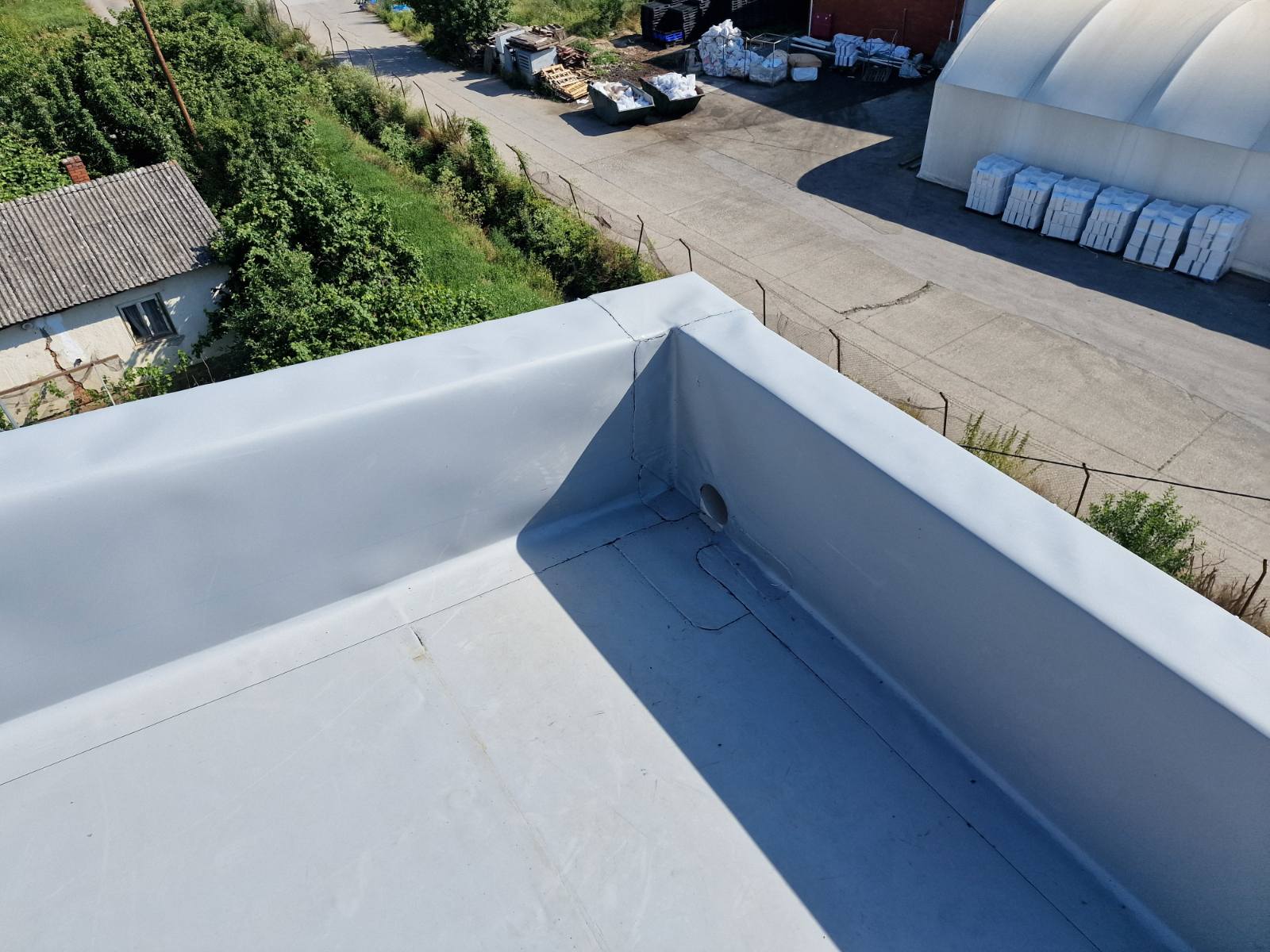
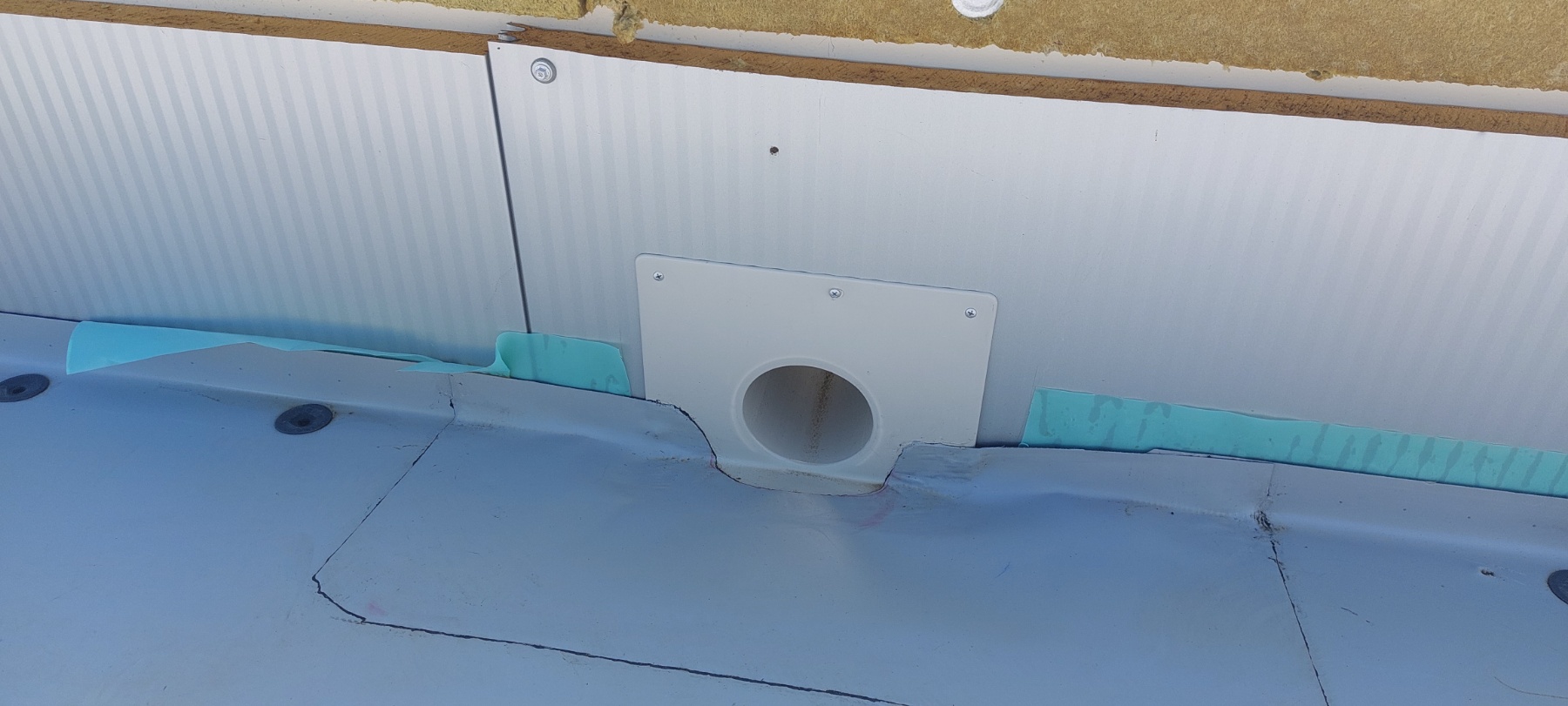
- Horizontal FPO roof drains, Ø125 mm – 10 pcs
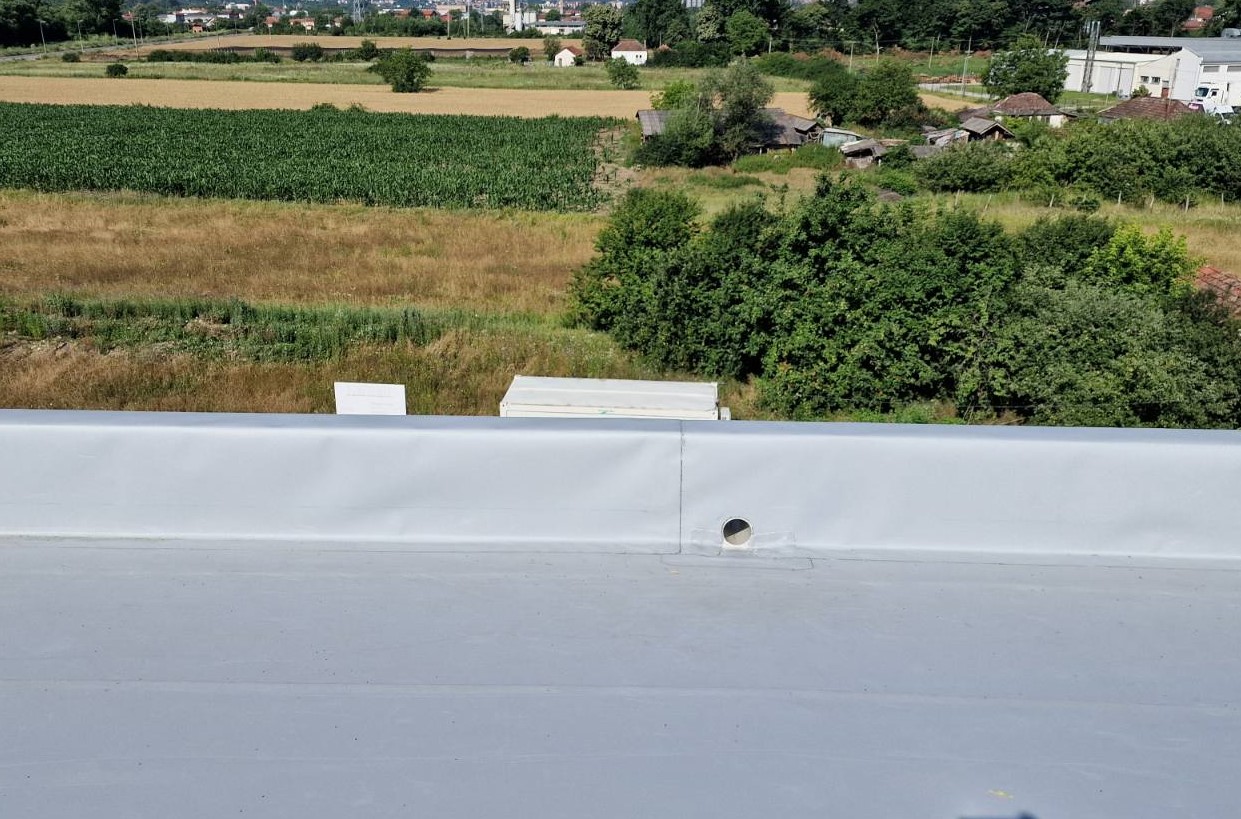
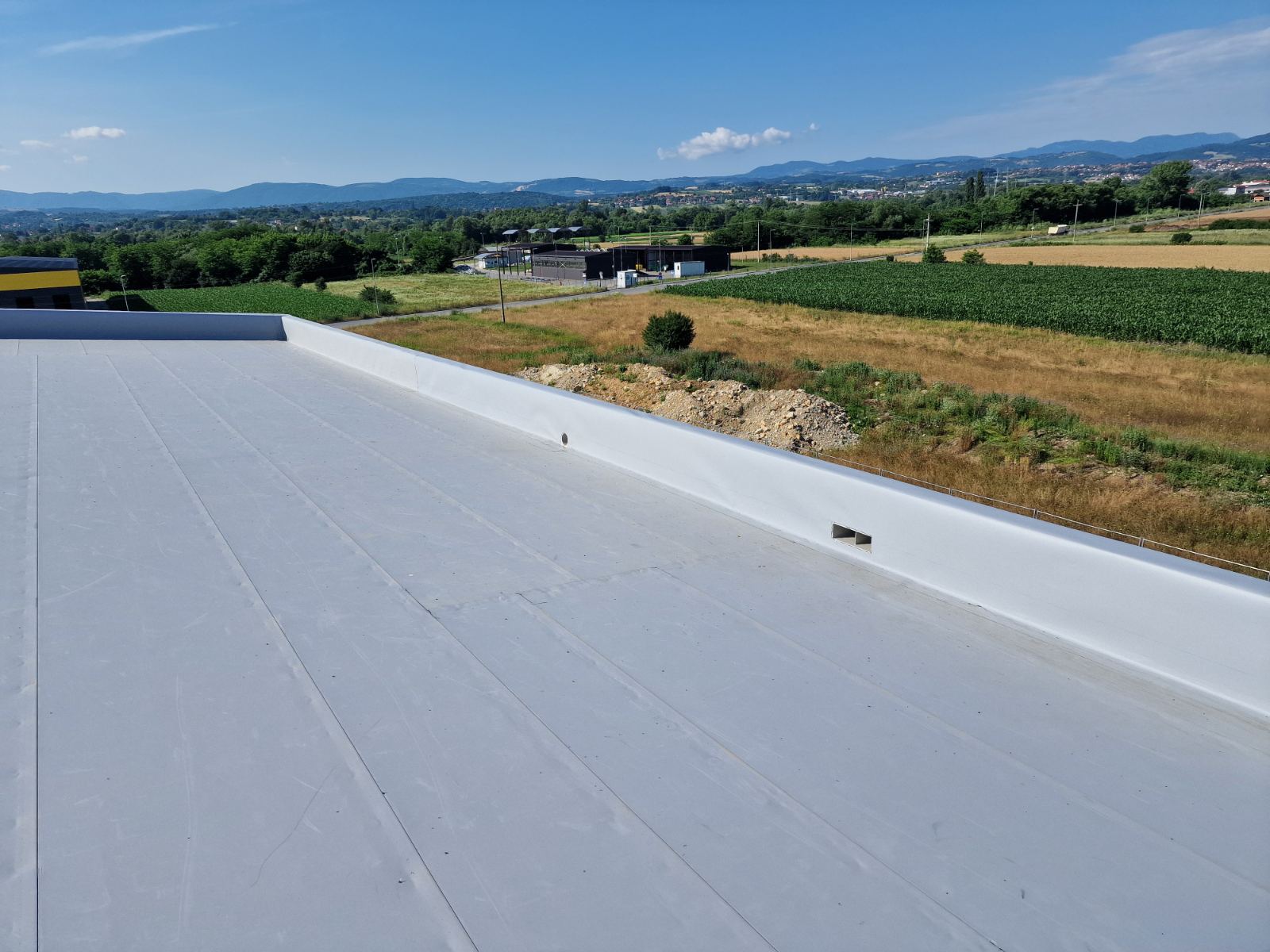
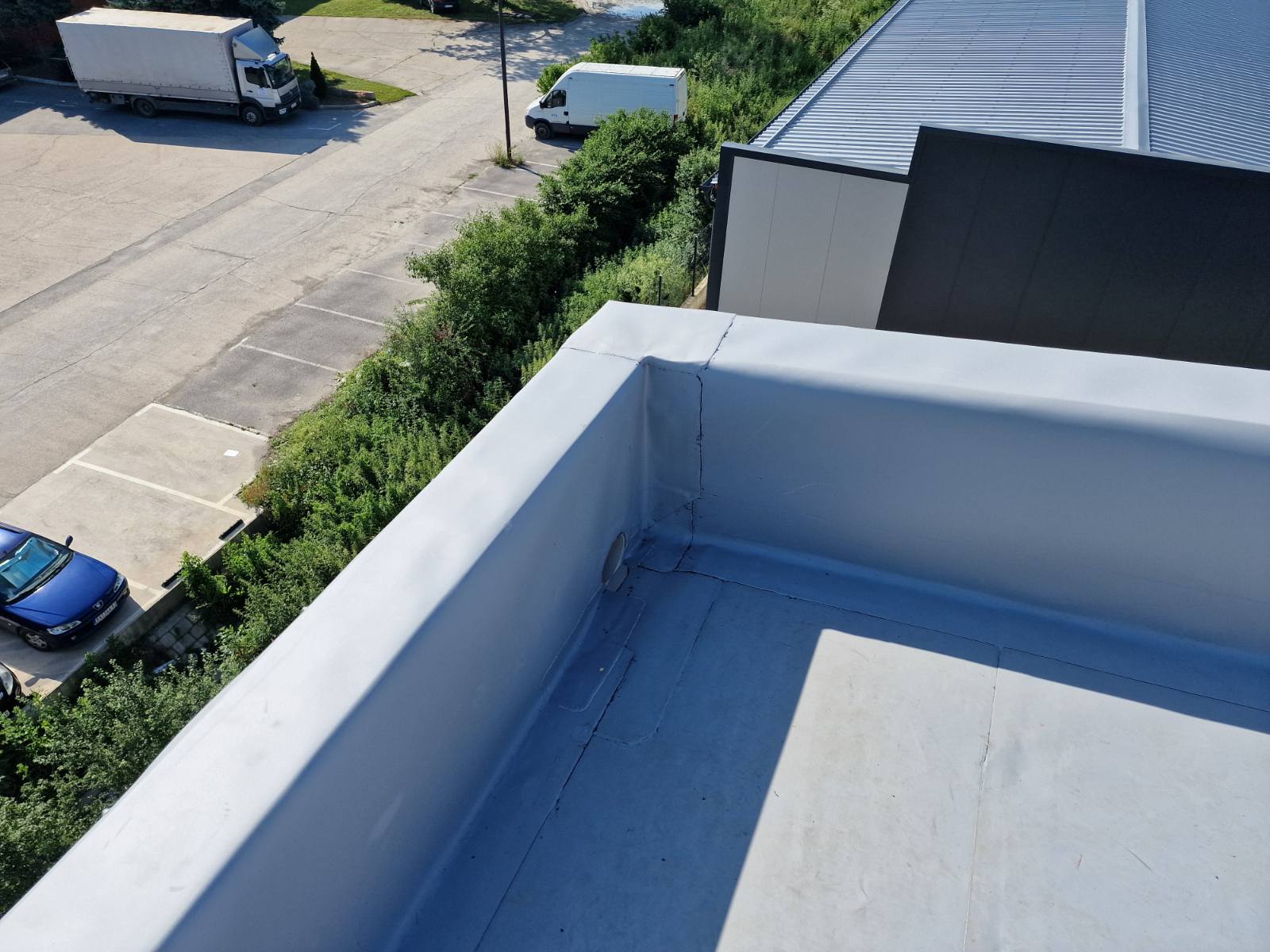
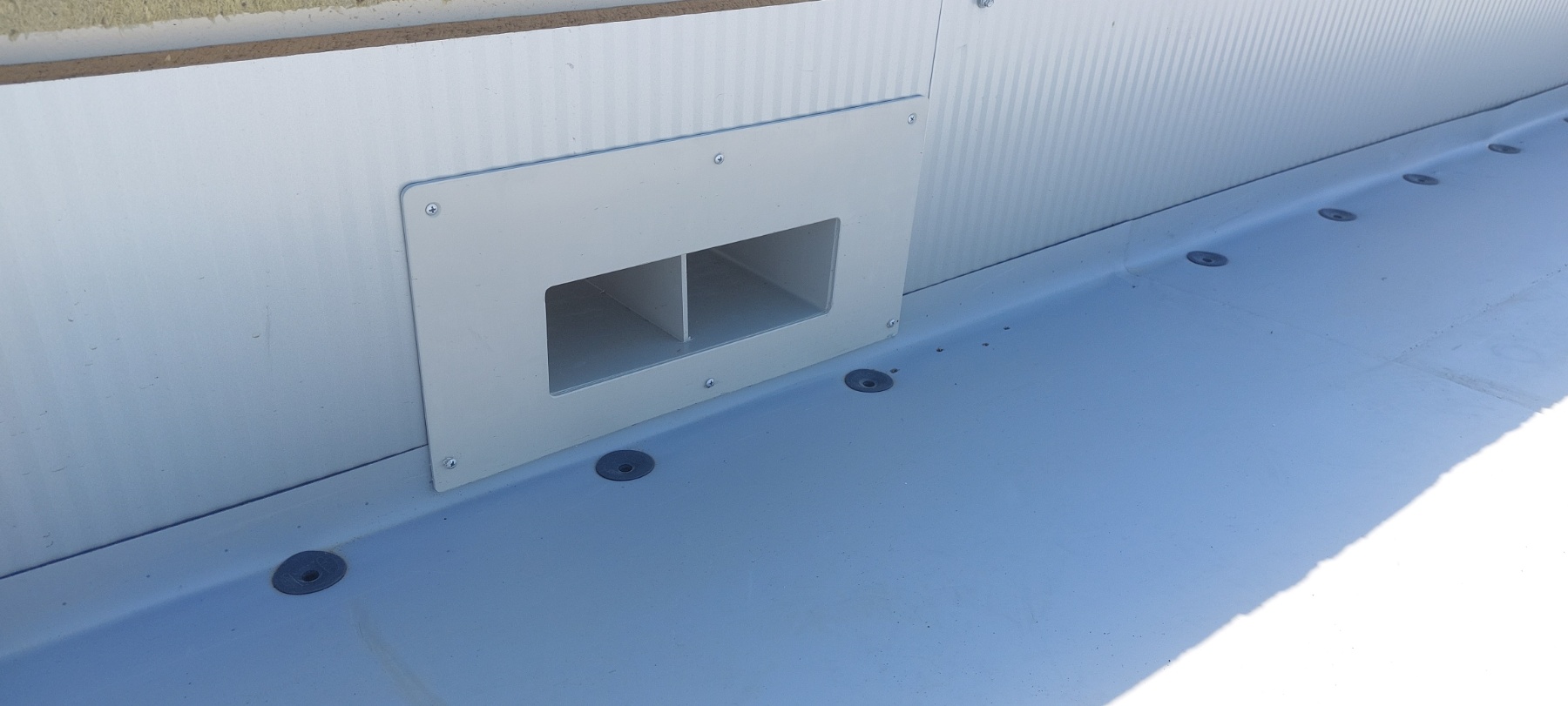
- Emergency overflow scuppers, 300 mm x 100 mm – 4 pcs
Critical elements of flat roofs include roof drains and emergency overflow systems.
Due to increasingly frequent intense rainfall, there is a risk that the primary drainage (rainwater pipes) may become overwhelmed or fail.
If water rises above the designed level, emergency overflow scuppers are activated, preventing roof overloading and potential structural damage or collapse due to water accumulation.
Insurance companies also often require flat roofs to include overflow protection as a condition for coverage.
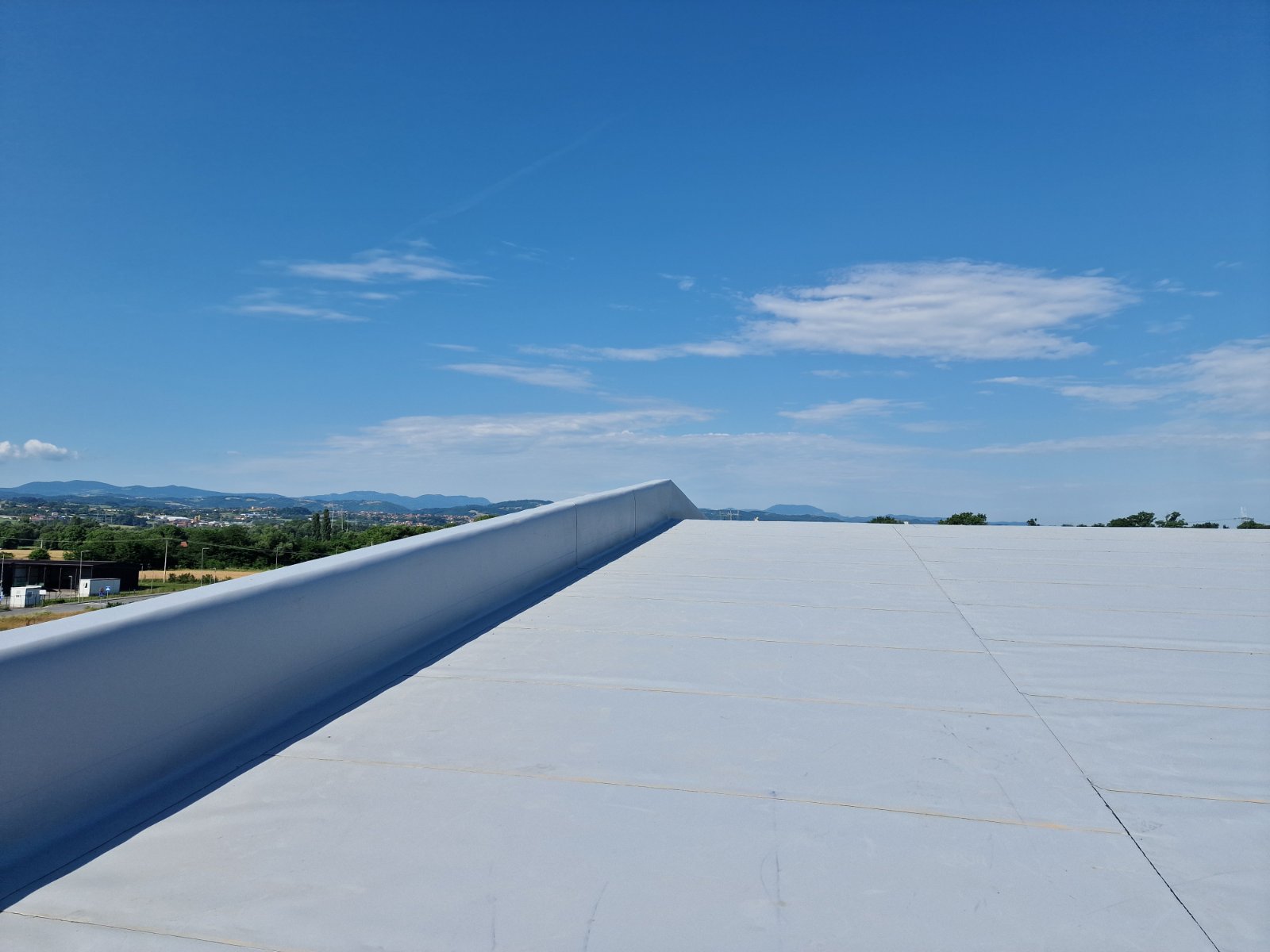
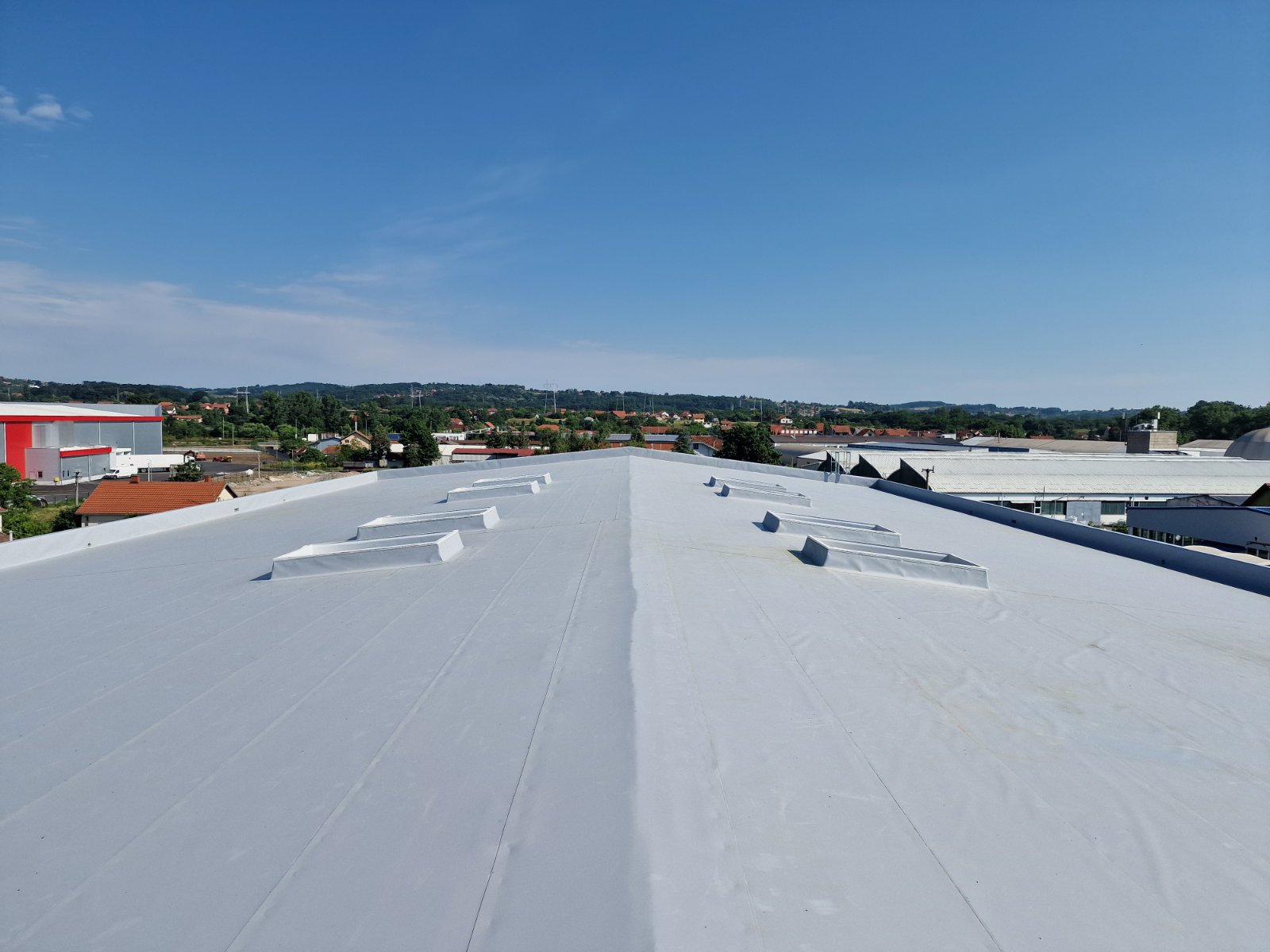
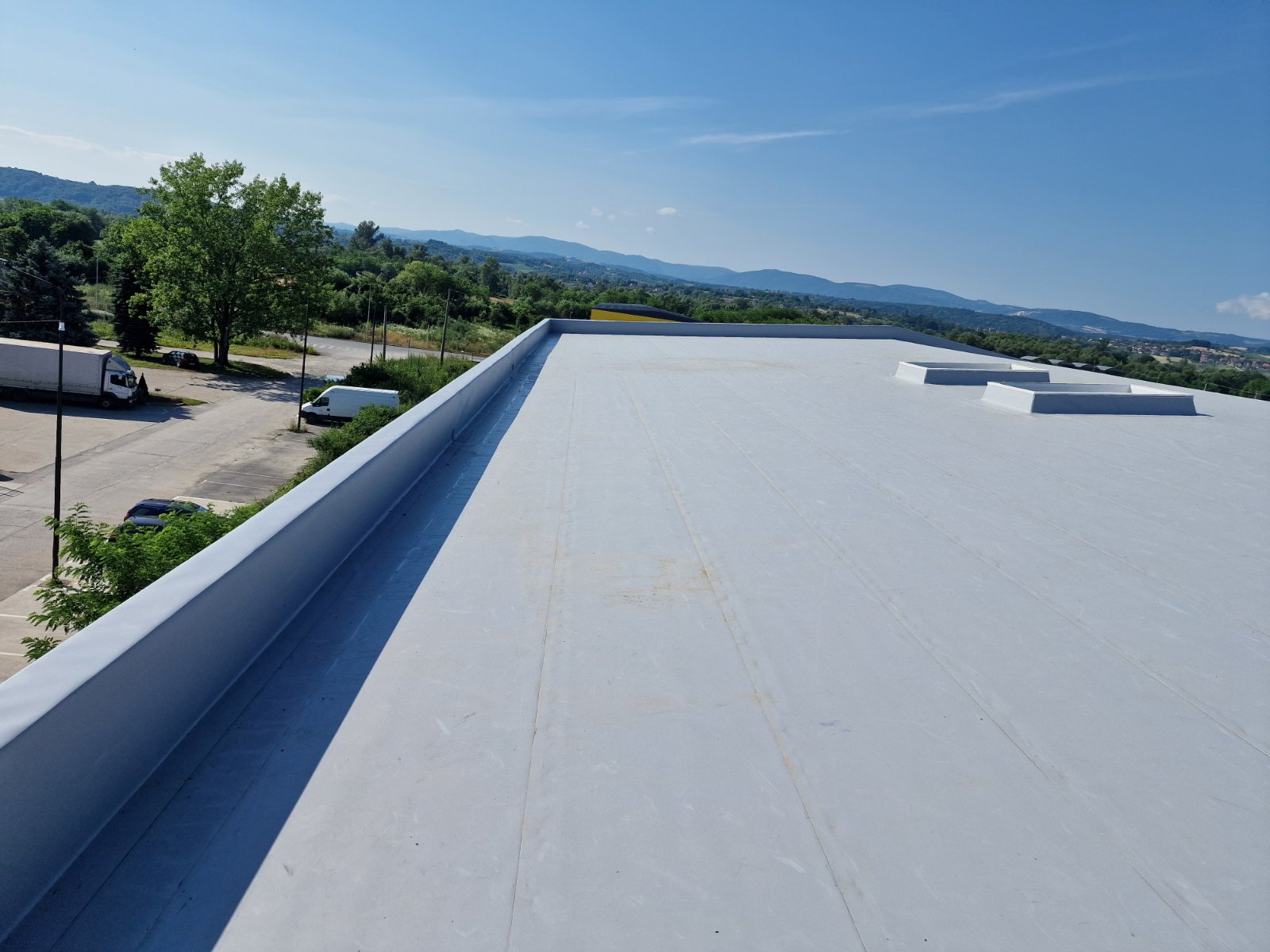
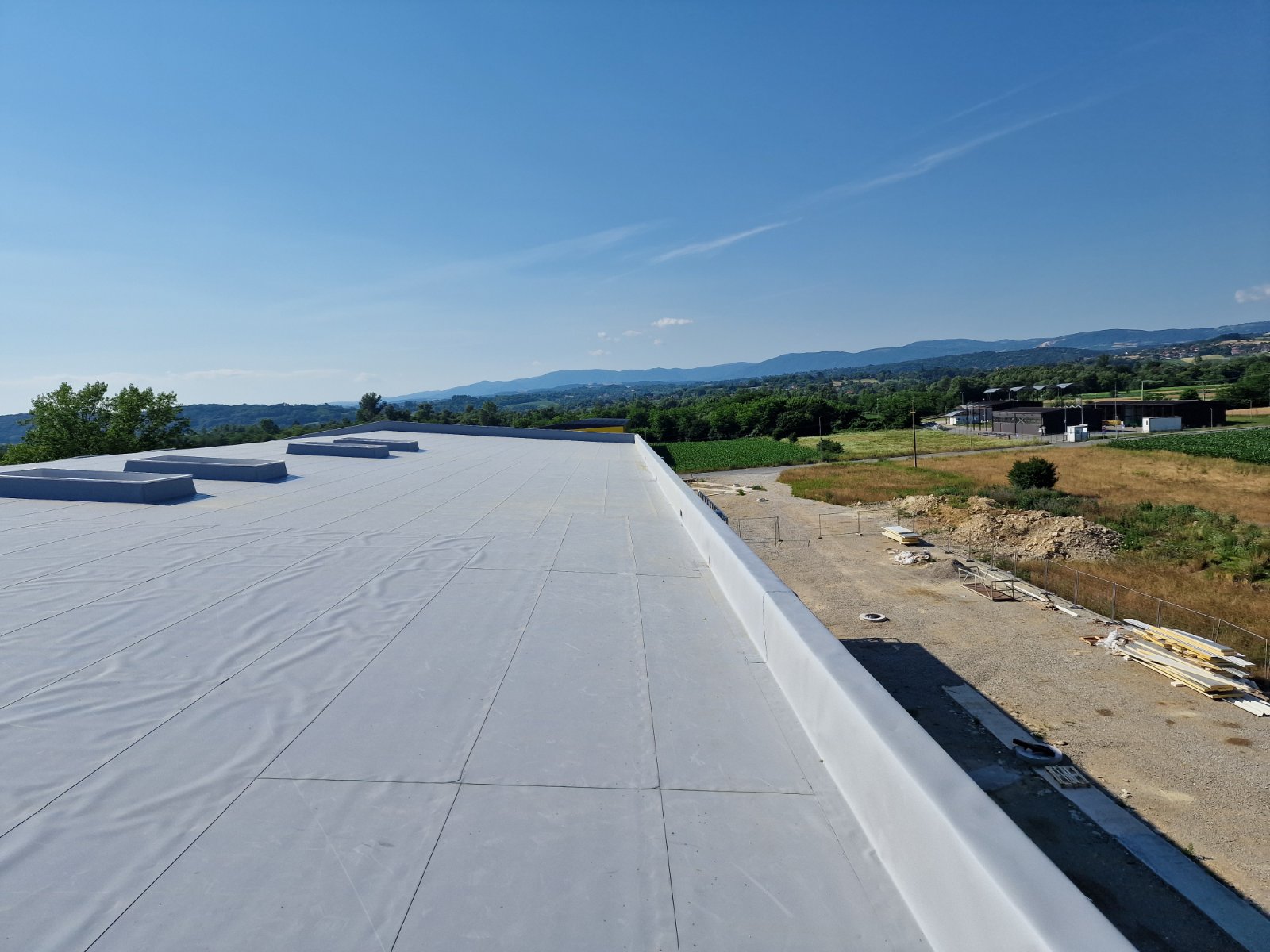
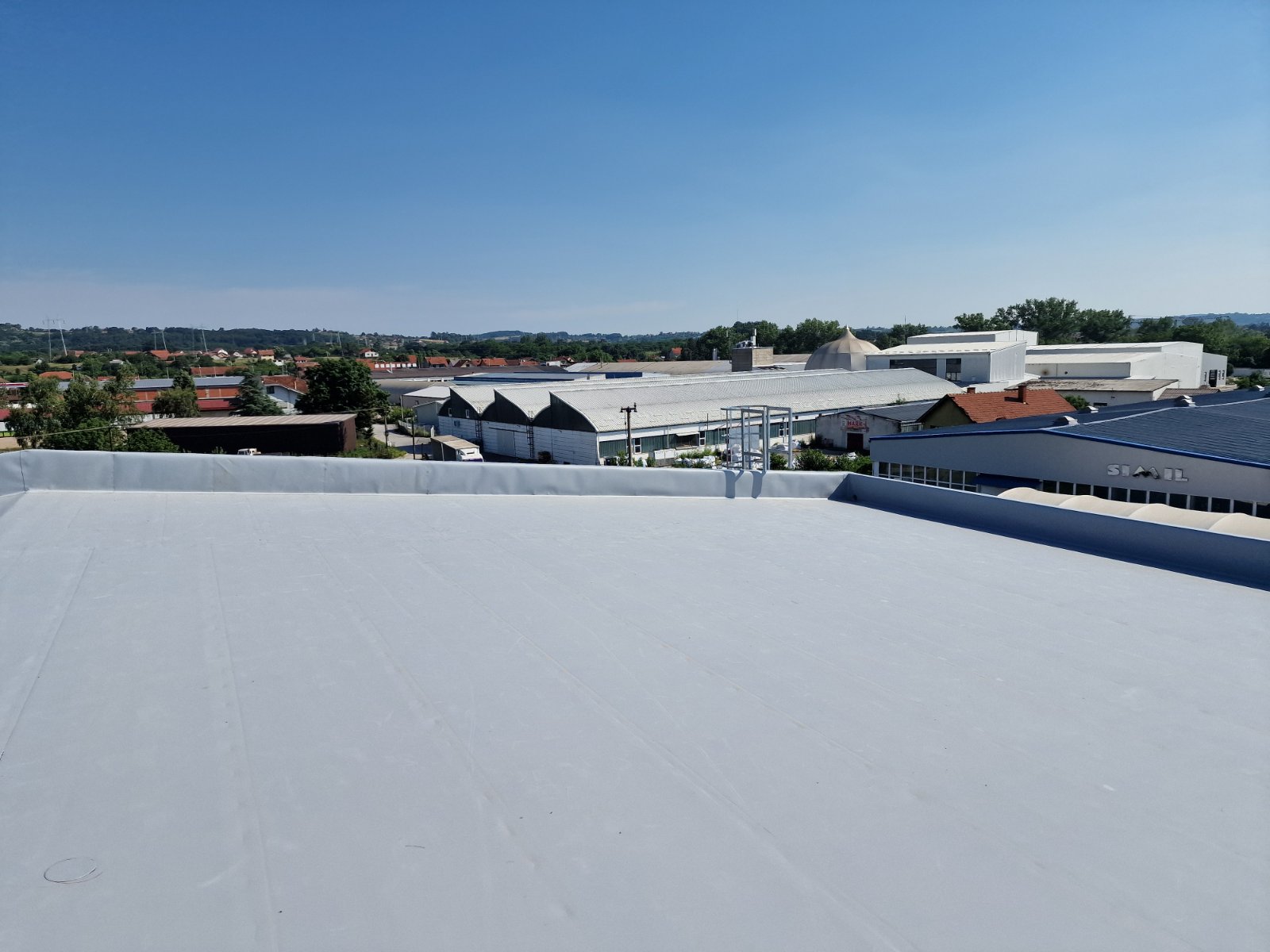
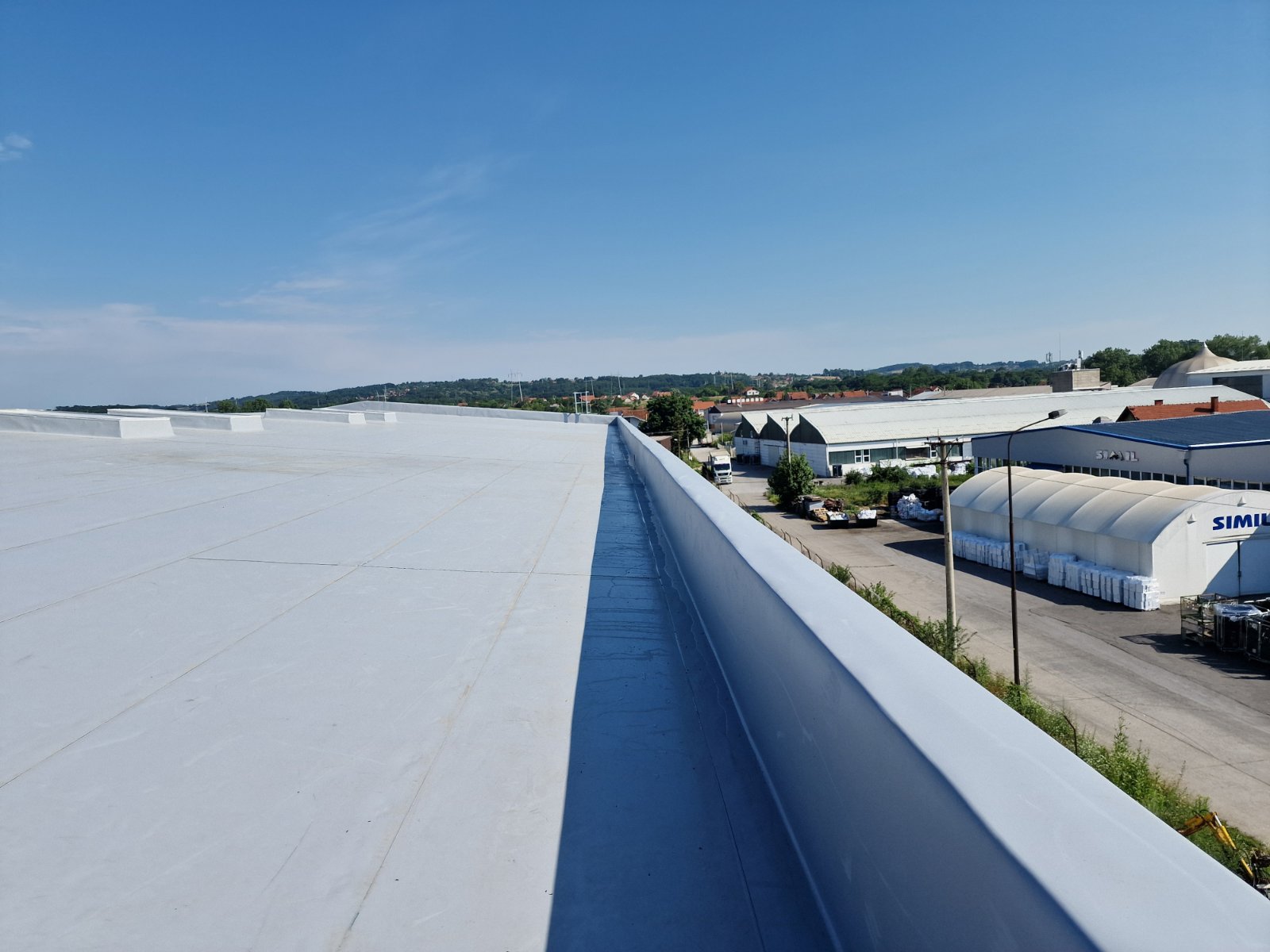
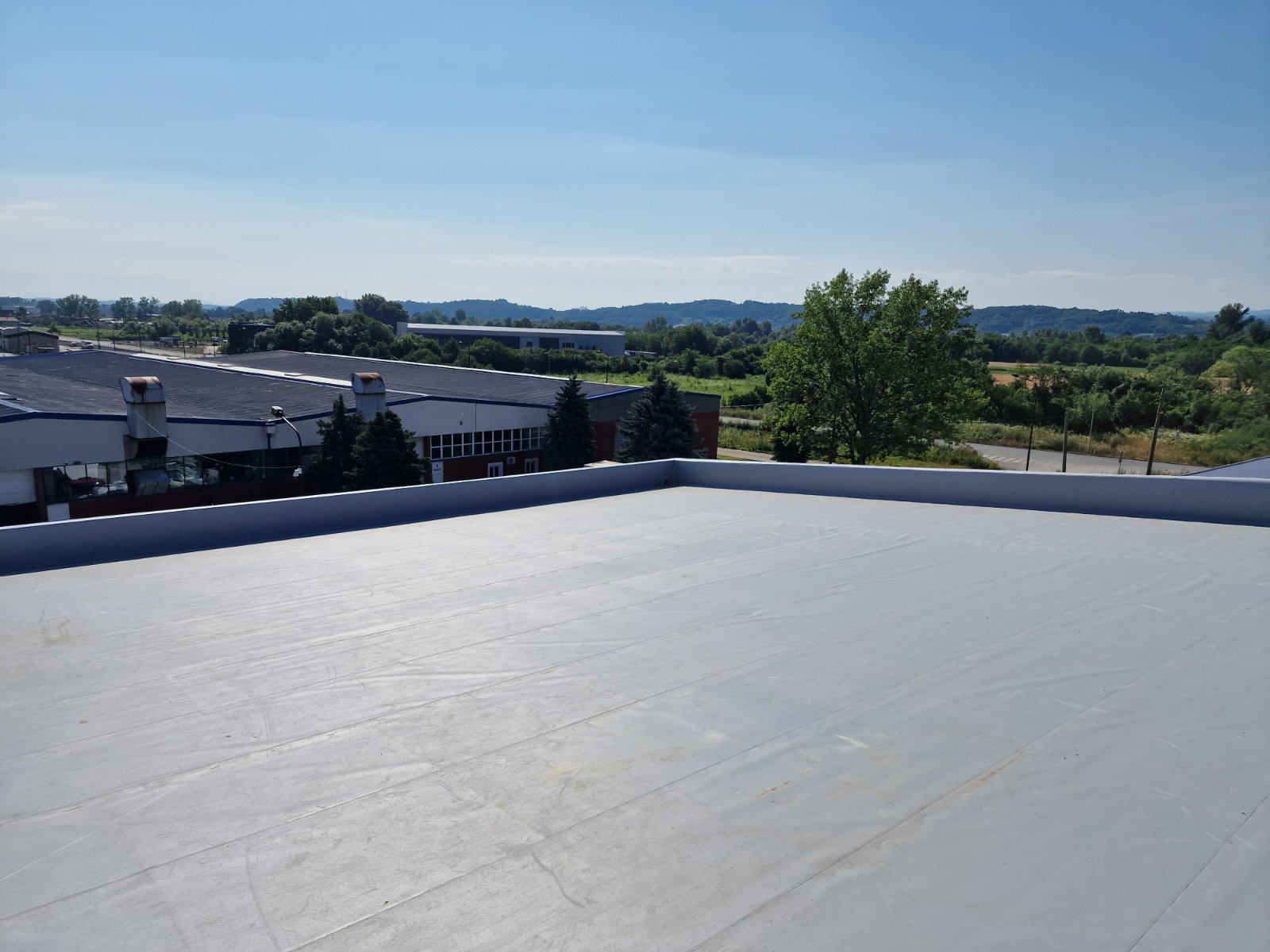
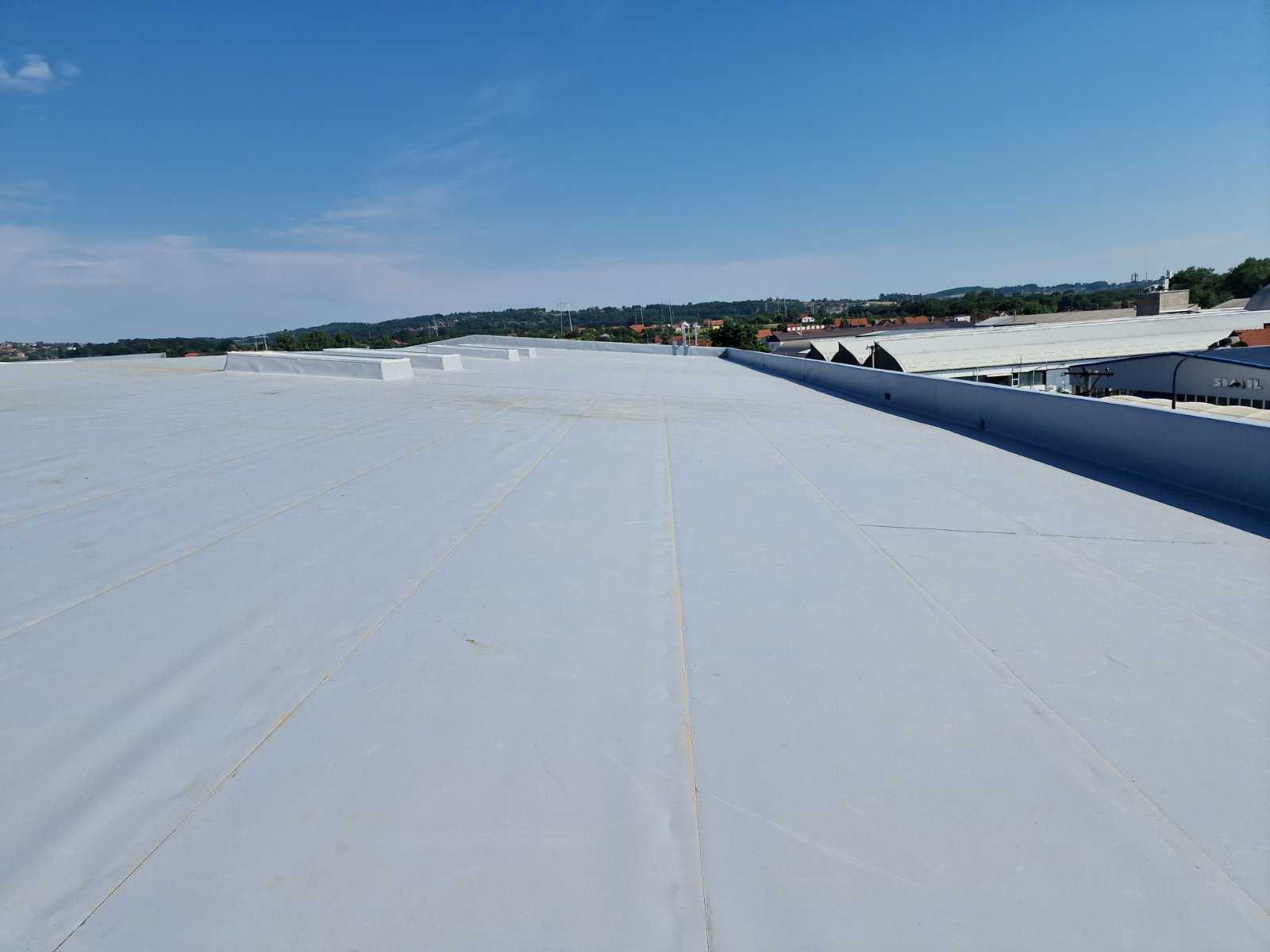
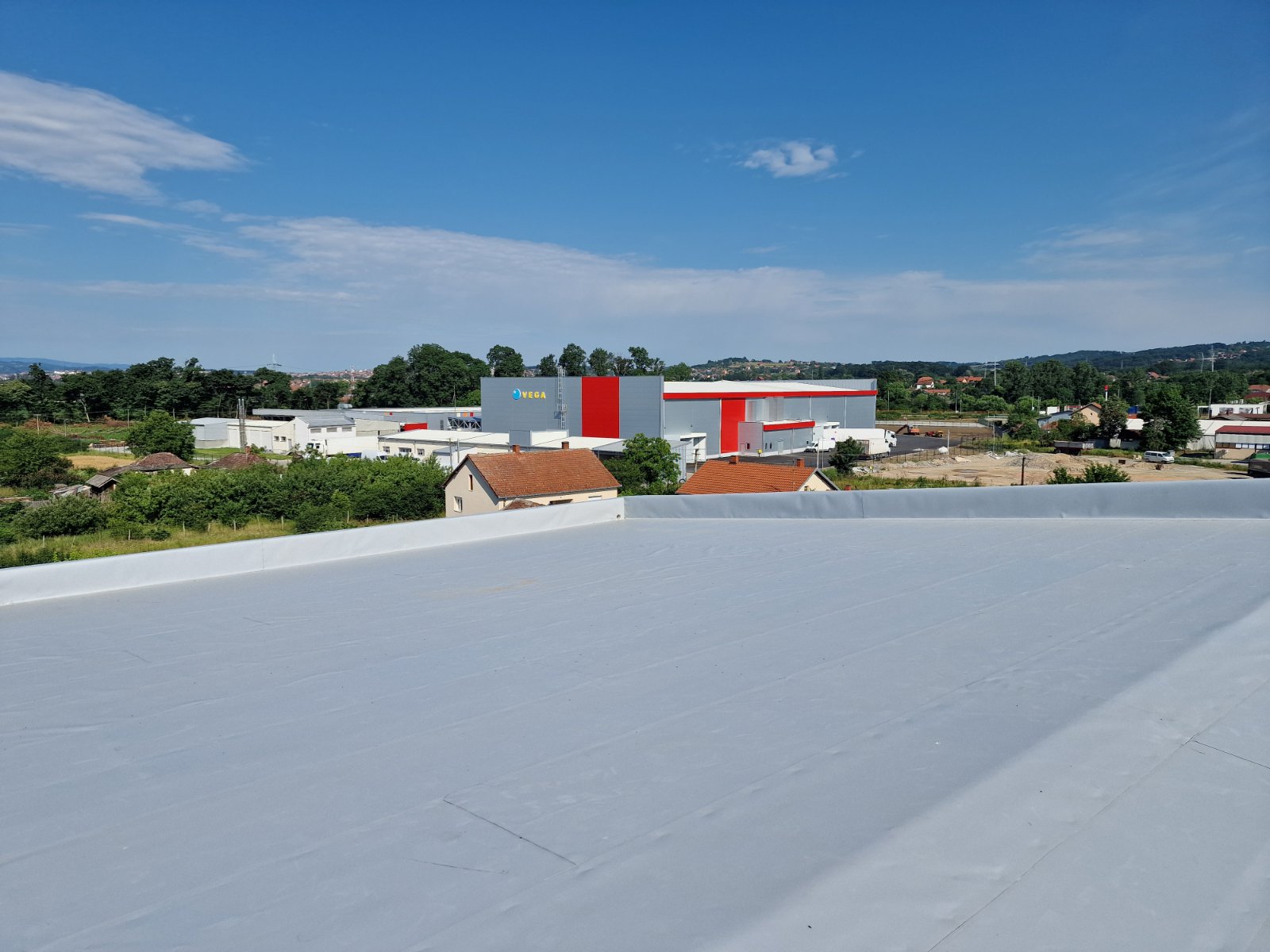
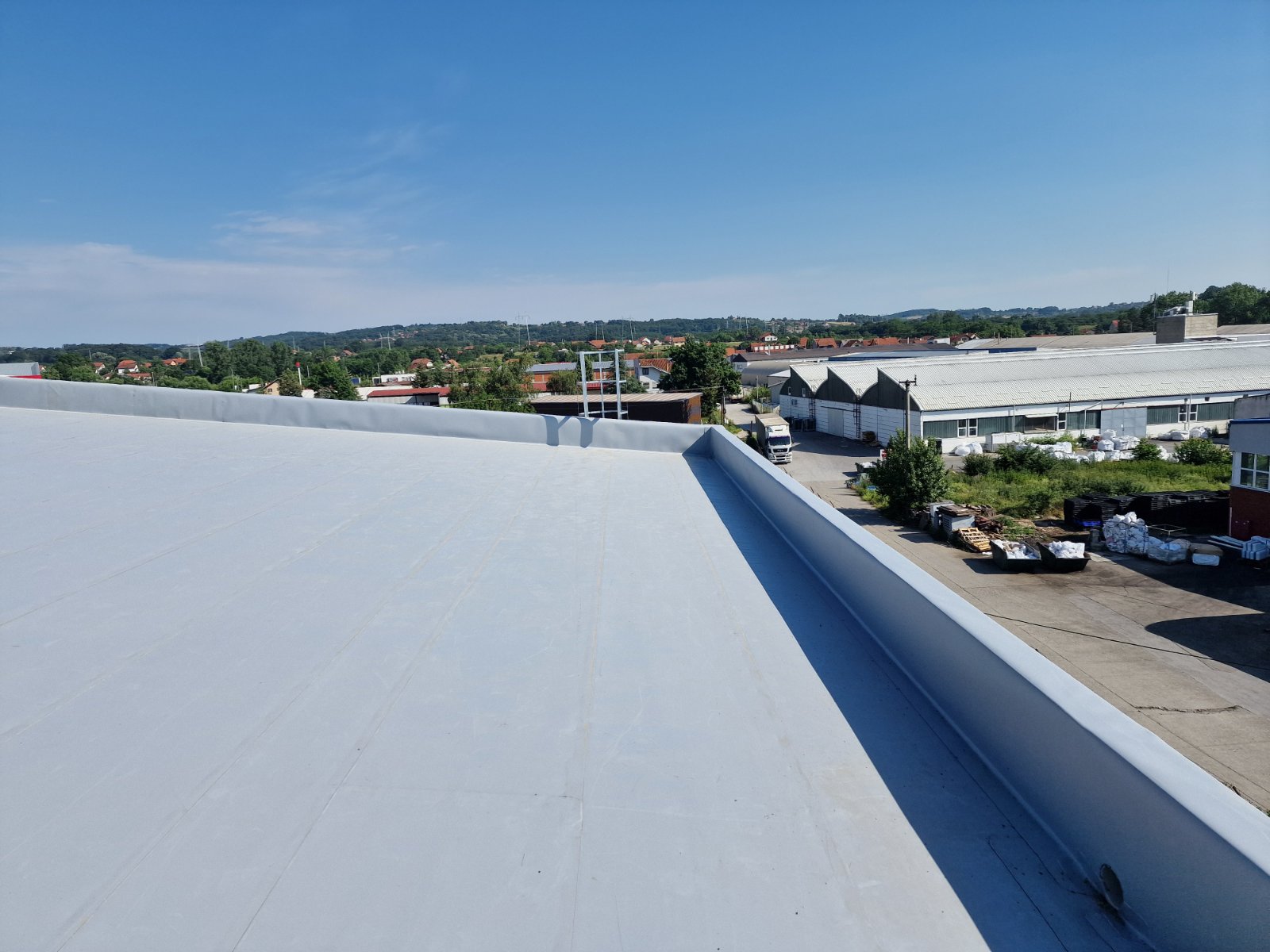
Photos after project completion: